
Scientists Find Mysterious, Life-Rich Ecosystem Nearly 12,000 Feet Beneath Greenland Sea
Published Dec. 24 2025, 6:19 a.m. ET

A diver near the seafloor.
Small sea snails with their shells coated in orange material, amphipods, tube-dwelling worms, and deep-sea clams; these are the residents of a colony recently unearthed by scientists about 11,940 feet deep in the Greenland Sea. Families of these little residents were spotted living on and around the Freya Hydrate Mounds. In a study published inNature Communications, they documented the intriguing mechanism these species use to survive, reproduce, and feed themselves in the dark, inky abyss where the Sun’s light cannot reach.
At a depth so unfathomable, the living organisms don’t have access to light that they can use for making food via photosynthesis. Their bodies have evolved to cook the food via chemosynthesis. Instead of breaking down light to make food, they break down toxic chemicals in the deep sea to prepare their food. The family of fauna discovered in the Molley Ridge represents one of the “deepest known hydrate deposits worldwide,” whose chemosynthetic society shows similarity to the hydrothermal vents of the Arctic at similar depths.
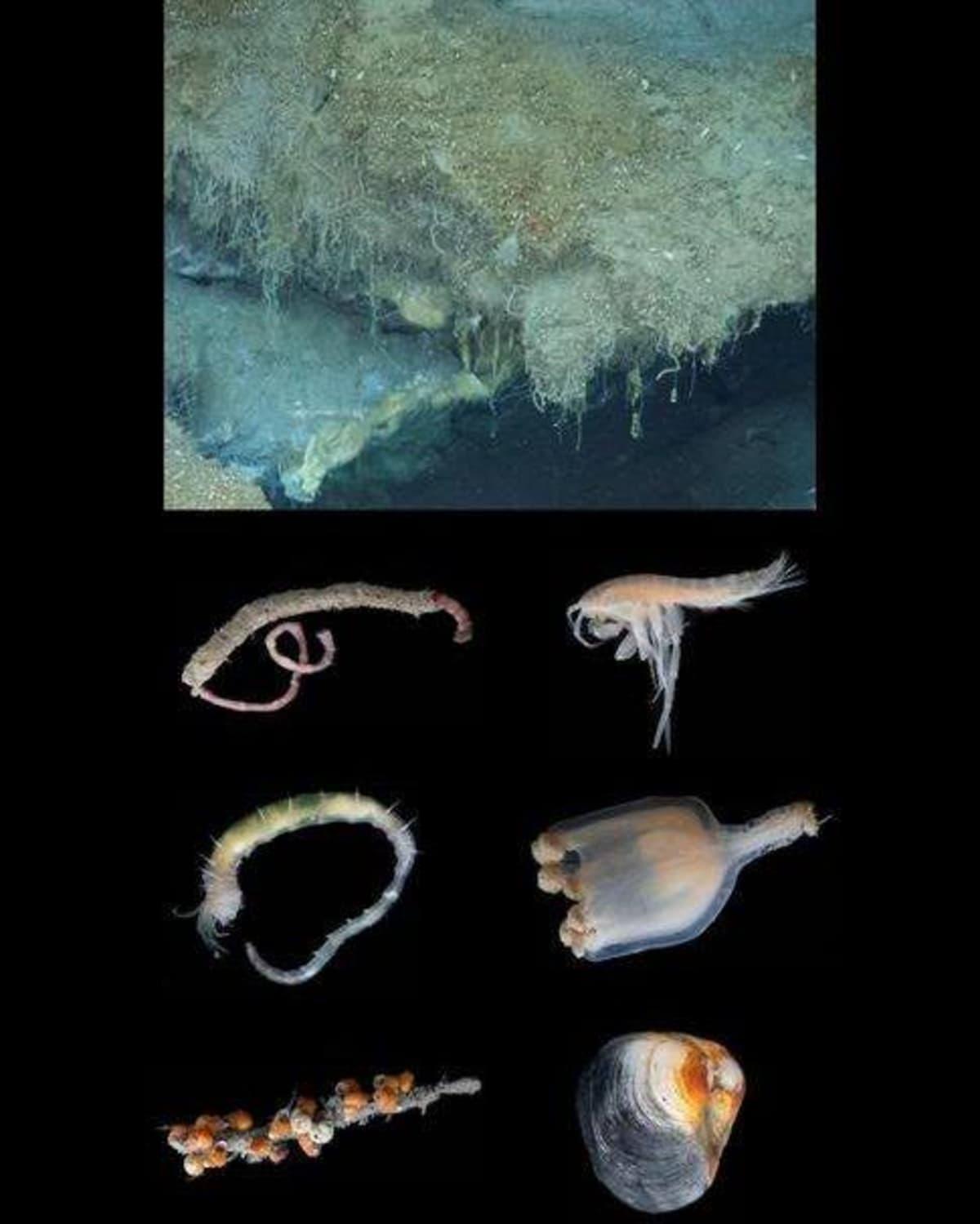
Chemosynthetic creatures found near the Freya mounds
There is an array of structures that materialize on the seafloor, driven by pulsing waters and the migrations of chemical-laced fluids. This study explored the contrast between two of these structures: vents and seeps. While vents are aggressive in nature and they spew vigorous tongues of super-hot volcanic material, seeps are cooler. Unlike vents, seeps maintain a slow, continuous discharge of hydrocarbon-rich material. In this case, the seepage observed was discharging methane gas, which formed the Freya Hydrate Mounds, the deepest vents of their kind ever discovered.
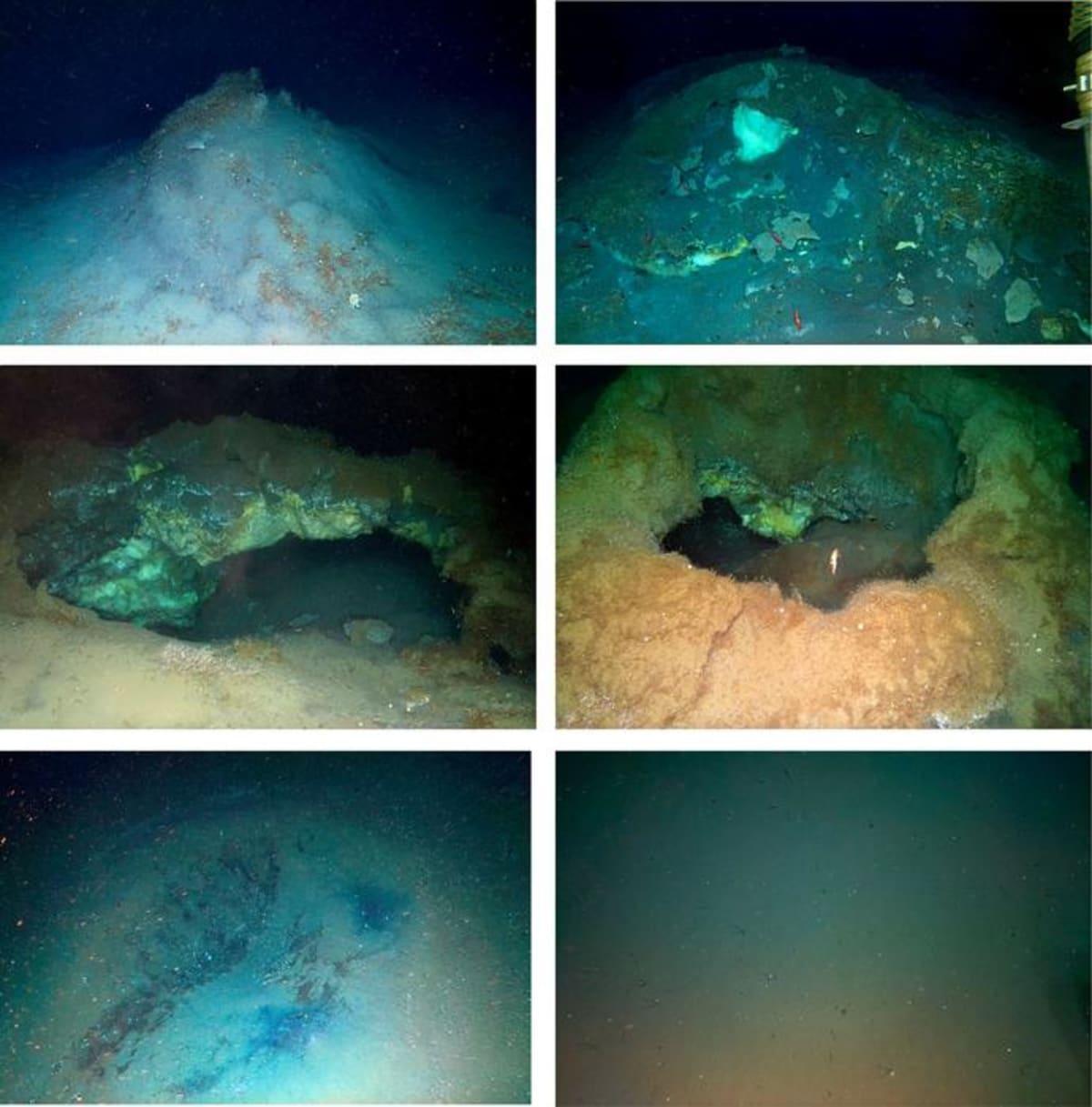
The Freya hydrate mounds
The study was conducted as a follow-up to earlier discoveries along the Molloy Ridge. Scientists recorded methane gas flares rising from the seafloor, using advanced instruments. The data suggested that there were hydrate mounds nearby. During Ocean Census Arctic Deep – EXTREME24, they spotted Freya and the fauna families that inhabited the mound. From gastropods to snails and amphipods, the mound was teeming with life. This overlap between the seep and vent fauna unlocks a new perspective in the understanding of ecological connectivity across deep-sea environments.
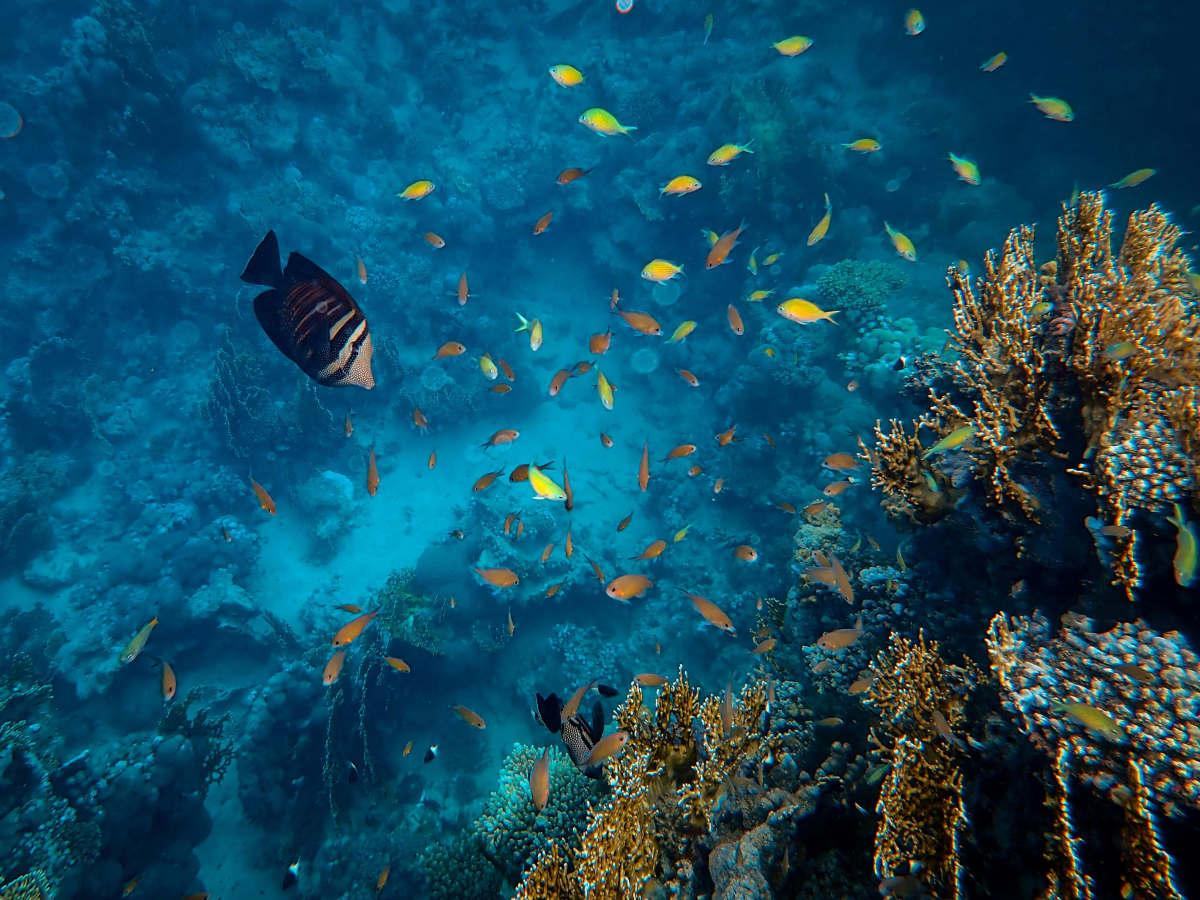
Surreal underwater ecosystem with clusters of tiny fishes and organisms
In a press release, the expedition's co-chief scientist, Giuliana Panieri, reflected that this discovery “rewrites the playbook for Arctic deep-sea ecosystems and carbon cycling.” The ultra-deep system, she said, is both “geologically dynamic and biologically rich.” Usually, when one thinks of the seafloor, they imagine a place cloaked in shadowy darkness and devoid of life, except for monsters, if at all. Seeing this mound burst with a silent cacophony of life was remarkable. Jon Copley, who led the biogeographic analysis of the new discovery, said, "There are likely to be more very deep gas hydrate cold seeps like the Freya mounds awaiting discovery in the region, and the marine life that thrives around them may be critical in contributing to the biodiversity of the deep Arctic."
The active nature of these features is a precious piece of information that suggests that these organisms could be making a potential contribution to the carbon cycling processes in the water column. If this is true, this presents an exciting possibility of how scientists can manage the carbon-induced global warming. The discovery offers fresh perspectives for understanding not just deep-sea chemistry, but also plate tectonics, heat flow, environmental change, and how these sessile colonies form, evolve, change, dissociate, and re-form over time.