
California Forests Face Toxic Threat From Illegal Cannabis Farms. Experts Warn Wildlife Is at Risk
Published Feb. 11 2026, 9:44 a.m. ET

A member of the Integral Ecology Research Center recovers a pesticide sprayer that was hidden under brush at the Shasta-Trinity trespass grow.
Illegal cannabis farms or ticking time bombs? The latter fits perfectly in this scenario, and experts who surveyed the lands of the Shasta-Trinity National Forest have gathered enough proof. Ecologist Greta Wengert arrived at the site and was disheartened by what she witnessed: piles of pesticide sprayers trashed along the forest's hillside. These chemical-clad containers were gnawed at by wild animals, leaking some of the liquid poison into the environment. “They’re just these little death bombs, waiting for any wildlife that is going to investigate,” wrote Wengert, the co-founder of the Integral Ecology Research Center, an NGO dedicated to studying harms caused by cannabis farms. The crisis isn't new, as Wengert and her colleagues have been tirelessly working to raise awareness on the harmful impacts of cannabis farms for a decade.
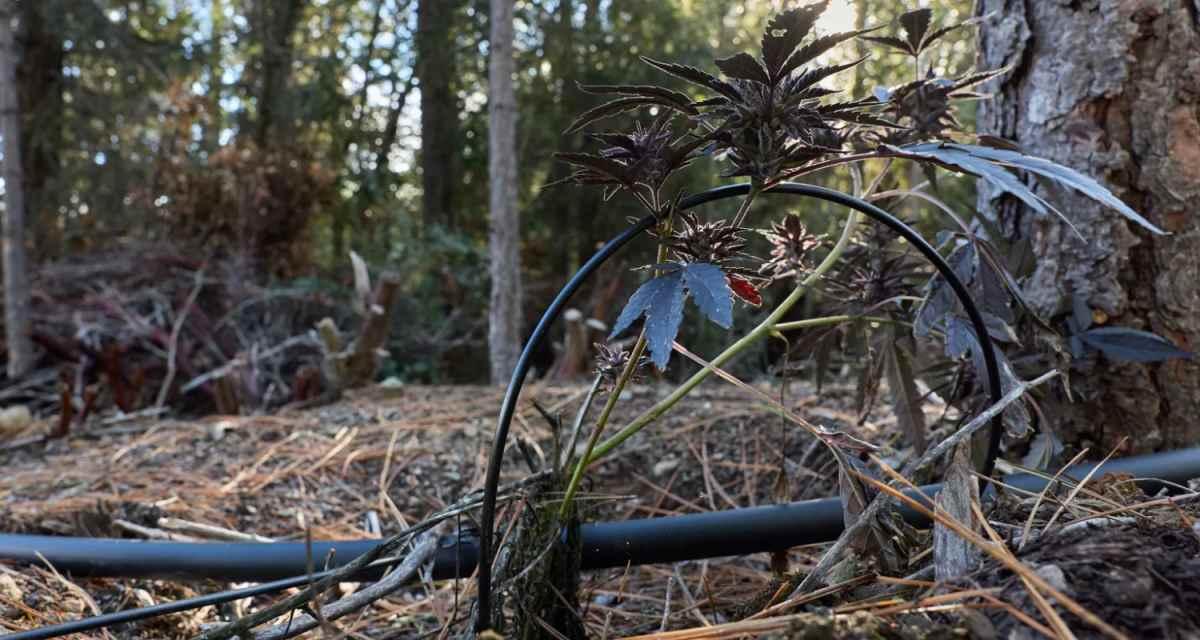
A cannabis plant grows alongside irrigation tubing at the illegal grow site in Shasta-Trinity National Forest.
Illegal cannabis growth hampers the wildlife, soil, water quality, and ecosystems in its vicinity. Now, the experts have highlighted a culmination of issues that are eating away at the forests of California. Besides ecological consequences, lack of federal funds, miscoordination between agencies at the state and federal levels, and other factors have now made clean-up efforts difficult. In the aftermath, the hazardous disposal of pesticide containers, fertilizers, and residual trash is polluting the forest lands to a concerning extent. Upon Wengert's recent excursion to the Shasta-Trinity National Forest, she found fertilizer bags bleeding poison into the ground and several irrigation tubes twisted around empty plant holes. The recklessness of the growers was outrageous, at the least.
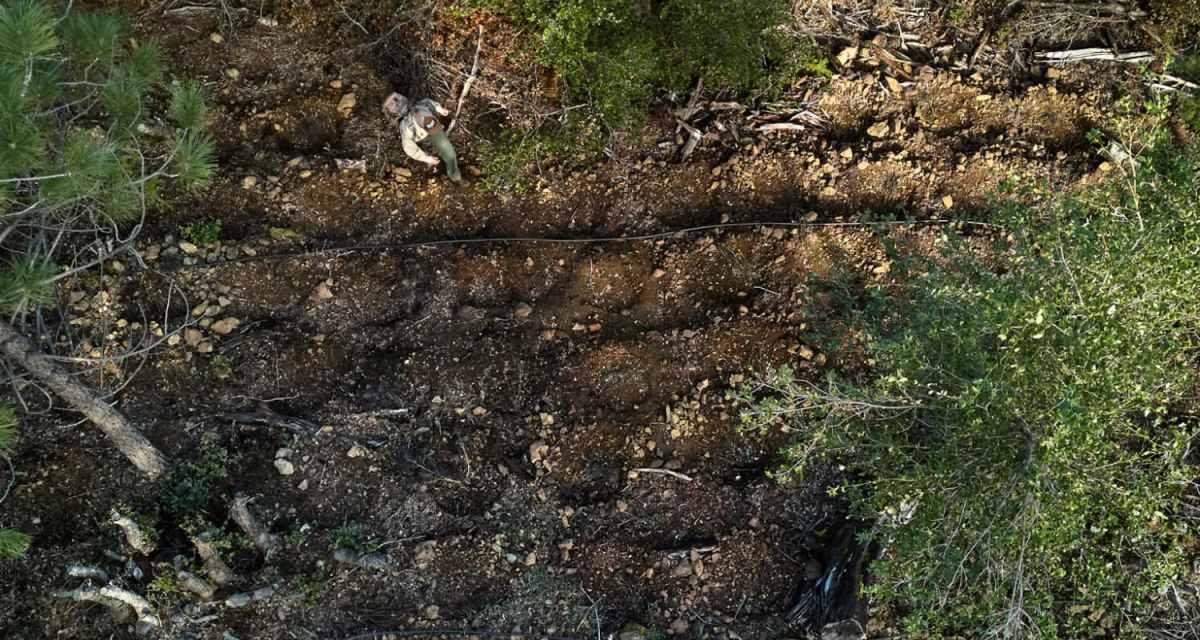
An aerial view of a scientist walking through empty planting holes at the illegal Shasta-Trinity cannabis site, where growers chopped away brush and laid irrigation lines for their crop.
Although law enforcement had raided the site months before Wengert paid her visit, she could still find piles of trash all over the place. The conservationist has wandered over 7,000 abandoned sites like this one across California, and the poor sight of one is no different than the other. The research team only knows 587 out of these sites that are at least partly cleaned. Despite visiting thousands of such sites, Wengert suggests that the numbers are an underestimate. Unfortunately, no government agencies have accurate statistics for these lands, making it harder for conservationists to envision the damage along with the cleanup efforts that would be required. Since most of these damaged sites are within the vicinity of national forests, the hopes for cleanup are further lost unless properly funded.
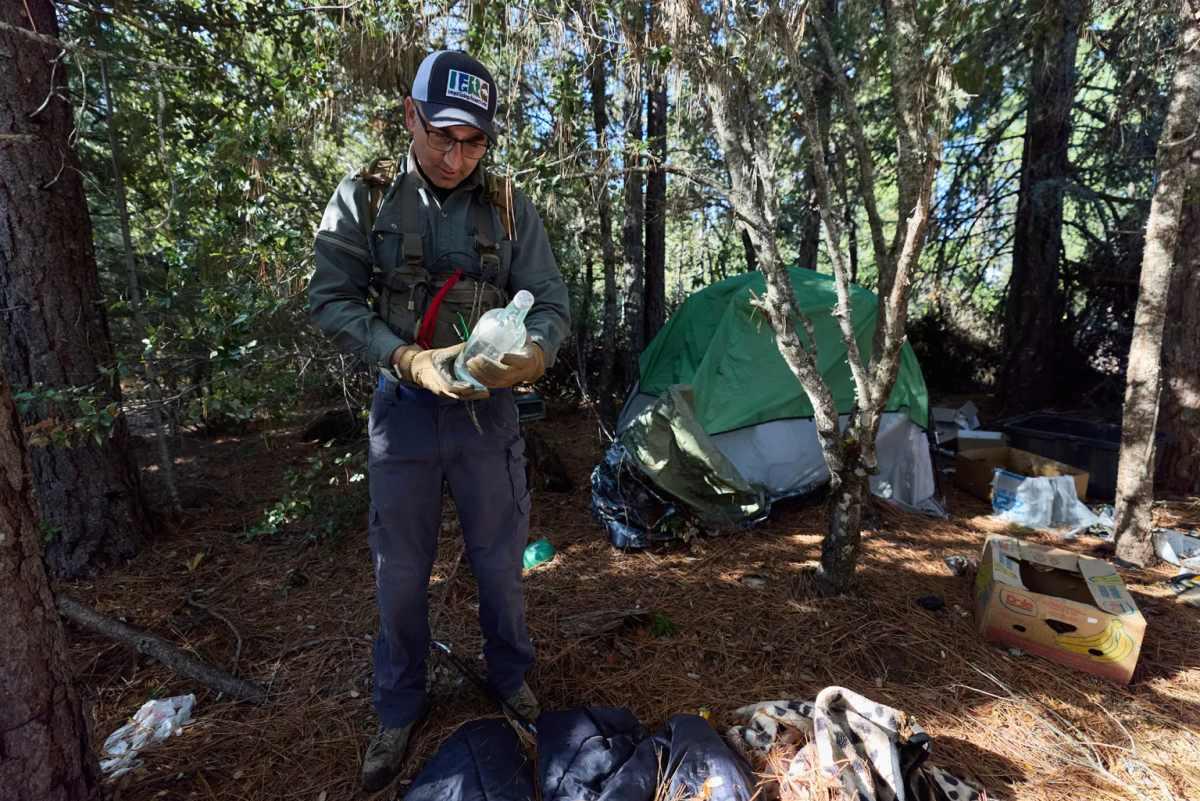
Mourad Gabriel, co-founder of the Integral Ecology Research Center, looks at an alcohol bottle found in the abandoned camp of the illegal cannabis site in Shasta-Trinity National Forest.
The national forests have “limited funding and a shortage of personnel trained to safely identify and remove hazardous materials.” Almost half of more than 100 million acres of land in California are owned by the federal government, yet it's the agencies taking initiatives to control these illegal grows. The California Department of Fish and Wildlife’s policy is committed to cleaning illegal cannabis grow sites across its 1.1 million acres of wildlife areas, ecological reserves, and other properties. However, the department only assists with the clean-ups of federal lands "when asked."
The issue of illegal cannabis farming increased since 2016 after voters legalized the use of the drug. “It’s like whack a mole. They pop up in a new location, and then we have to go there—but the impacts are occurring across the landscape,” said Scott Bauer, an environmental program manager with the Department of Fish and Wildlife’s cannabis office. “Everybody thought with legalization that a lot of these problems would go away. It’s a ticking environmental time bomb," said ex-Assemblymember Jim Wood, a North Coast Democrat.