
Scientists Warn Amazon Is Approaching Irreversible Forest Loss Faster Than Thought
Published Jan. 29 2026, 4:24 a.m. ET

Amazon River flowing from between the trails of Amazon rainforest
If planet Earth were a creature, the 3-million-square-mile green-colored piece called the Amazon would be the source of its vital breath. With a morass of broadleaf trees, palms, and lianas, tree islands, agricultural patches, and pastures, the Amazon rainforest has been the primary source of water and oxygen for earthlings. Each tree is a giant straw or pump whose leaves concentrate moisture and cough it upwards, generating atmospheric rivers that travel with the winds and construct clouds that burst to bring rain.
In the recent decade, however, this natural chain of events has been suppressed by aggressive deforestation often paired with destructive human activities. These activities have sabotaged and dismantled the forest to the point of no return. In a study published in Nature Communications, scientists documented how deforestation remains the greatest bogeyman behind this devastation, especially for the Amazon’s Southern basin.
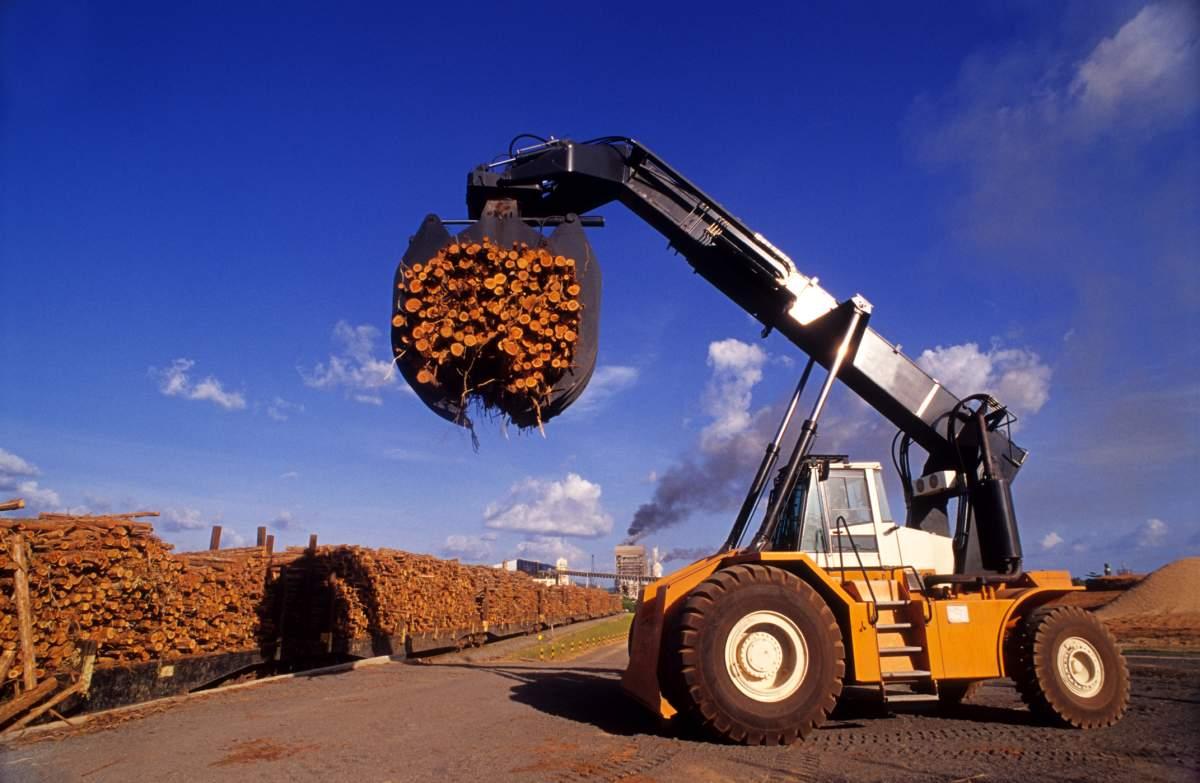
A crane lifting bulk load of wooden logs chopped from deforested trees in Amazon rainforest
There was a time, at least until the 1970s, when the Amazon exploded with a wellspring of life-sustaining vegetation. Like Earth’s royal sponge, the Amazon maintained the largest stock of carbon in its bosom, blissfully supporting a rich biome, the invisible guardian of life. But then the forest caught the attention of humans. Farmers got lured by the luxurious stockpile of vegetation, and miners couldn’t stop getting enchanted by the troves of metals sitting beneath the ground. Mouths of woodcutters, loggers, and smugglers salivated at the prospect of the sumptuous wood that they could loot by chopping off the tree trunks.
Basically, Amazon got doomed. By the late 1980s and early 2000s, waves of human colonization had ravaged the Amazon into a shell of what it was earlier. Big Mercedes-Benz trucks rolled out of the forest with their cabins stacked with logs and chopped timber. Sharp blades of tractors, boulders, and cranes viciously barbered the lush vegetation, reducing a large portion of the Amazon to a zigzagging puzzle of fish bones, as a NASA Goddard scientist described. All this exploitation may have resulted in economic profits for humans, but it ended up damaging the Amazon with each passing day. Add the forest fires that loggers set up after assaulting the trees, and it turned to mass destruction.
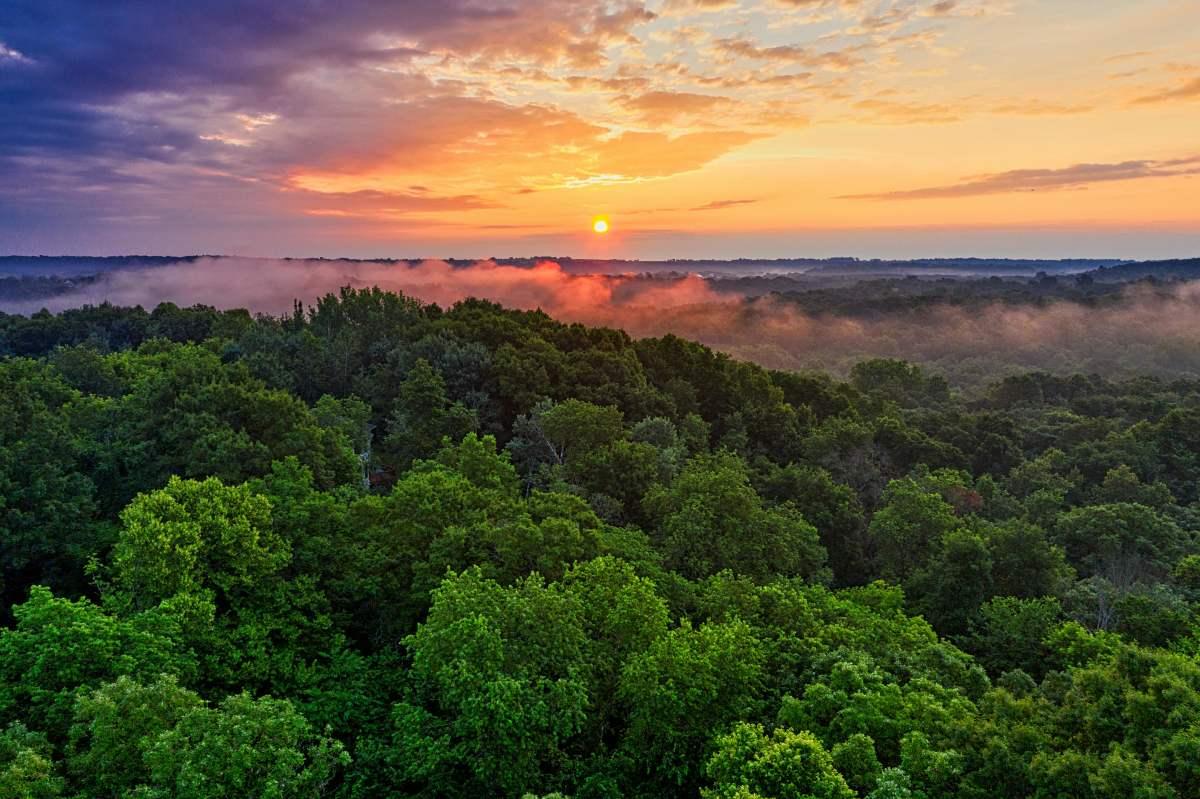
Aerial shot of a lush green rainforest with sun setting in the sky
In the latest study, scientists reported that this destructive effect was more prominent in the Amazon’s southern basin. The striking north-south divide has never been documented before. Deforestation is at the top. Under it are several factors, including timber exploitation, urbanization, cattle ranching, grain production, palm cultivation, and environmental stressors. All this only makes scientists think that “the Amazon forest is at risk of major loss much sooner than previously projected.” In the southern Amazon, particularly, they recorded the possibility of a 75% increase in the probability of extreme drought or delayed rainy seasons in specific hotspots due to deforestation and the position of the Southern Hemisphere tropical jet.
While the entire Amazonian landscape is suffering from the impact of tree-cutting, the southern basin is experiencing more losses, including an annual decline of 8% to 11% in precipitation and vigorous drying spells. Scientists deduced these statistics after analyzing 40 years of satellite data on rainforests and quantifying these feedbacks with an atmospheric moisture tracking model from 1980 to 2019.
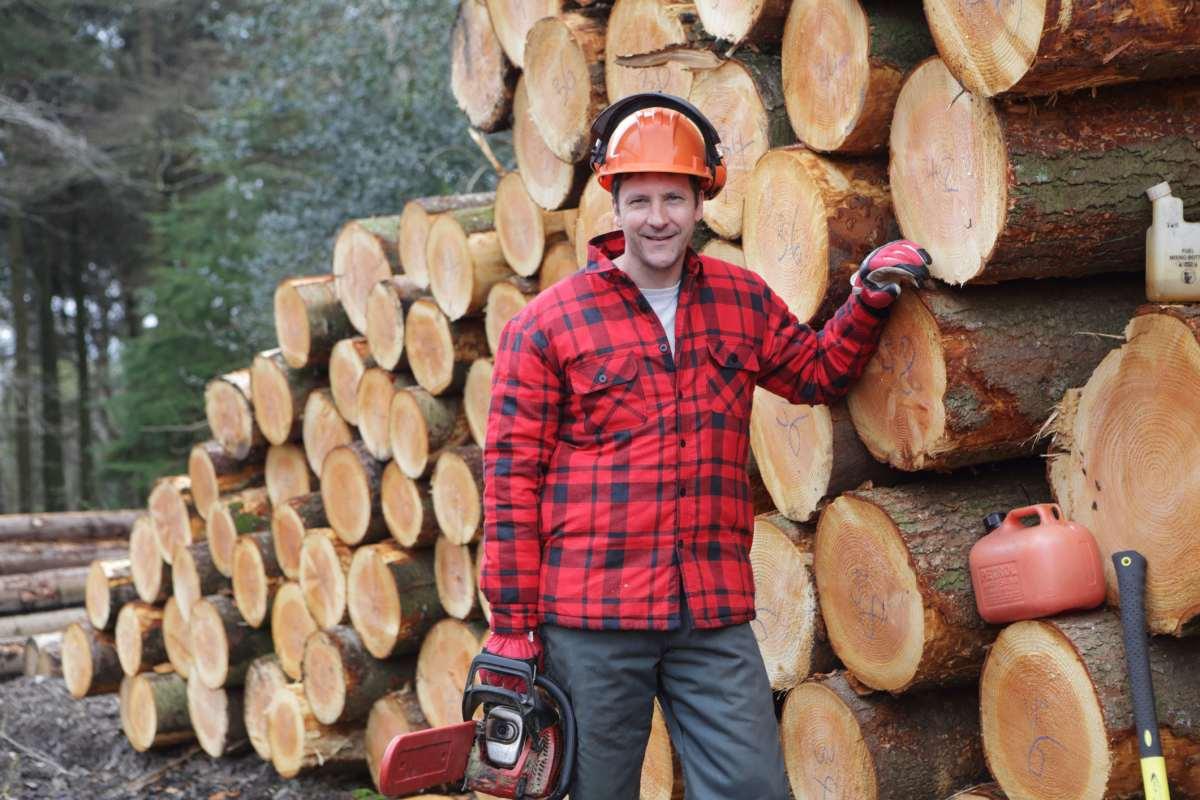
A tree-cutting worker standing with a large pile of wooden tree logs
The remarkable contrast of responses in the northern and southern basins suggests that deforestation could soon trigger a forest dieback, pushing the Amazon beyond its threshold towards irreversible damage. As scientist Jesse Hyde says in a video, it all comes down to “responsibility.” Most of the forest is already gone due to this arc of deforestation, political dynamics, and violent clashes, but there’s still hope if farmers and loggers agree to make a sacrifice. Unless they stop cutting trees, Amazon’s health will continue to degrade, and so will Earth’s. “We cannot accept. We cannot accept that we live in a place where illegality is actually the norm,” asserted a NASA scientist.