
After Extreme Heat Killed Over 80% of Flying Foxes, This Unusual Hospital Is Giving Them a Lifeline
Published Feb. 12 2026, 8:55 a.m. ET

Flying Fox bat.
A hospital for bats? Sounds unusual, but this unique place does exist. In far north Queensland, Australia, a short drive from Cairns, there is a rescue center called Tolga Bat Hospital. It is exactly what it sounds like, a safe haven solely for the care of bats. It is one of the very few facilities that exist in the world. Once you step inside, you may witness a bat gently washed, fed, and tucked in like a newborn. “You meet a bat, and they’re worth caring about. They have serious threats that they’re facing, all of them human-induced,” founder and director, Jenny Mclean said, according to Vox.
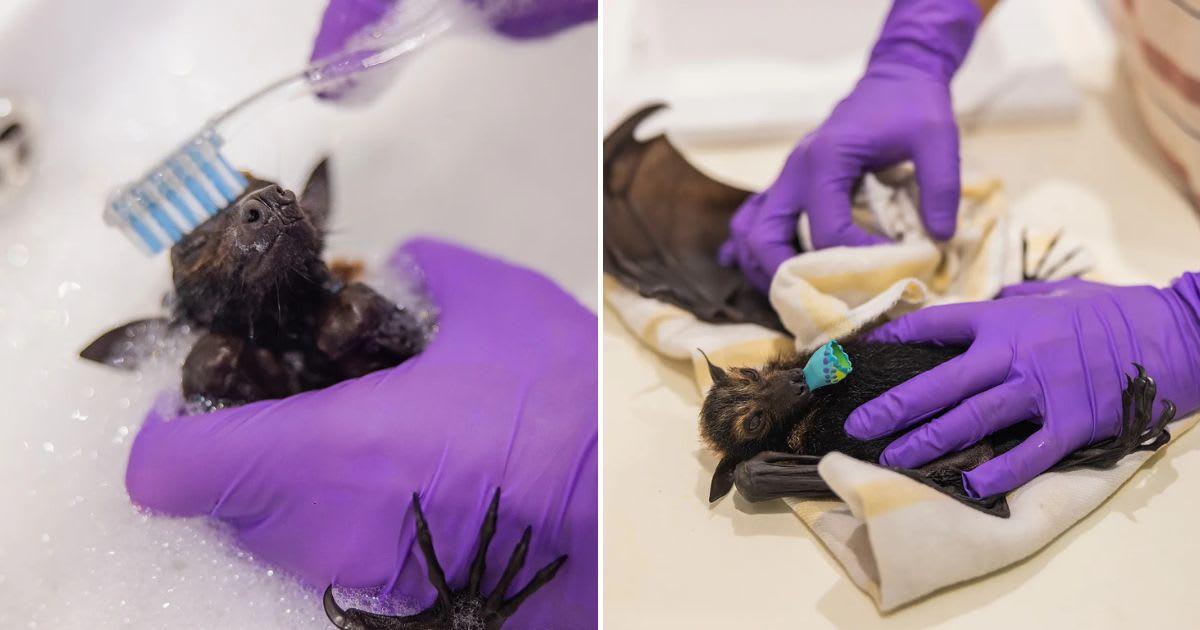
Flying fox bats
The hospital has been helping bats for three decades. Surprisingly, it is mostly run by a dedicated group of volunteers with only one paid staff member. The site has a handful of small buildings used for medical care, food storage, and raising orphaned bats alongside several outdoor enclosures. One large enclosure is reserved for bats that are injured and cannot return to the wild yet. The facility looks after over 1,000 bats each year, and most of them are spectacled flying fox, an endangered species.
Many bats are found sick, overheated, or injured after getting caught in barbed wire. However, the real challenge is to spot them due to the pale fur around their eyes, which makes them look like they are wearing tiny glasses. Most have lost their mothers and would not survive without human care. McLean has dedicated her life to the cause and does not draw a salary. She says she feels a strong duty to protect these animals, as flying foxes play a vital role in nature. They contribute to the growth of forests by pollinating plants and spreading seeds over long distances.
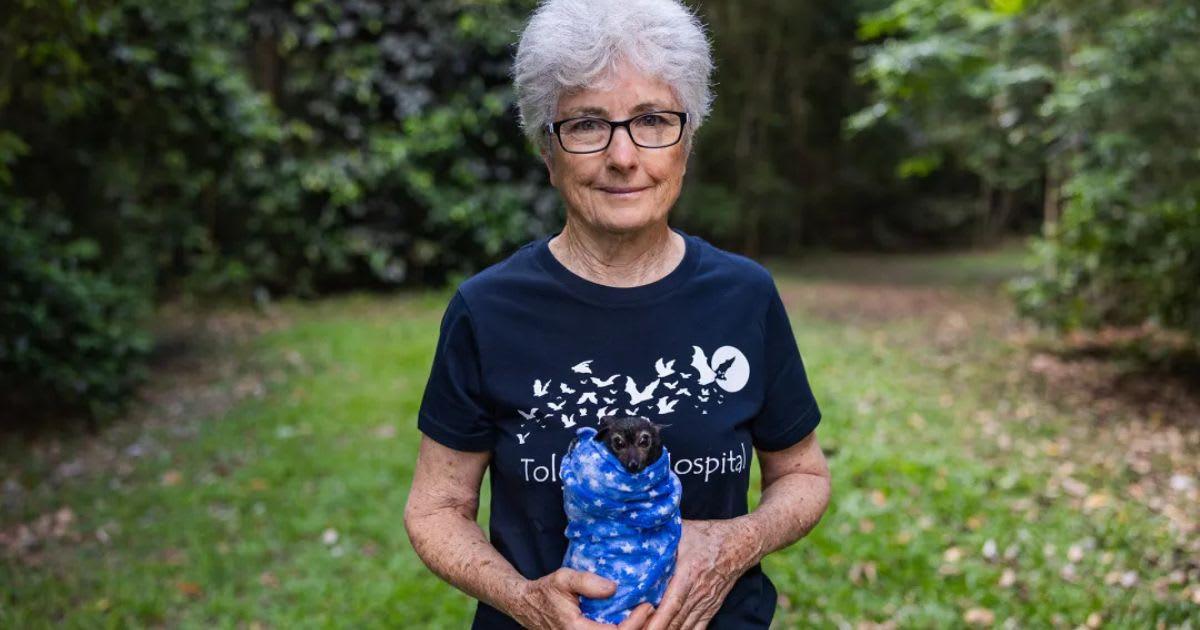
Jenny Mclean, Tolga Bat Hospital founder and director, holds an endangered spectacled flying fox
McLean emphasizes that human activity has contributed to bats’ suffering. A flying fox colony in the South Australian town of Naracoorte has been devastated after extreme heat swept through the region. The camp was home to around 1,000 bats, but more than 80% died as temperatures climbed. It left the colony almost entirely wiped out. Only approximately 180 bats survived, and rescuers saved about 34 baby flying foxes. Many were severely underweight and dehydrated and will need months of care to recover. “It’s a devastating loss of numbers,” said caretaker at Bat Rescue SA, Judith Bemmer, according to The Guardian.
Furthermore, the area was hit by another major heatwave in January, killing thousands of flying foxes across Australia. It is considered one of the deadliest mass die-offs for the species since the catastrophic 2019–20 Black Summer. “Unfortunately, this is likely due to most of the vulnerable and young passing away in the previous heat events,” Tamsyn Hogarth, the director of the Fly by Night bat clinic, said.
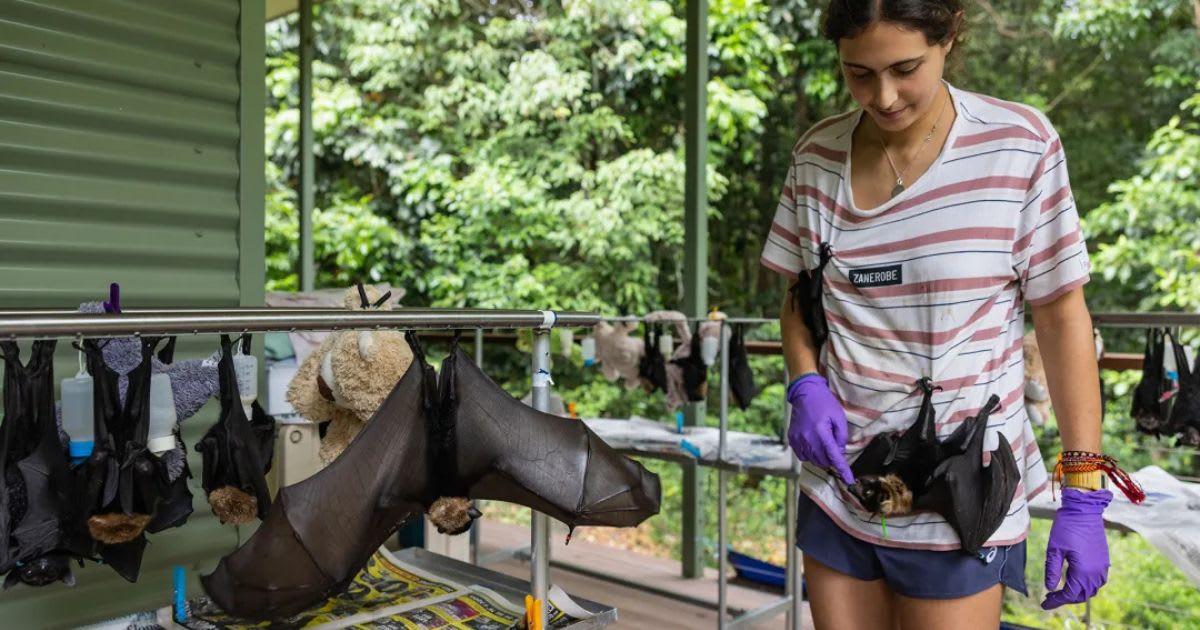
Volunteer caring for bats
Caring for bats also comes at a cost. Looking over rescued flying foxes is demanding and expensive. Each bat can eat up to 350 grams of fruit every day, and for orphaned babies, recovery can take months before they are strong enough to return to the wild. The bat rescue centers spend hours preparing food, cutting around 35 kilograms of fresh fruit daily. Apples, pears, rockmelon, and grapes are washed, chopped, and carefully portioned to keep the bats healthy. “That’s ongoing past the heat event. Once the heat’s gone, the focus is off. That’s actually when the biggest struggle starts for us – the financial struggle,” Bemmer said.