
A Danish Town Just Switched to Red Streetlights and It Could Change Animal Life in Cities Worldwide
Published Feb. 11 2026, 9:38 a.m. ET

Red streetlights installed in Gladsaxe Municipality, Denmark
Denmark has introduced a revolutionary transformation: to change the street lighting. In the region called Gladsaxe, red LED streetlights have been installed along selected roads as a way to protect wildlife while keeping residents safe. It is also a way to reduce the harmful effects of artificial light at night. Nocturnal animals, especially bats, are highly sensitive to bright urban lighting, and this change could cut down the disruptions. Backed by scientific research, the shift hints toward a new way of thinking about urban design, balancing safety and environmental responsibility.
The main motive for installing streetlights in cities is to improve safety and visibility for drivers and citizens. However, research shows that traditional lighting can disturb natural ecosystems. Since bats depend on echolocation to find food and navigate at night, these bright artificial lights can interfere with their normal behavior. Studies have found that short-wavelength lights such as white, blue, and green are disruptive to their feeding patterns and can even to changes in migration routes.
However, red-spectrum lighting appears to have far less impact on bat activity. "We've found these bats to be equally active in red light and in darkness. White and green light, on the other hand, substantially reduce the bats' level of activity," said lead researcher Kamiel Spoelstra, per Euro News. In Gladsaxe, officials replaced standard white streetlights with red LEDs. The move aims to reduce harm to wildlife while still providing safe and effective lighting for the public. Changes have already been made in the city by officials who replaced standard white streetlights with red LEDs along Frederiksborgvej, a road close to a bat colony. The focus is to protect species like the common pipistrelle and the brown long-eared bat.
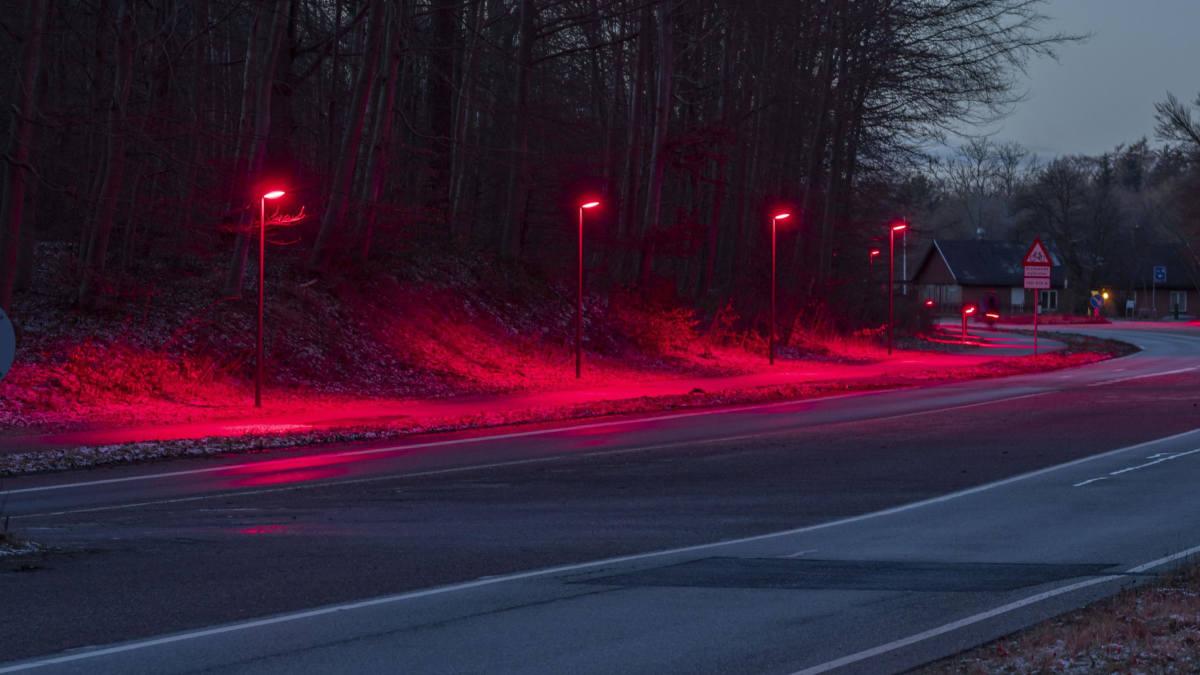
The red light notifies passers-by that this is a special natural area which the municipality wishes to protect and preserve.
Besides helping wildlife, the red streetlights also carry a clear signal. In Gladsaxe, the red glow is known as the area where city life meets natural habitats. It serves as a reminder for residents and commuters that these regions consist of vulnerable species and should be treated with care. The red lighting is a way to raise awareness. Gladsaxe’s approach could be inspiring for other cities as the environmental crisis grows. It is time to rethink how infrastructure can reflect sustainability values.
Switching to red LED systems can also help to conserve energy. Compared to older sodium or halogen lamps, LEDs use far less power and have a much longer lifespan. It will help cities cut electricity bills and maintenance costs. They also support smart features such as dimming controls and motion sensors, allowing lighting levels to adjust based on real-time activity. In Gladsaxe, around 5,000 streetlights are set to be replaced as part of the project. Across participating cities, more than 50,000 lights will be upgraded.
This new change is part of the EU-funded “Lighting Metropolis – Green Mobility” program, which includes cities in Denmark and Sweden. The program’s goal is to make urban lighting more environmentally friendly while also maintaining the safety measures. It may seem like a small design change, but its impact is greater, and it will surely bring a huge difference. Cities around the world are struggling with light pollution, rising energy use, and the negative influence of urban growth on wildlife. By simply changing the color and technology of streetlights, Denmark is finding a way to protect bats and other nocturnal animals without reducing public safety.