
Thousands of Penguins Are Dying in Patagonia. And This Native Predator's Return is to Blame
Published Feb. 6 2026, 5:13 a.m. ET

(L) A couple of adult Magellanic penguins in Patagonia. (R) An adult puma approaches the penguin nesting area.
Off the southern coast of Argentina, Patagonia is home to millions of yellow-eyed Magellanic penguins. Each day, adults step out of their colonies, bobbing their plump white bellies, to forage for fish for their infants. Back in the colony, the chicks they abandoned become vulnerable to getting abducted by predators like foxes, skunks, or armadillos. Initially, most of these penguin families had moved here from nearby islands due to the absence of predators.
But today, they are living with a persistent sense of threat from predators who have invaded the region. In the Journal of Nature Conservation, researchers documented the grim statistics of the penguin population as a merciless predator reappears in Patagonia and kills these birds.
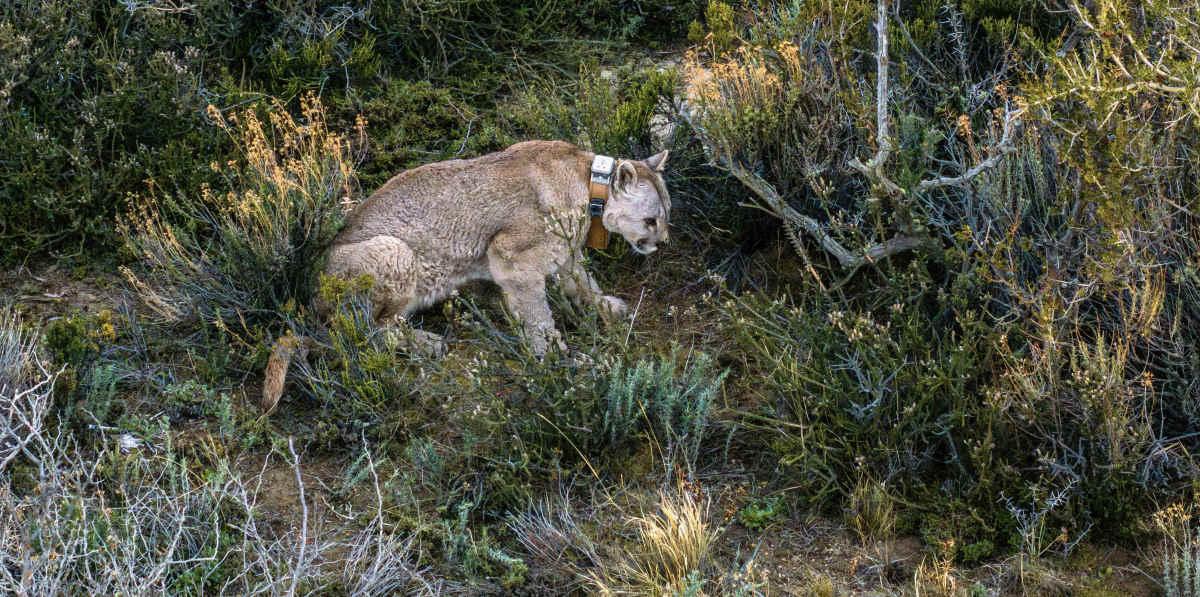
An adult puma leaving the penguin nesting area after a kill.
This is the story of a dramatic interaction going on between the two groups. Pumas are returning and recolonizing their territory. On the other side, the population trajectory of penguins faces an immense, almost continuous threat from these predators. Their only hope is that the pumas will change their diet, develop a taste for some other bird, and leave them alone. But sadly, it isn’t easy.
No one is to blame here, because this is what predators do. However, this painful dynamic has jolted the humans safeguarding this habitat into a “conservation dilemma.” Officials of the Monte Leon National Park on the southern Argentinian coast are grappling with the dilemma of whether to save the “emblematic species” or to let the pumas roam free and ruthlessly. It is heartbreaking to think that they need to save one at the cost of the other.
In this study, researchers from the University of Oxford, together with rangers from the park, conducted an investigation on this predator-prey dynamic to figure out a way to manage both populations. The objective was to project a scenario where they could ensure the long-term penguin population survival despite the risk of uncontrolled puma predation.
Between 2007 and 2010, they counted the number of carcasses stranded by pumas. For each carcass, they recorded age class, appearance characteristics, and marks of predation left by pumas or other carnivores. In the case of pumas, the marks observed in most cases included broken necks, wide bite marks, and notorious body injuries.
What they found was nothing short of striking. Over a span of four years, more than 7,087 penguins were killed by pumas, which is approximately 7.60% of the adult population of about 93,000 individuals. An interesting thing about most of the observed carcasses was that they were not fully eaten. It seemed many of them had not even been killed for food.
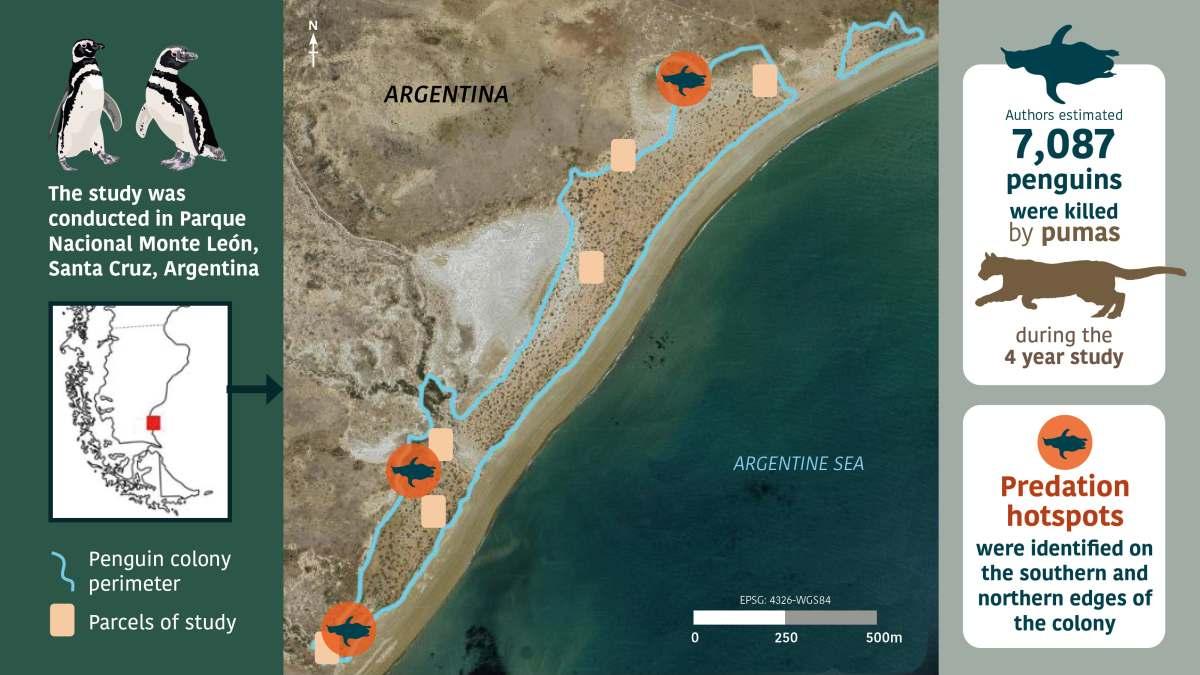
Map showing the study area researching the penguin deaths.
Reflecting on the patterns displayed in the killings, lead author Melisa Lera, a postgraduate student at WildCRU, Oxford University, deduced that pumas are showing off a behavior called “surplus killing.” It's just like when you host a get-together with your friends and end up ordering way more snacks than you can eat, and the rest of the food goes to the dustbin the following day. “The number of carcasses showing signs of predation we found in the colony is overwhelming,” Lera said.
It’s both the ease of capture and vulnerability of penguins that enable such brutal predation. However, not all blame is to be heaped upon the shoulders of pumas. Models highlighted that other factors could be contributing to the penguin population extinction. Reproductive success and juvenile survival rate, for instance. It’s a feedback loop. These factors fuel the pumas’ predation behavior, and the pumas' predation keeps these issues lingering. After analyzing the dietary preferences of pumas and the reproductive challenges of penguins, researchers asserted that there is a need for better environmental management so that both parties can live together peacefully.