
A Scientist Kayaked to Remote Arctic to Study Microplastics. What He Found in the Ice Was Worse
Published Feb. 17 2026, 8:48 a.m. ET

Inuit scientist Kristian Louis Jensen on a kayak.
Inuit scientist Kristian Louis Jensen chose a life of purpose. He doesn't kayak in the icy waters of Arctic environments for the thrills or adventure. Those are just additional perks to his larger mission of studying some "pristine" places of our planet and finding ways to protect them for eternity. He recently traversed the remote glaciers of Greenland and found something upsetting: a vast spread of microplastics. What inspired him to look for the invasion of microplastics so far up North? During his days as a master's student studying environmental protection, Jensen invented something called the Plastsaq. The citizen-science tool helped kayakers and local communities collect samples of surface water containing larger pollutants like abandoned bottles and plastic packaging.
The tool worked efficiently, but Jensen's thoughts couldn't help but wonder, seeking a bigger solution. “That work led me to ask a deeper question about the invisible footprint of humanity,” he told Euronews Green. The thought inspired his most recent trip to one of the most “isolated corners of the Arctic.” Even though the place was remote, Jensen expected to see a certain level of plastic pollution. However, perhaps unconsciously, his imaginations were limited to larger debris. That's why the scientist was surprised to notice traces of car tire particles in the collected samples. “Finding them on a pristine glacier in eastern Greenland was a shock because it validated a terrifying thesis: these particles are no longer just an urban issue,” he told the outlet.
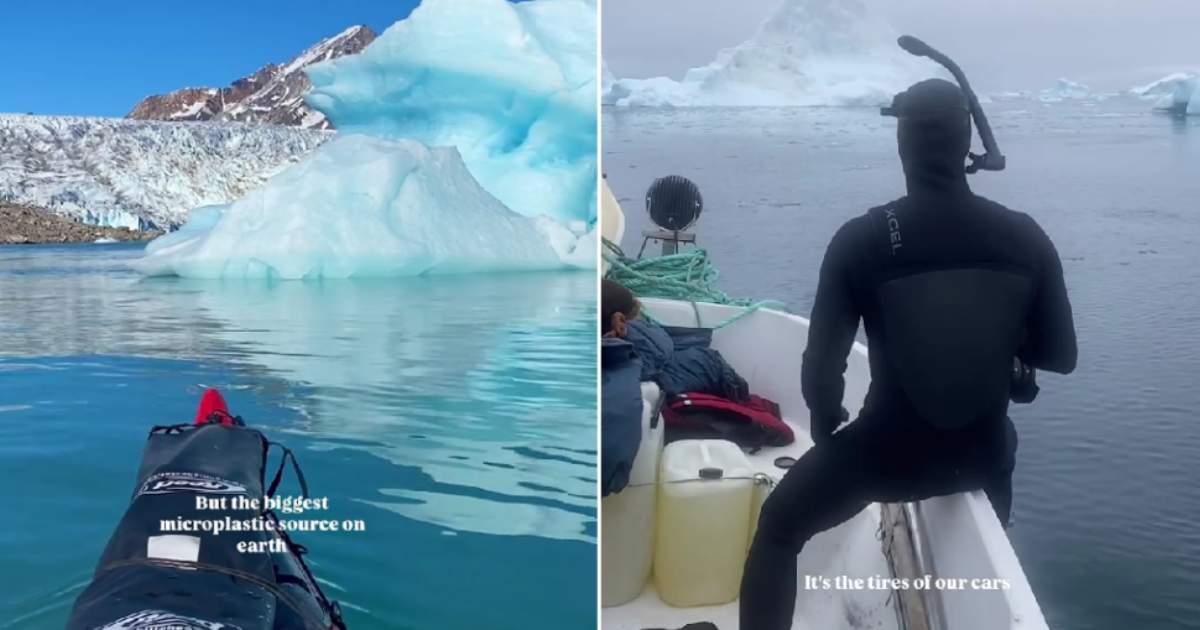
Screenshots from a video where Kristian Louis Jensen talks about microplastics in Greenland.
Jensen highlighted that these microplastics are so tiny that they have essentially become dust, travelling easily across endless miles, reaching even the remotest places of the Arctic. "This is ‘fossil fuels in motion’. It tells us that the Arctic is a ‘sink’ for the world’s pollution," he added. The most surprising yet tragic aspect of these microplastics is that even after being reduced to the size of a dust particle, they do not relieve our planet. Jensen revealed that microplastics lose around 10-30% of their mass during their lifetime, which means they never completely disappear. “It breaks down into toxic dust that settles at the very start of our food chain," he added. Although there are policies dedicated to preventing microplastic spread in Greenland, Jensen believes that there's a "critical blind spot" in the current approach.
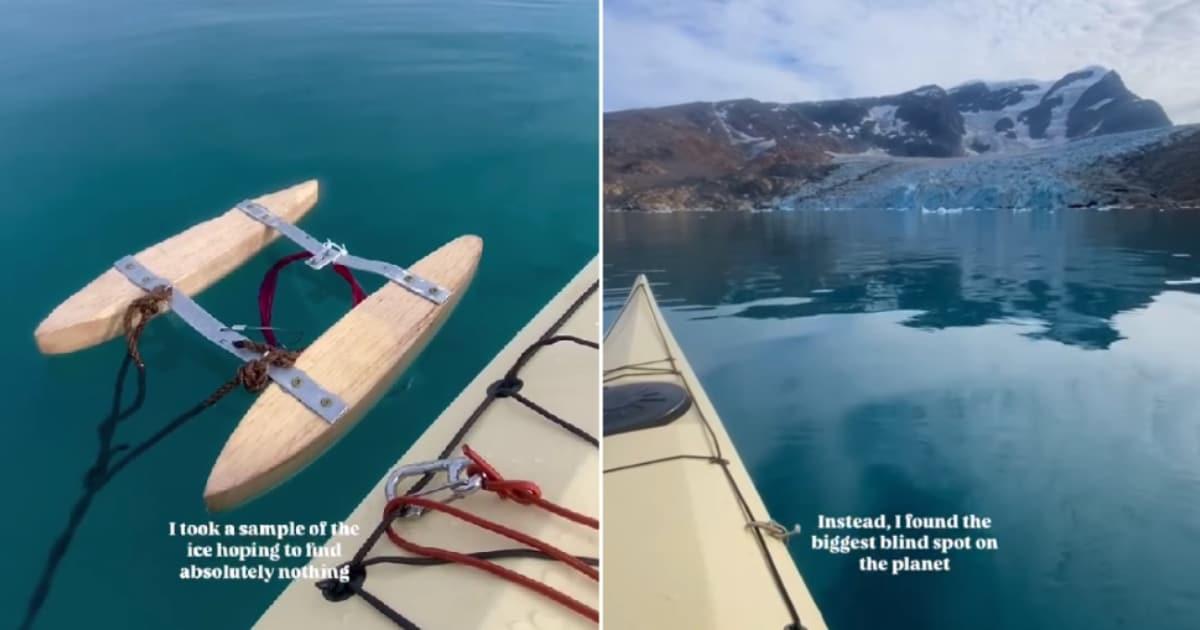
Screenshots from a video where Kristian Louis Jensen details what he found in Greenland.
In the past, there have reportedly been studies that highlighted that microplastic pollution is massive in the remotest areas compared to the usual garbage patches. Yet, nothing significant has been done to address the issue. “Currently, we regulate what comes out of the tailpipe, but we ignore what wears off the tire,” he explained. “This is dangerous, given that tire particles are now recognized as a leading source of microplastics entering ecosystems globally," he added.
The burning of fossil fuels is considered harmful and advised against by environmentalists. Over 90 countries have begun their transition away from fossil fuel use, primarily coal, oil, and natural gas. However, Jensen believes that the fossil fuel category needs to be broadened and include carbon black, the "fossil fuel-derived filler that makes up a massive portion of every tire.” That's why Jensen is launching the Black Carbon scientific coalition at this year's Arctic Frontiers conference. “The core of this campaign is the formation of a cross-sector science coalition to monitor black carbon and carbon black in the Arctic, and its effect on the health of the Arctic,” he revealed.