
Your Coffee Cup is Leaking Microplastics into Your Drink— and the Material Makes All the Difference
Published Jan. 19 2026, 8:38 a.m. ET

A young woman with eyes closed drinking coffee from a plastic to-go cup.
Your coffee cups might be a factory of microplastics, and you are likely drinking a bunch of them. Grabbing a to-go cup of hot beverage while running errands or heading for office is oddly satisfying, but you may not know the damage those plastic cups can do. According to the Environmental Protection Agency, the U.S. produces an approximate of 25 billion polystyrene cups every year, or about 82 cups per person, as per Medium. In Australia, 1.45 billion single-use coffee or hot beverage cups are thrown out annually. In a new study published in the Journal of Hazardous Materials: Plastics, researchers focused on the impact of heat on plastic cups, and the results were concerning. The finding revealed that heat causes microplastics to release, making consumers prone to drinking them.
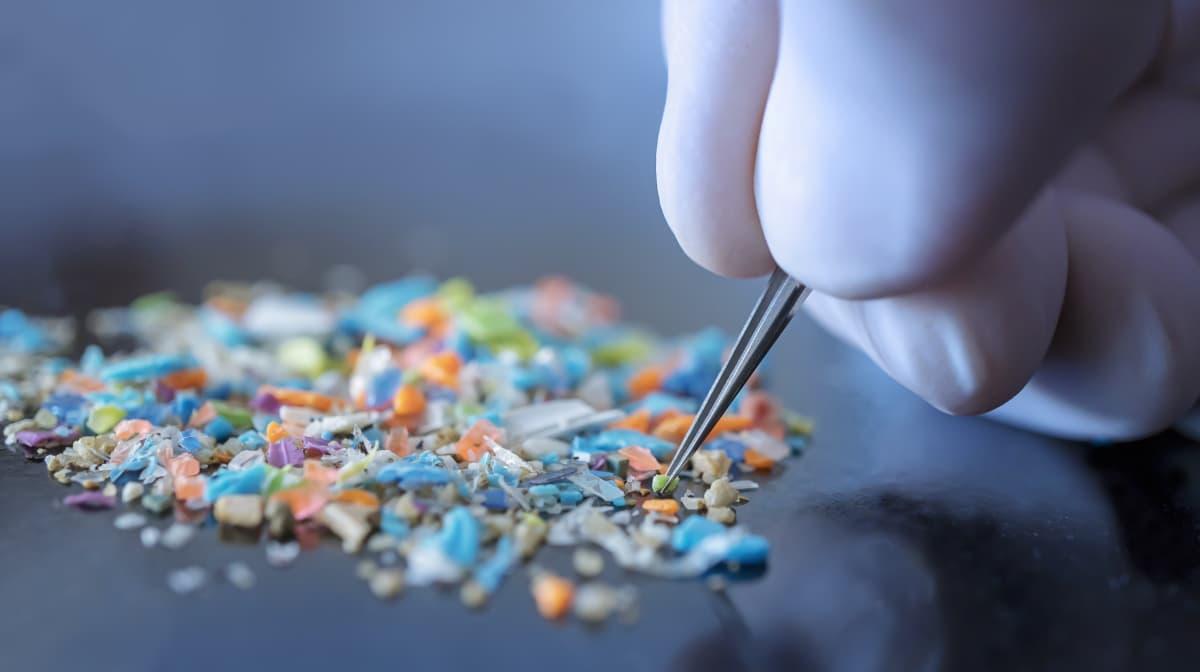
Macro shot of a person with medical gloves and tweezers inspecting a pile of microplastics.
Microscopic microplastics are just a few micrometers long, making them invisible to the naked eye. The tiny particles are released when larger plastics break down and can easily camouflage in the environment. You may have inhaled or consumed thousands of microplastics so far, unbeknownst to their impact. Study co-author Xiangyu Liu revealed it is difficult to determine the amount of microplastics unknowingly consumed, which stays within the body, and for how long. So far, there has been no accurate measurement of the number of tiny microplastics present in human tissues. That’s not the only limitation of these tiny, harmful materials. Its impact on human health in the long term, although explored, is still being pieced together by scientists.
While more thorough research awaits, humans can be cautious, leveraging the information that’s already out there. Thanks to the recent study, it’s confirmed that consuming hot beverages in plastic cups must be avoided as the warm temperature triggers microplastic production. For the experiment, the research team started by meta-analysis of 30 peer-reviewed studies to observe any common pattern, and indeed, there was one. The researchers noticed the behavior of common plastics such as polyethylene and polypropylene and found that temperature was a common factor affecting the changes. To put it simply, the warmer the beverage inside your plastic cup, the more microplastics are produced.
A woman sitting down holding a cup of takeout coffee while travelling.
In the reports they observed, the microplastic releases ranged from a few hundred particles to 8 million particles per liter. Besides temperature, the quality of the plastic is also a factor affecting the contamination. Ever left your hot beverage on a table, forgetting to consume it until hours later? Evidently, that does not make much of a difference. It would be easy to presume that the longer a beverage sits in a cup, the more contamination there will be. However, according to Liu, the “soaking time” is not a consistent driver behind microplastic release. It is the initial hot temperature that gets the action started and continues regardless of how long the beverage remains in the cup.
The researchers also sampled 400 plastic cups divided into 2 different types: polyethylene cups and plastic-lined paper cups. After testing them under two different temperatures, colder and hotter. The result showed that the material of a cup is a major determinant of microplastic contamination. The plastic-lined paper cups were observed to have less release compared to the polyethylene cups. This experiment further confirmed that high temperatures affect the release of microplastics. For both types of cups, researchers observed a 33% increase in contamination once they switched the temperature from cold to hot.