
Greenland's Prudhoe Dome Melted 7,000 Years Ago — Experts Warn History Could Repeat Soon
Published Jan. 6 2026, 8:35 a.m. ET

GreenDrill team members at Prudhoe Dome, a key ice cap part of the Greenland Ice Sheet.
The temperatures of the Holocene period had completely melted Greenland's Prudhoe Dome ice cap about 7,000 years ago, earlier than previously assumed. Now, a recent study, published in Nature Geoscience, shows that the nightmare might recur in the future. The University at Buffalo co-led a project, GreenDrill, which marked its first study milestone with the recent findings. Jason Briner, professor and associate chair of the Department of Earth Sciences in the UB College of Arts and Sciences, led the project with Joerg Schaefer, research professor at Columbia University’s Lamont-Doherty Earth Observatory. The researchers emphasize that there isn't much time before the deteriorating climate conditions and high atmospheric temperatures melt the ice dome again.
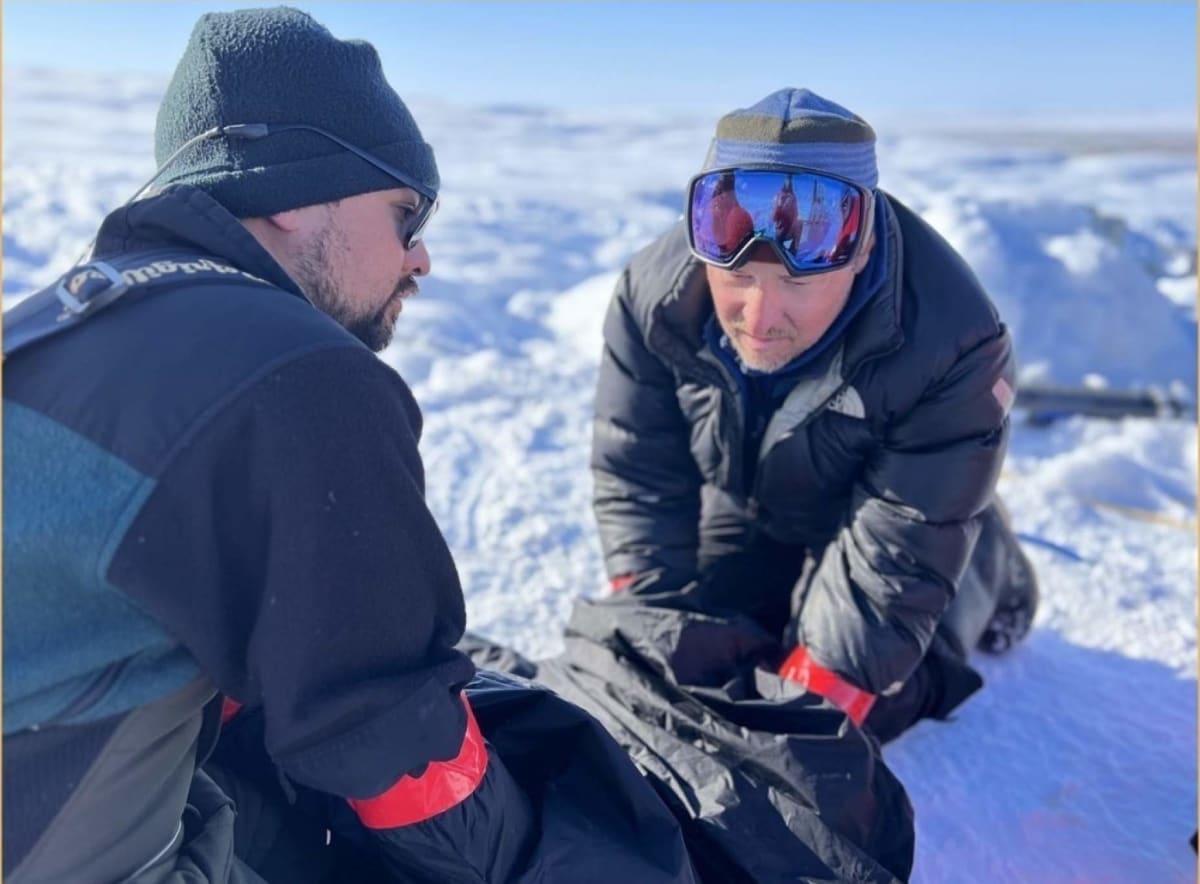
Caleb Walcott-George and Jason Briner prep equipment at the campsite near the edge of Prudhoe Dome.
When the first ice melt of the Prudhoe Dome occurred in the Holocene period, the Earth's climate was relatively stable and mild. It supported farm practices introduced by humans and thus began the formative years of civilization. If a slight disturbance in a relatively stable and balanced atmosphere could cause the ice melt, then today's industrial activity makes the destruction inevitable.
"So for natural, mild climate change of that era to have melted Prudhoe Dome and kept it retreated for potentially thousands of years, it may only be a matter of time before it begins peeling back again from today’s human-induced climate change," Briner said in a statement. Through project GreenDrill—funded by the U.S. National Science Foundation—researchers drilled the Greenland Ice Sheet to collect materials for further study.
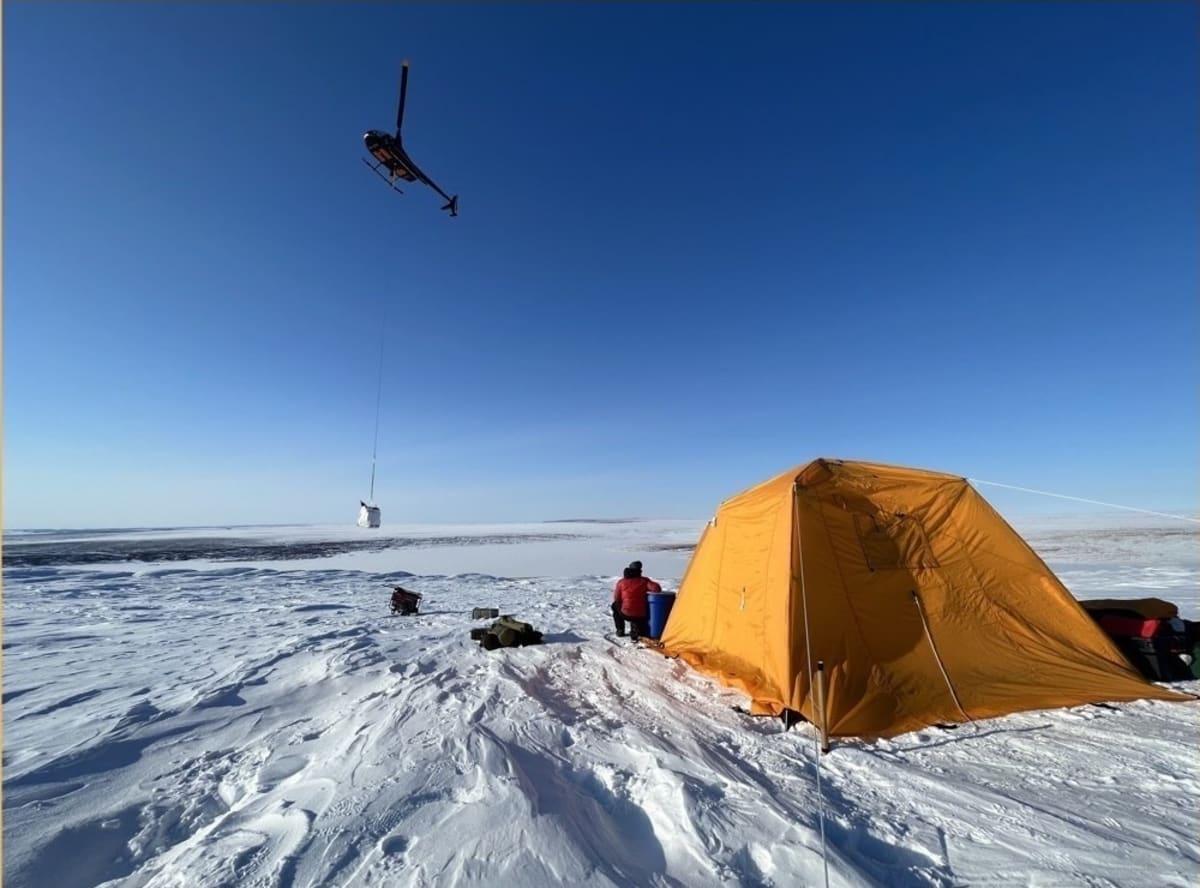
The GreenDrill camp near the edge of Prudhoe Dome on the Greenland Ice Sheet.
In its first-ever plan of action in 2023, researchers drilled more than 1,669 feet below the surface of the ice sheet to retrieve the frozen, ancient bedrock and sediment. The excavation happened during their weeks-long encampment at the summit of Prudhoe Dome. The retrieved sediments underwent a process known as luminescence dating. The electrons trapped inside the mineral grains of the sediments produce a glow when exposed to sunlight, which scientists measured to track the ice sheet's previous interactions with light. The glow intensity is what helped the scientists confirm that the sediments present deep beneath the ice sheet were exposed to sunlight about 6,000 to 8,200 years ago, implying that the ice cap had completely melted during that time.
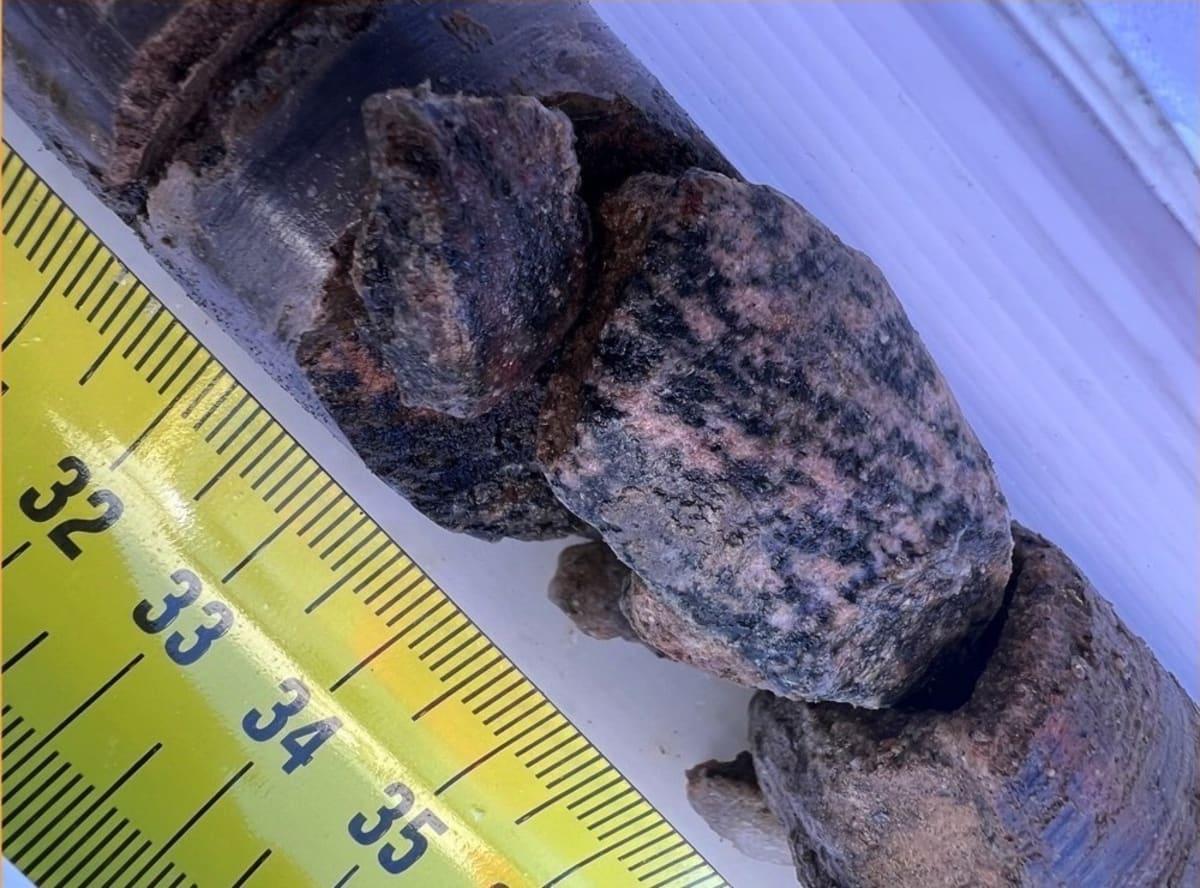
A core of bedrock and sediment pulled up from 300 feet below the Greenland Ice Sheet near the edge of Prudhoe Dome.
“This means Prudhoe Dome melted sometime before this period, likely during the early Holocene, when temperatures were around 3 to 5 degrees Celsius warmer than they are today," said study lead author Caleb Walcott-George. "Some projections indicate we could reach those levels of warming at Prudhoe Dome by the year 2100,” the assistant professor at the University of Kentucky added. If the projects turn out to be accurate, the ice cap will drastically melt in 2100, causing a concerning rise in the sea level. The edges of the ice sheet can help determine which coastal areas will be first affected by the sea level rise.
“Rock and sediment from below the ice sheet tell us directly which of the ice sheet’s margins are the most vulnerable, which is critical for accurate local sea level predictions," said Schaefer. "This new science field delivers this information via direct observations and is a game-changer in terms of predicting ice-melt,” he added. Even though the excavation project was high-stakes and adventurous, researchers believe that this is just the initial phase of their big plans for the future. "We have very reliable, numerical models that can predict the rate of melting, but we also want real, observational data points that can tell us indisputably that X amount of warming in the past led to X amount of ice being gone," Briner said.