
A Hidden Life Form is Turning Greenland’s Ice Dark and Melting It Faster
Published Feb. 2 2026, 4:35 a.m. ET

Researcher taking samples of algae spread in dark patches across the Greenland Ice Sheet.
Something eerie is growing across Greenland's icy landscape, raising dangers for the future. As if threats of climate change deteriorating ice weren't enough, new studies have identified a hidden catalyst: algae blooms. The ice melts caused by warming temperatures are getting a boost due to the widespread occurrence of algal blooms. According to a study published in Environmental Science & Technology, Greenland loses billions of tons of ice each year, exposing the rocky surfaces underneath. The phosphorus-rich dust from these rocks is transported through strong winds to the ice-covered lands, where it feeds the microscopic algae. The phosphorus-laden dust, as well as other trapped nutrients released from ice melt, provides algae with sufficient food to grow. However, this widespread algae is no less than an outbreak that could gradually eat away at Greenland.
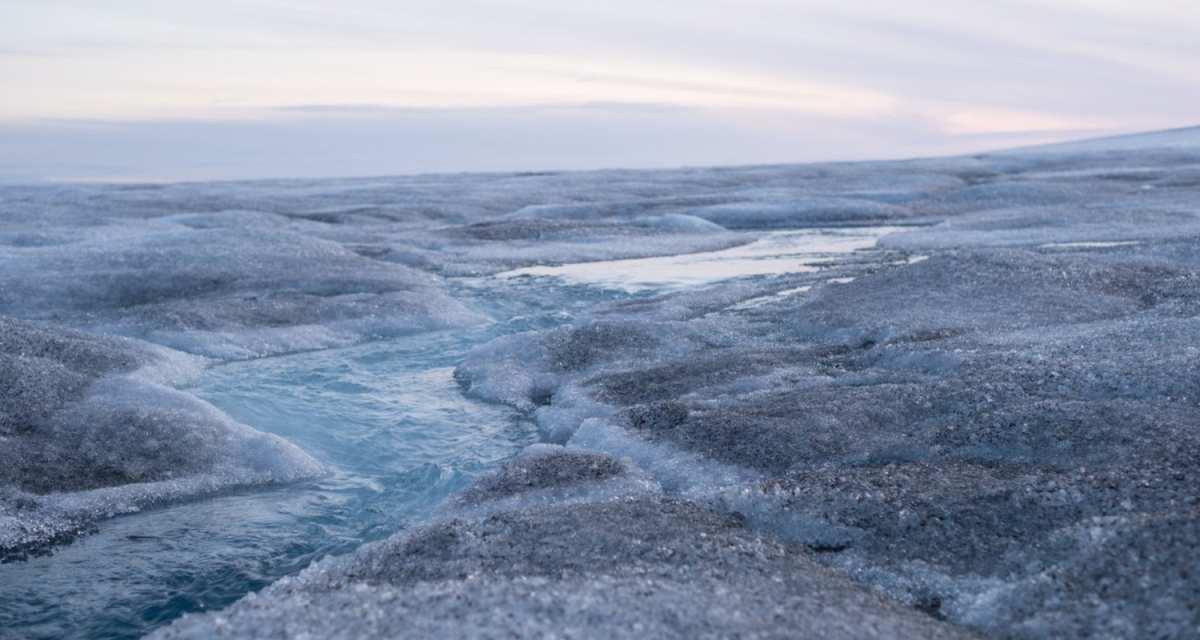
Brownish-grey patches of ice caused by algal blooms.
These unruly algal blooms are seen as patches across the icy landscape. The more they spread, the more they block the ice sheet's ability to reflect sunlight. In the aftermath, the surface absorbs sunlight, further increasing the melting of ice. So, if rising atmospheric and ocean temperatures are causing the large-scale meltdown of Greenland's ice, these algal blooms are accelerating the process. The threshold for the entire landscape to melt away is lower due to these dark, brownish-gray patches on the snow. When the surface ice melts increase, the nutrients trapped in ice and hidden in the dust particles escalate further. In simple words, the landscape is stuck in a vicious cycle, inching closer and closer to inevitable surface ice melt.
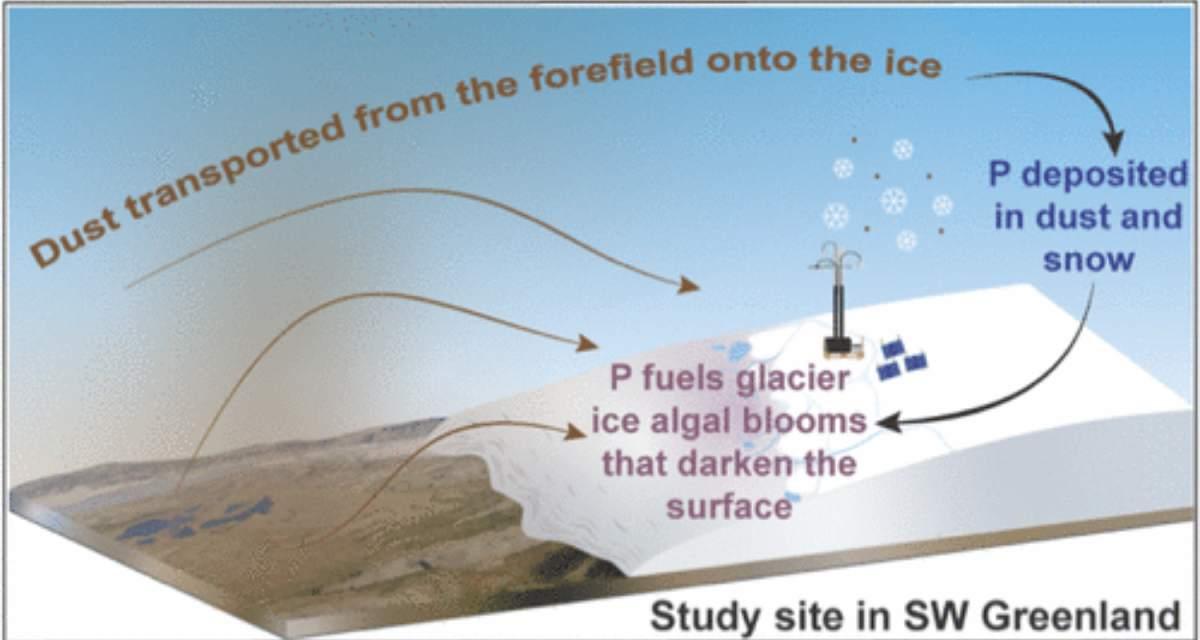
The image shows dust being transported onto Greenland's ice.
Then comes the additional risk of Greenland's ice melt: its contribution to sea level rise, which eventually poses a risk to coastal areas and their residents. Dr. Jenine McCutcheon, a professor of geomicrobiology at the University of Waterloo, and her collaborators studied the composition of the mineral dust they discovered on ice to trace its origin and the variety of nutrients present within. “The mineral dust we tested had the same composition as rocks from nearby Greenlandic sources and also contained phosphorus that, when spread across ice surfaces, can fuel the growth of pigmented glacier algae,” McCutcheon said. “The amount of phosphorus delivered in the dust each year is enough to support large populations of glacier algae, which is what we see documented in the region," she added. To understand how the algae spreads across the ice, the researchers collected aerosol samples containing airborne snow and ice algae from the site.
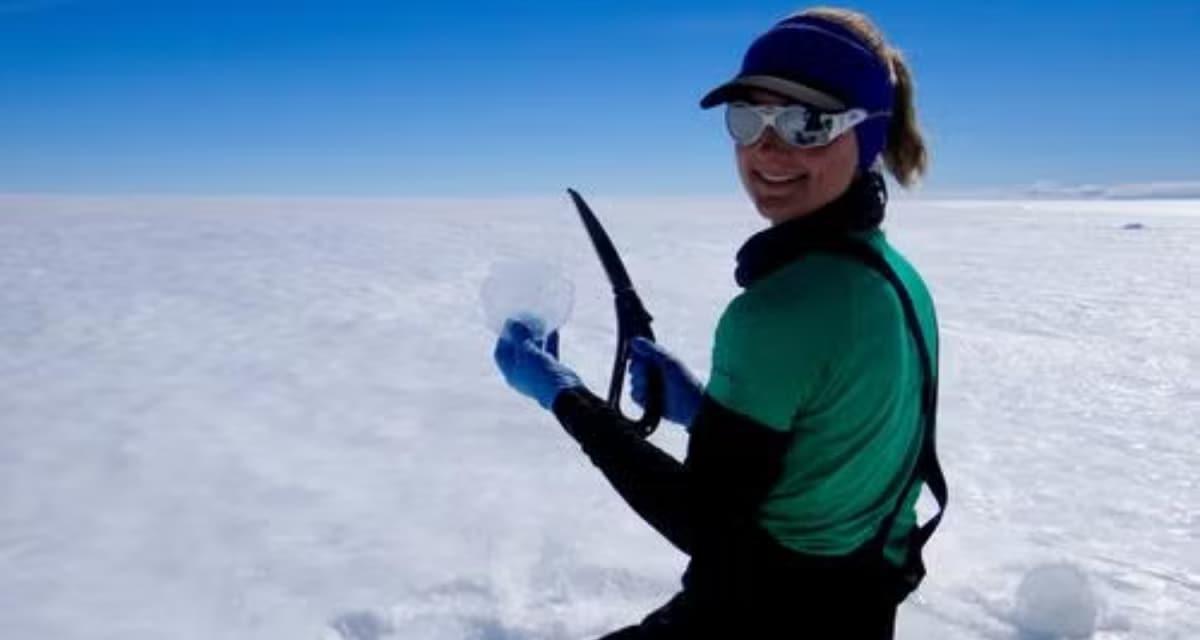
Dr. Jenine McCutcheon samples an ice core in Greenland.
That's how they determined that wind drove this mineral-rich dust to land on the ice. This transportation allowed the microbes to grow on new snow and ice surfaces and facilitated the formation of new algal communities. “While we were in Greenland studying the airborne dust, we were also sampling soot being deposited out of the air, the researcher revealed. “We want to better understand its role in darkening the ice surface, especially as events like forest fires are becoming more frequent," she added. In Dr. McCutcheon’s 2021 research, she had singled out phosphorus-rich dust as the reason for the algal blooms. However, her recent study also took other nutrients under consideration that likely emerged from the exposed ground around the edge of Greenland, blown inland by the wind. Moreover, the recent study determined wind as a contributing factor, providing researchers with clues about how these algal blooms colonize new patches of ice.