
Iceland May Turn Into a 'Giant Glacier' if Climate Change Derails Ocean Circulation, Meteorology Director Warns
Published Feb. 12 2026, 6:38 a.m. ET

Melting ice from Svinafellsjokull glacier floats in a lake of meltwater as the glacier, a portion of it blackened by volcanic rock and dust, looms behind, near Svinafell, Iceland.
It's paradoxical how warming temperatures will leave Iceland in a state of deep freeze. But that's exactly why it's a huge concern among scientists and Icelanders alike. The warm ocean currents flowing from the tropics warm some parts of Europe, but if the flow is disrupted by climate change, northern Europe, especially Iceland, will grow colder. Scientists believe that the Atlantic Meridional Overturning Circulation (AMOC) is vulnerable to breakdown, and as a result, Iceland will plunge into winters as cold as -50°F (-45.5°C).
“At that point, Iceland would be one giant glacier,” said Hildigunnur Thorsteinsson, the director general of the Icelandic Meteorological Office, as per The Washington Post. The damage to AMOC flow will bring sea ice around Iceland for the first time since the Viking settlement.
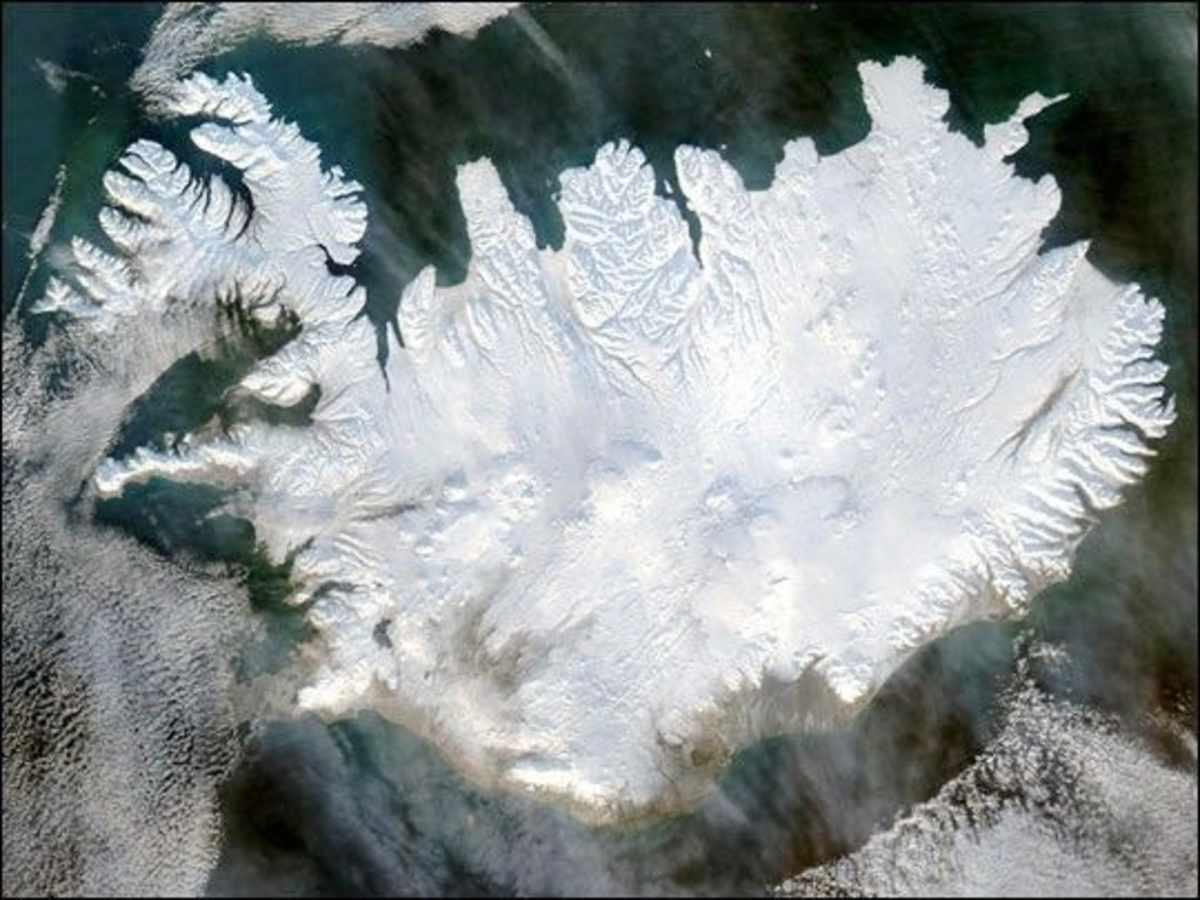
Iceland is shown here covered in a white blanket of ice and snow. Low layers of clouds float over the Greenland Sea (left) and the Atlantic Ocean (bottom).
According to NOAA, the Atlantic Meridional Overturning Circulation is an ocean system and part of the "global conveyor belt" that circulates warm waters from the tropics to the poles, like the Gulf Stream in the North Atlantic, where the water cools and forms sea ice. The cooled water then flows southward through deep ocean currents, completing a long cycle within the Atlantic Ocean. However, scientists have observed that the process has weakened over the years. If AMOC were to slow down drastically or halt entirely, the global heat distribution and climate could be severely affected.
The U.N. Intergovernmental Panel on Climate Change, during one of its climate research assessments, had claimed that the collapse of AMOC before 2100 was "very unlikely." It's been five years since the declaration, and experts can't promise the same anymore. In a study published last year, a team of researchers used 9 different high global emission models to record the AMOC's response. Under each simulation, the ocean system slowed down and eventually collapsed. Even if the Paris climate agreement goals are met, there would still be a 25% chance of collapse, a concerning probability. Stefan Rahmstorf, an oceanographer at Germany’s Potsdam Institute for Climate Impact Research who was part of the study, thought this was a "scary" development. “It was wrong to assume this was low probability," he added. Rahmstorf has become a prominent figure in voicing the threats of AMOC collapse. In 2024, he crafted an open letter signed by 43 other researchers to bring the Nordic government's attention to the “catastrophic” consequences of collapse while highlighting that the issue was highly "underestimated."
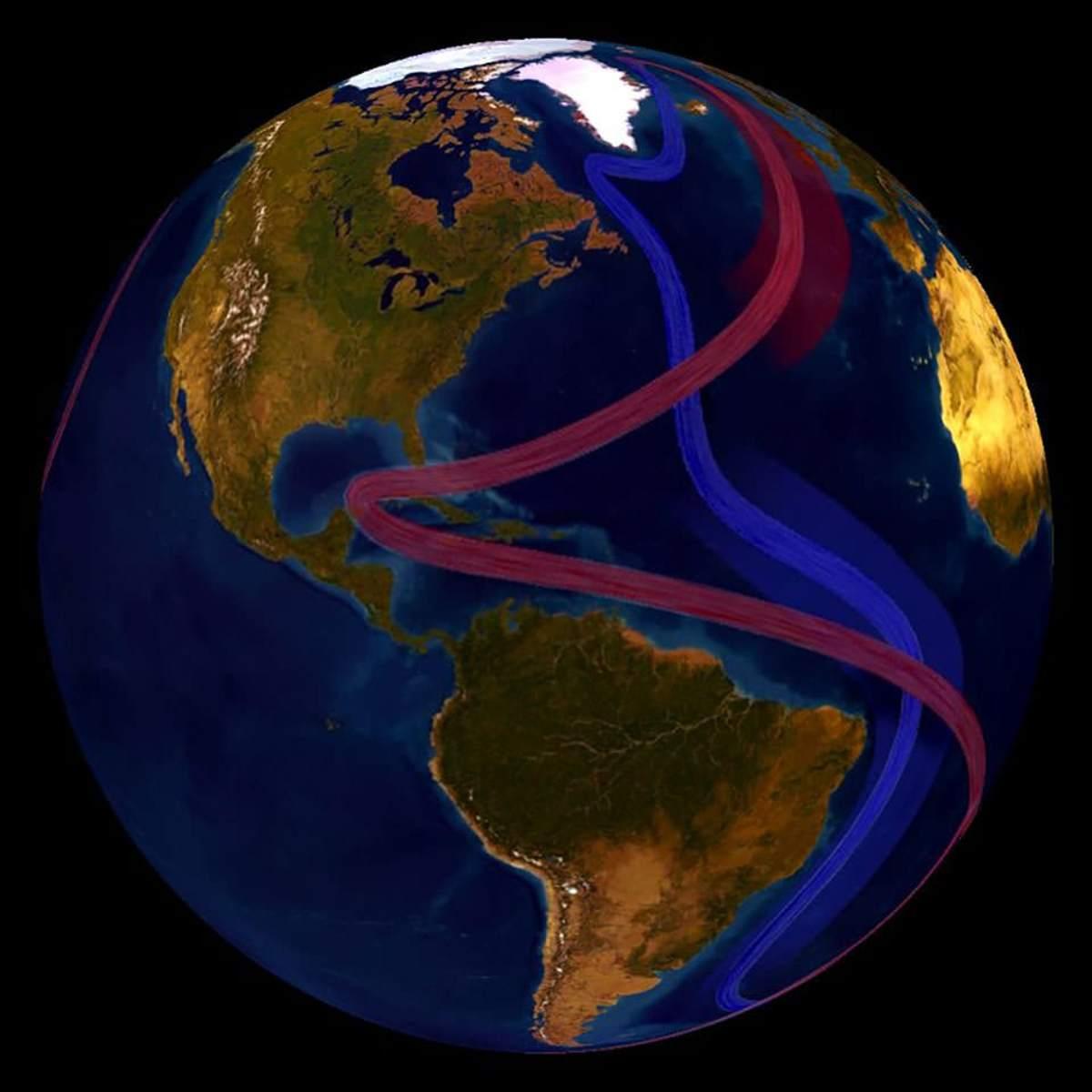
The global conveyor belt, shown in part here, circulates cool subsurface water and warm surface water throughout the world. The Atlantic Meridional Overturning Circulation (AMOC) is part of this complex system of global ocean currents.
Iceland's decision to incorporate AMOC risks into the strategy for dealing with hazards has given some solace to the scientists and conservationists. The plan, which is set to be finalized by 2028, will help Icelandic authorities determine their next step. Researchers believe that even the smallest effort at a moment of crisis can behemoth. It's better than waiting for the perfect solution to arrive, as it might be too late. “In the case of AMOC, once you know it is collapsing, it is probably too late. You don’t wait for your science to be exact," said Halldór Björnsson, the Icelandic Met Office’s leader for weather and climate research. The shutdown of AMOC will not simply leave Iceland frozen but also affect other parts of the world. It could disrupt heavy monsoons in West Africa and South Asia, shrink the global food supply, and trigger extreme weather disasters.
“You’re talking about a reasonable worst-case scenario of global tumult, driven by countries with large populations pushed out of the climate regime they were used to,” said Laurie Laybourn. “It's a recipe for serious and persistent global destabilization," he added.