
This Alaskan National Park's Rivers Are Turning a Mysterious Orange — and Scientists Are Alarmed
Published Jan. 30 2026, 4:24 a.m. ET

An aerial view of the rust-colored Kutuk River in Gates of the Arctic National Park in Alaska.
Climate change's devious impact has crept into Alaska's Gates of the Arctic National Park. It can specifically be noted in the Salmon River, a 70-mile stream flowing through the national park. The once clear waters of the river have now turned orange. This change was noted back in 2019, and now around 200 streams running across the Brooks Range in the facility have followed the same trend. This network of orange streams is possibly a consequence of permafrost thawing, a direct effect of climate change, which is impacting the entire ecosystem. The United States Geological Survey (USGS) claims that the thawing brings iron-bearing minerals out in the open, which were previously frozen. The interaction of these minerals with water bodies eventually causes the color change.
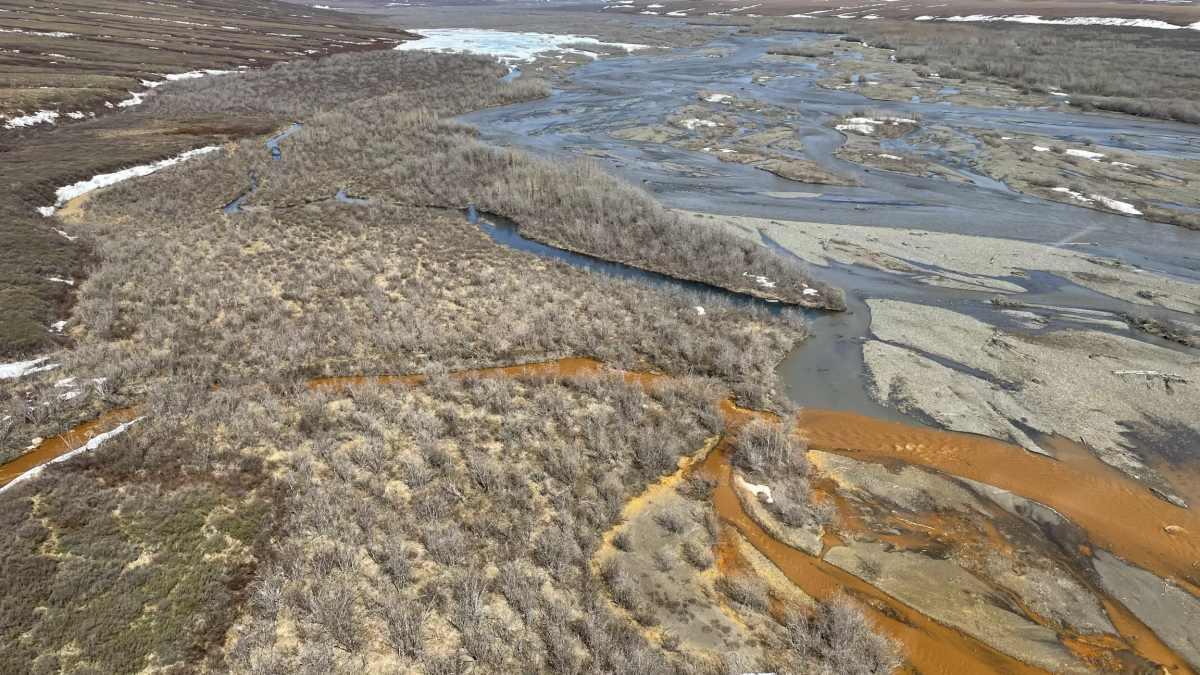
Orange streams are increasingly common in the Brooks Range of northern Alaska.
The iron minerals interact with the water bodies when they flood into the watershed, according to the Natural Resources Defense Council (NRDC). Along with an uptick in the quantity of iron minerals, experts have also detected an increase in the levels of copper and zinc. All this elevation is incredibly dangerous for the surrounding wildlife and human population. Initially, experts couldn't figure out why all these toxic changes were occurring in the water bodies. Humans, despite residing in Arctic Alaska for around 11,000 years, have not changed the area's wild identity. Therefore, connecting the contamination of these water bodies with human actions was a difficult pursuit.
Experts have been investigating the waters since first noting the color change in 2019. In the summer of 2022, they gathered water samples from the Brooks Range. It was the analysis of these samples that cited permafrost thawing as the culprit. University of California experts also conducted an investigation, whose results they published in a 2024 study. “These startling scientific discoveries illustrate the complex, interconnected nature of polar ecosystems, where one harmful change sets off cascading impacts that are hard to even predict,” shared Laurie Geller, an atmospheric scientist in NRDC’s Science Office.
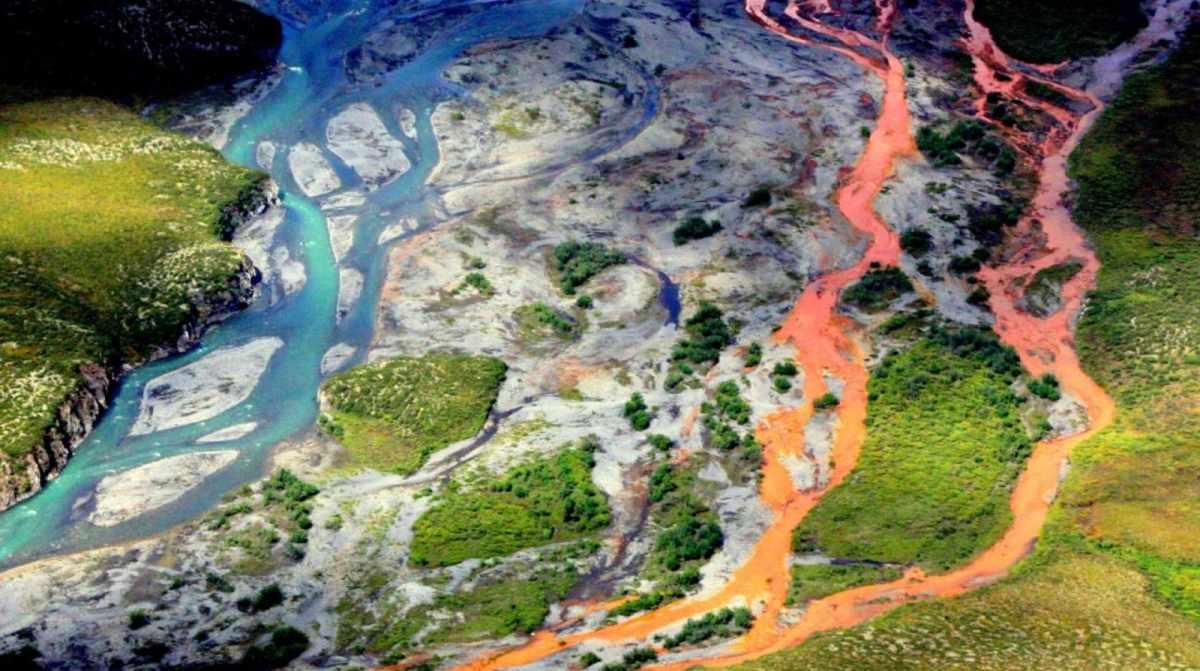
An aerial view of the rust-colored Kutuk River in Gates of the Arctic National Park in Alaska.
Permafrost is the frozen ground that separates the soil's active layer above it from the bedrock underneath. This barrier is primarily thawing because of upward trends in global warming. 2025 was reportedly the third-warmest year on record. A 2022 study claims that since 1979, the Arctic has heated up four times faster than the rest of the Earth. The accelerated thawing causes groundwater in the active layer to enter the bedrock and interact with long-isolated minerals. If these minerals turn out to be sulfide minerals like pyrite, then the interaction could lead to the formation of sulfuric acid. Sulfuric acid, in turn, takes away metals like iron, zinc, aluminum, and cadmium from surrounding rocks, which results in the creation of an acidic solution that eventually enters the streams.
Iron is separated from the acidic solution when they come face-to-face with basic stream water. This separation causes the water to rust and become orange after some time. The most astounding thing about this revelation has been that the phenomenon is taking place far away from the industries responsible for it. “These extremely remote areas—that have layers and layers of protection from development—are being indirectly degraded by fossil fuel combustion and rising atmospheric carbon dioxide concentrations,” ecologist Patrick Sullivan, who first noted the color change, shared.
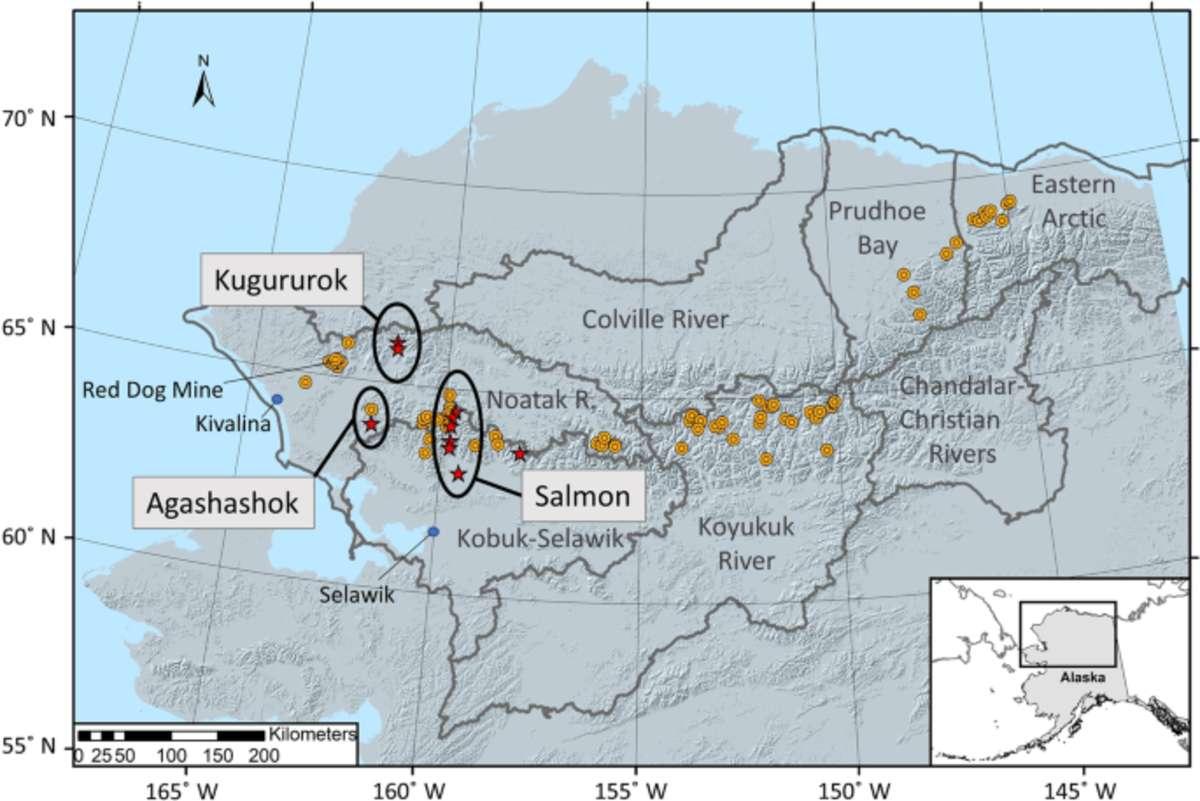
Map of orange stream observations across the Brooks Range in northern Alaska.
Apart from orange water, toxic metals were also detected in clear water. This finding has caused a lot of disruption in the Arctic ecosystem. The human population in the area directly depends on the fish from these streams and has received a considerable blow because of the water-rusting phenomenon. Fish species like Dolly Varden char and slimy sculpin also declined in numbers after the color change. The National Oceanic and Atmospheric Administration (NOAA) has urged officials to examine the water quality of these streams and determine whether they can be used as rural drinking water sources.
Once permafrost melts, there is no way to restore it. The only solution is prevention against further losses. Experts request that governments worldwide establish stricter environmental policies that will lower the current levels of contamination in Arctic rivers.