
Melting Ice Is Making the Arctic Louder Underwater, and Whales Are Struggling to Be Heard
Published Jan. 28 2026, 7:49 a.m. ET

Two beluga whales in Somerset Island, Canadian High Arctic
Deep within the shadowy abyss of an ocean, a baleen whale moans. A pod of humpbacks is busy communicating with clicking songs. One patch rumbles with the grunts and groans of seals, while the other is invaded by a whining sea lion. Insects buzz. The underwater world is a self-sustaining music theater rolling with uncanny echoes, bubbly whispers, and an eerie cacophony of natural sounds.
Over the years, humans have started remixing this cacophony with their own caterwaul—boats, machines, submarines, drills, and all those pump-studded gadgets. But as climate change provokes an aggressive melting of ice, these waters have opened up even more to these human vessels. The result: an overwhelming noise that is leaving underwater residents disturbed and their eardrums ruptured. In a study published in npj Acoustics, researchers documented the profound suffering these animals are going through. Whales, especially.
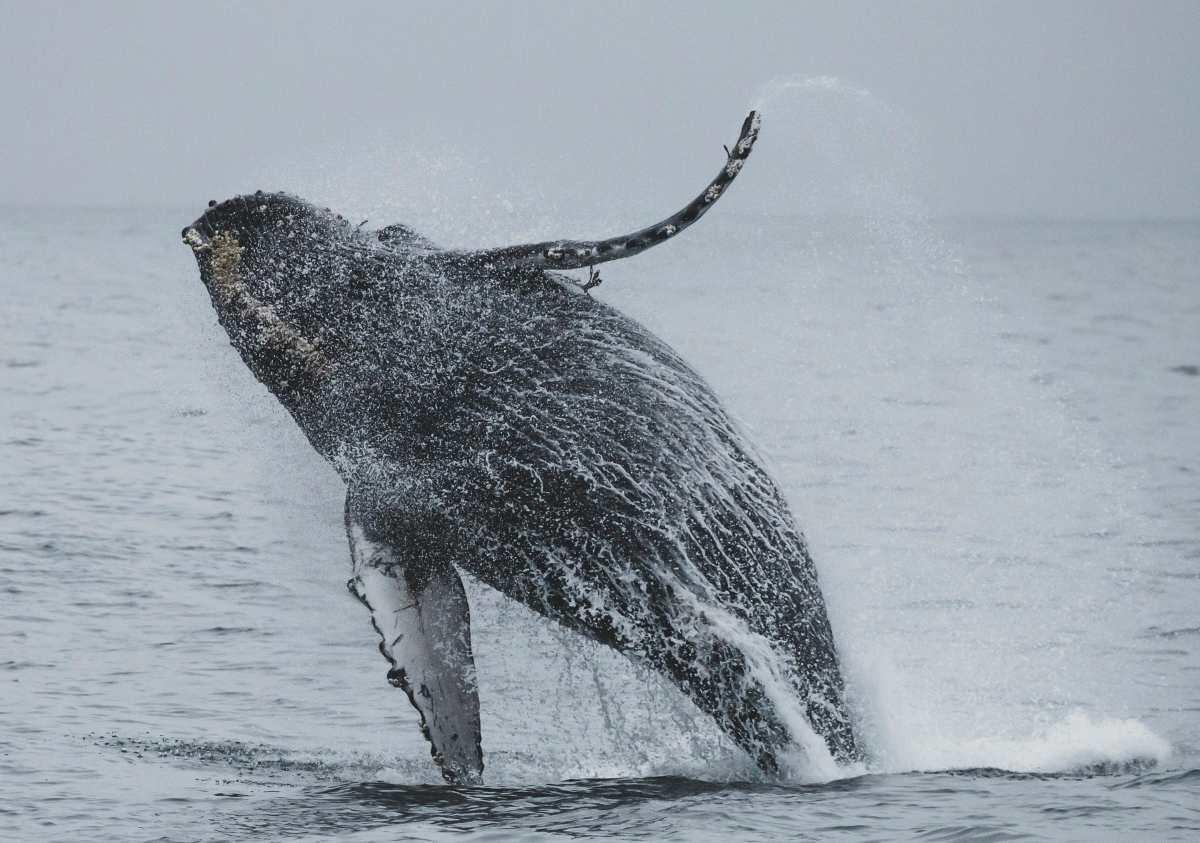
Humpback Whale Jumping over the Sea
Total silence is not the goal. A little bit of human chorus and technological medley is not a problem. The problem arises when this racket of manmade noise starts overpowering the natural sounds and suppressing the acoustic habitat these animals need to survive, feed, forage, mate, communicate, navigate, grow, and escape from predators. With changing seasonal patterns, however, the natural rhythm of the ocean is being layered with human-made sounds that travel for miles through the cold, northern waters, fracturing the underwater world with an intrusive noise that leaves whales petrified and anxious.
A research team from the University of Bath, led by Dr. Philippe Blondel, an expert in underwater acoustics, set out to investigate the frigid Arctic waters. The Arctic, Blondel said, is warming up three times faster than the global average. As it does, the ice blanketing its ridges, sheets, mountains, and glaciers is becoming destabilized. With each passing day, it is surrendering a little piece of itself to the neighboring rivers in the Northern Atlantic. Meanwhile, the Sun exploits the excuse of global warming to heat the ice even more. And despite being the royal polar palace of Earth, the Arctic is shedding itself in icy tears.
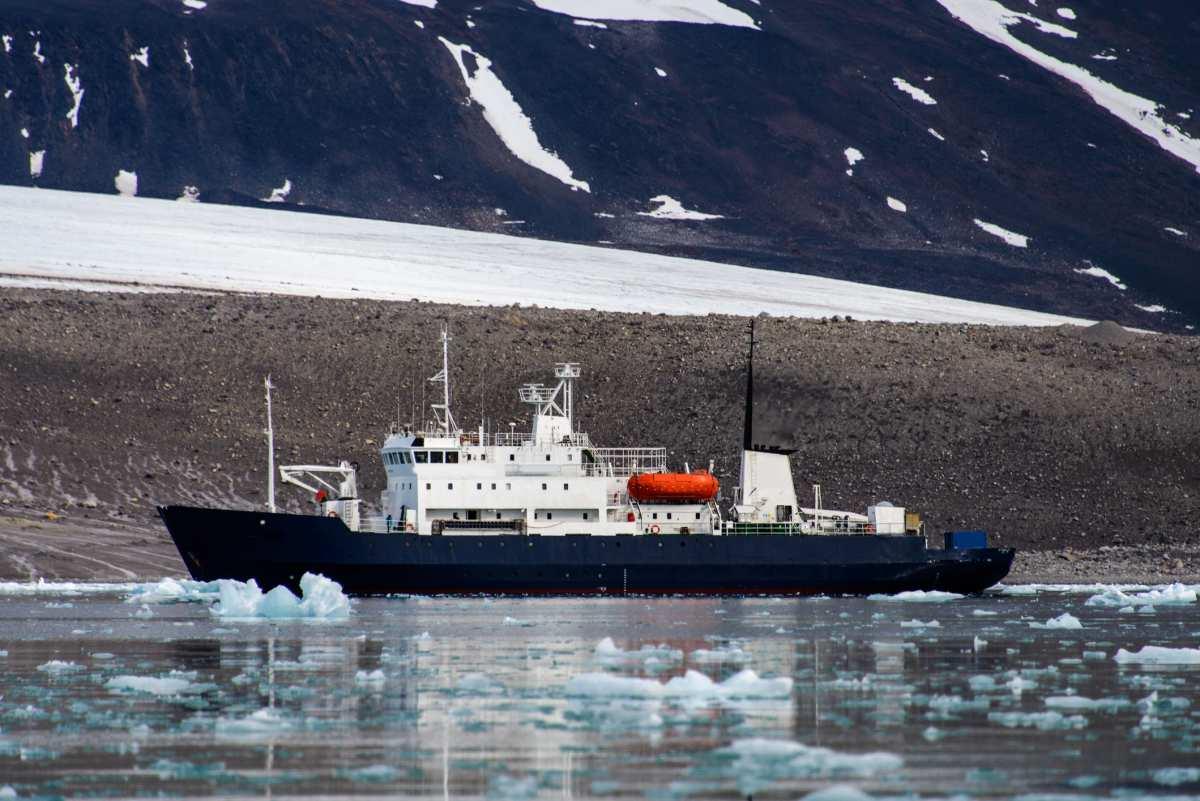
Expedition vessel in Arctic Sea
To make matters worse, the melting of all this ice flashes a green flag to humans who flock to the seas hauling their research vessels, pleasure crafts, speedboats, and cargo vessels, not to forget the fishing boats, oil tankers, and expedition cruises.
Underneath this fleet of vehicles, the wildlife secretly suffers. In the paper, researchers noted that shipping is the “largest source of anthropogenic sounds,” and this global shipping noise pollution is estimated to double every 11.5 years. A horde of resource exploration and industrial activities also adds to the trauma. Rowdy pipelines, rocket-sized drills, and tentacled jack-up rigs bustle into the underwater world, invading the serene sanctuary of the water-dwellers and also exerting geostrategic pressures on the ecosystem.
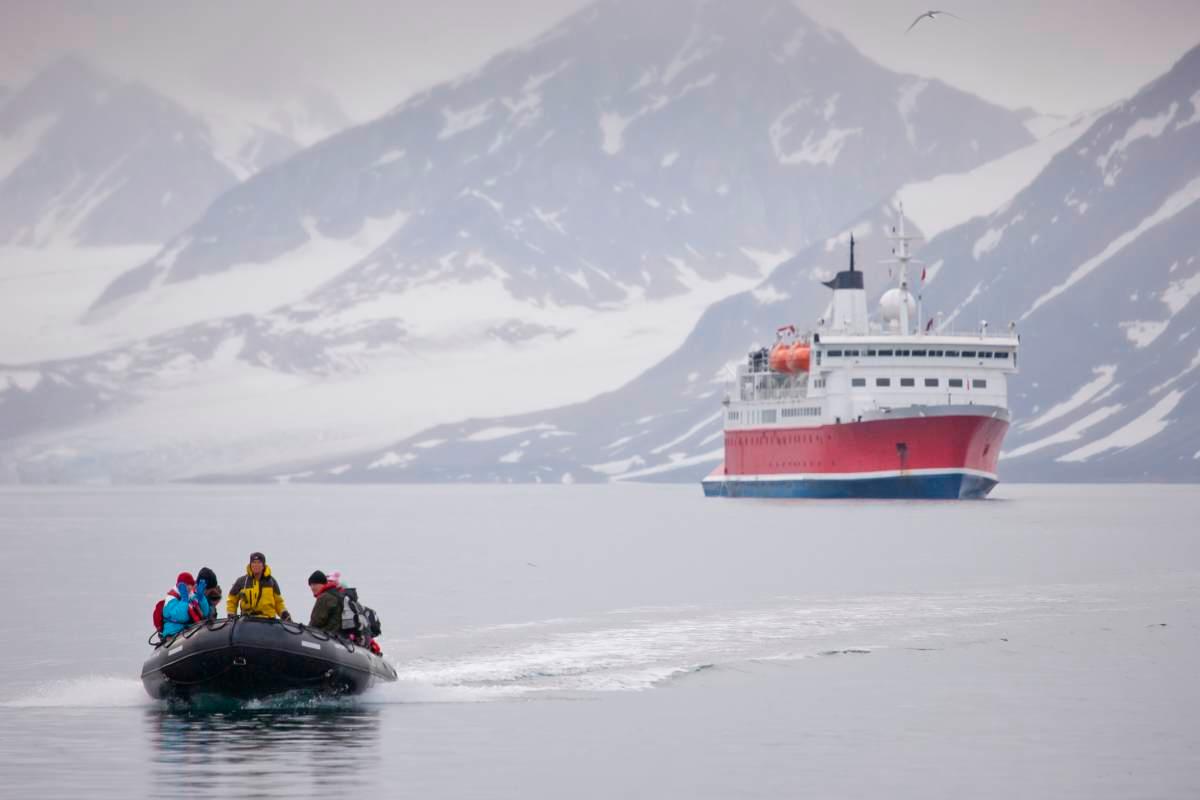
Tourists on Zodiacs heading toward Smeerenburg with a cruise ship, Spitsbergen, Svalbard, Norway.
Sadly, most of these sounds are elusive, and they are not detectable by satellites. That’s why scientists needed an alternative method. Blondel and his team benefited from the long-term measurements made by Ocean Networks Canada at their community observatory in Cambridge Bay in Nunavut. Over 10 years' worth of measurements were collected from Arctic Canada. Their most valuable tool remained low frequency 'shipping bands.' These bands record the greater him produced by human activities while dimming down the interference from natural non-applicable sounds like winds and waves. Lately, however, the bands are proving to be insufficient.
With the growing number of vehicles entering the waters, the bands no longer reflect the real map of human-caused noise or the Arctic’s changing acoustic environment. Researchers, therefore, are seeking help from international organizations and authorities responsible for setting, updating, and enforcing underwater noise regulations. This is a wake-up call, and it cannot be left unchecked.