
A Giant 'Cosmic Burger' May Be Cooking Up New Planets — And the Implications Are Huge
Published Jan. 14 2026, 8:26 a.m. ET

Enormous protoplantary disk, also called the cosmic hamburger rumbling with glowing gas, dust, and stars in a surreal photo captured by ALMA telscope in Chile
Nine hundred light-years away from Earth, a giant burger of glowing gas is about to offer a masterclass in planet formation. Nicknamed Gomez's Hamburger or GoHam, the gassy burger showed signs of pregnancy when scientists observed it using the powerful radio antennas of Atacama Large Millimeter/submillimeter Array (ALMA) in northern Chile. GoHam, one of the biggest protoplanetary disks ever recorded, is soon going to birth a planet, scientists informed in a press conference at the American Astronomical Society's annual meeting this January.
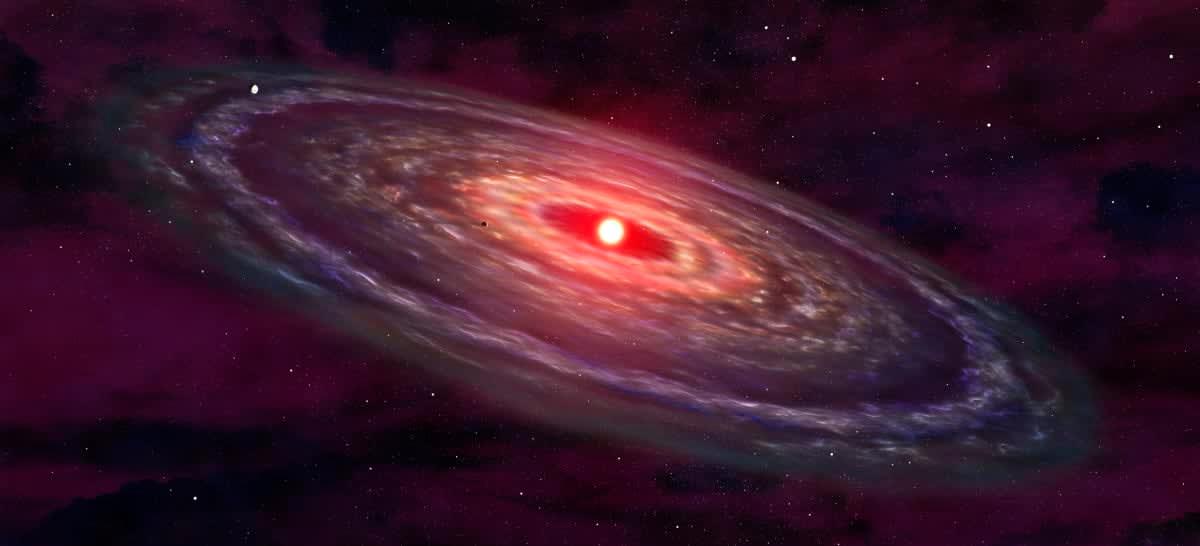
Protoplanetary disk, the cosmic birthplace of planets
Protoplanetary disks are the birthplaces of planets. Jumbo-sized clouds of gas swirling around a star form the ingredients of this disk, which, over time, form new planets. This cosmic hamburger is a humongous monster of dust and gas stretching to almost 1,000 astronomical units in radius and reaching vertical heights of several hundreds of astronomical units. The detailed perspective of ALMA's high-precision antennas enabled scientists to capture its geometry and movements down to the millimeter wavelengths. Unlike the perfectly sculpted buns that encapsulate the squishy patty in McDonalds’ Happy Meal, GoHam is not a perfect burger. The buns in it feature a lopsided north-south geometry, with one side appearing brighter and more extended. Vortices of gas whirl around, trapping solid particles to accumulate materials for future planet construction. Faint whirlpools of carbon monoxide wheeling around also suggest "photoevaporative winds," a celestial event in which the starlight gradually blows away the disk's outer gas, triggering conditions for planet formation.
ALMA provided an elaborate blueprint of the GoHam's structure, mapping how the gases and dust are arranged. They noticed several layers of gas and dust orbiting the central star. Two layers comprise carbon monoxide, while one layer bustles with sulfur-bearing molecules, each one occupying different heights above the disk's midplane. While the minuscule dust particles are concentrated in a thin layer near the midplane, the bubble of gaseous components extends far beyond the midplane.
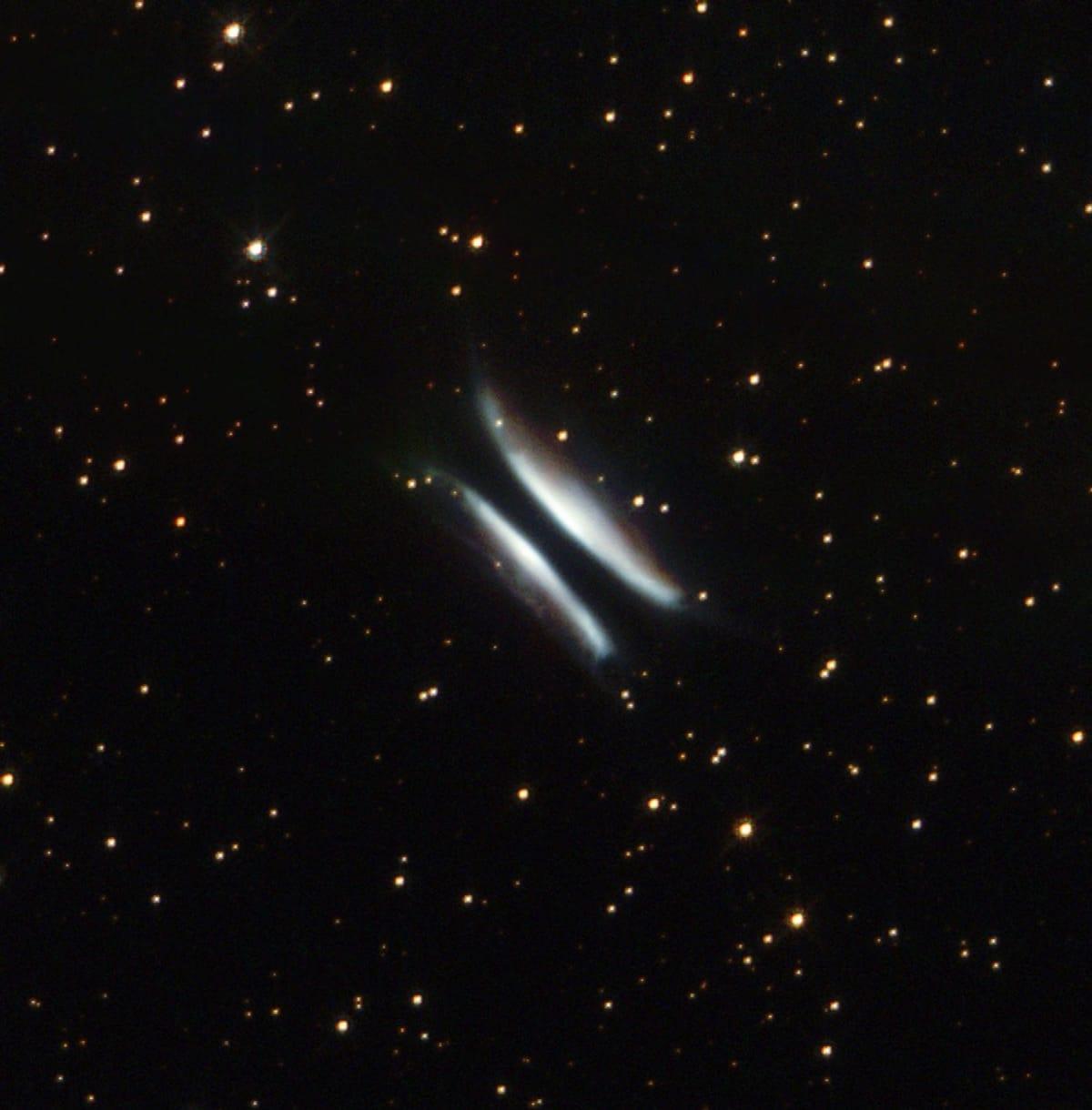
A photo of a protoplanetary disk called the interstellar hamburger captured by NASA's Hubble telescope
The press release also mentions the earliest phases when this glowing hamburger or the cosmic butterfly was first observed. At that time, scientists registered a one-sided arc of sulfur monoxide emissions located just outside the brighter dust region. This arc aligned with a dense clump they named GoHam b, a colossal bundle of gas collapsing under its own gravity.
Charles Law from the University of Virginia and lead investigator for this project said that with ALMA, they have received a "rare and clear view of the vertical and radial structure of a very large, nearly edge-on disk" of GoHam. This, he added, makes a benchmark system for testing detailed models of how protoplanetary disks evolve and form planets. Observing GoHam is like watching a science documentary that details the origin of how planets like Earth were first created and how they ended up circling their stars the way Earth circles the Sun.