
Death Valley Set to Witness Rare Once-in-a-Decade Superbloom After Record Rains
Published Jan. 16 2026, 6:51 a.m. ET

Desert Gold blooming in bright orange sunset in California's Death Valley National Park during a superbloom with blue mountain silhouettes in the backdrop
Death Valley National Park, just the name evokes visuals of a barren desert bespattered with skulls, dead plants, and fans of frozen dust that billow with ghoulish echoes. For most of the year, the park indeed justifies these visuals. But when springtime arrives, magic unfolds. Torrents of heavy summer rains plunk down, stimulating the dormant seeds sleeping in the soil. By the time the seeds are fully awake, autumn has arrived. With tender warmth, the autumn caresses these seeds, ultimately passing them over to the little rains of the monsoon.
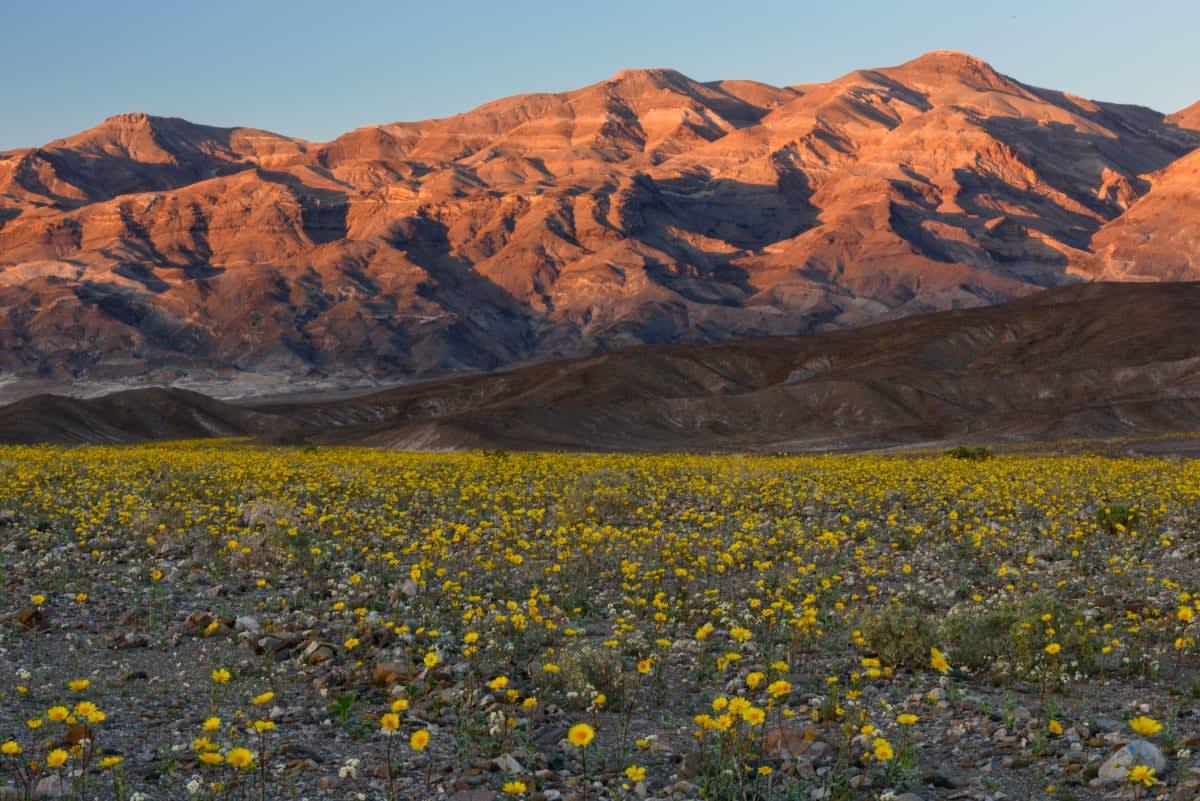
Desert Gold blooming at sunset in California's Death Valley National Park at sunset during 2016's superbloom
As rains touch down on the freshly-awakened seeds, they trigger a mass sprouting. And as spring knocks on the door, Death Valley turns into a dramatic pageant choreographed by pinks, purples, blues, yellows, and golds, something that officials call “superbloom.” A traveler visiting the park told the BBC that the display was so surreal it turned their car windshield into a movie screen.
Animated swaths of popcorn flowers loom from the southern parts of the park. In one patch, tangled clusters of Desert Golds dance in the Sunlight, stippling golden sparkle. Fragrant clusters of lavender-toned globe-shaped sand verbenas add life to the somber dunes, trapping their sand grains in their hairy stems. Dense concentrations of pink-and-yellow monkey flowers push themselves through the cracks in limestone rocks. With branches so thin that they appear invisible, the mottled white gravel ghost flowers look like eerie little ghosts flopping in the wind. Trucks and cars passing along Badwater Road invigorate the spires of colorful lupines in the grasslands on the sides. Being the hottest and driest place on Earth, Death Valley turns into something quite unlike itself.
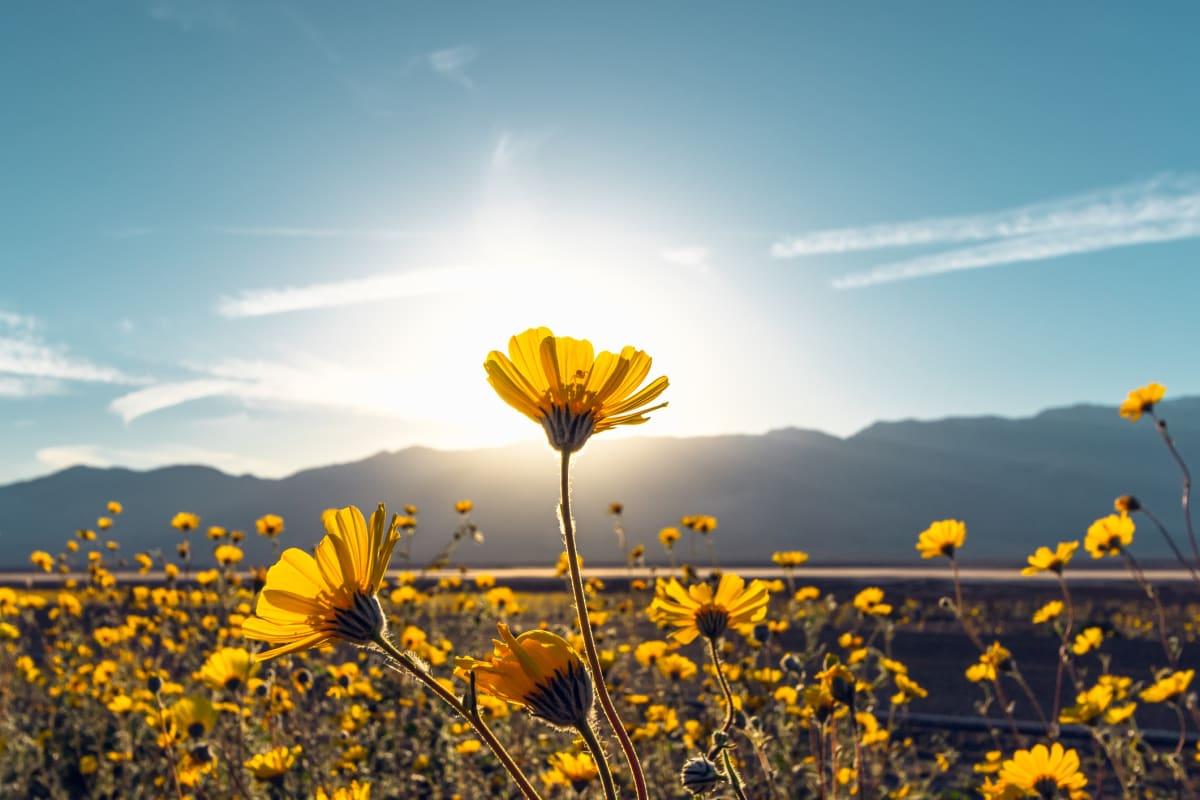
Desert Gold blooming at sunset in California's Death Valley National Park at sunset during 2016's superbloom
But as NPS notes, this sprouting of blooms happens only when conditions are just right. Otherwise, seeds remain dormant for most of the time. Only when they receive abundant rains followed by lots of warmth and then mild rains do they provoke the wildflower bloom. At the arrival of spring, pollinators like honeybees, hummingbirds, and butterflies flock to Death Valley, partying in the flowery aroma, sipping sweet nectar, and picking up blobs of pollen to deliver to other flowers.
2026, NPS mentioned, is expected to bring exceptional blooms, following heavy rains across Southern California in November 2025. By springtime this year, Death Valley will be awash in blankets of rainbow-colored blooms. The lower-elevation areas will exhibit the blooms instantly, while the higher-elevation areas will only showcase them between April and May. Experts anticipate that the bloom this year will last for several months, something that is rare and has occurred only in 1998, 2005, and 2016.
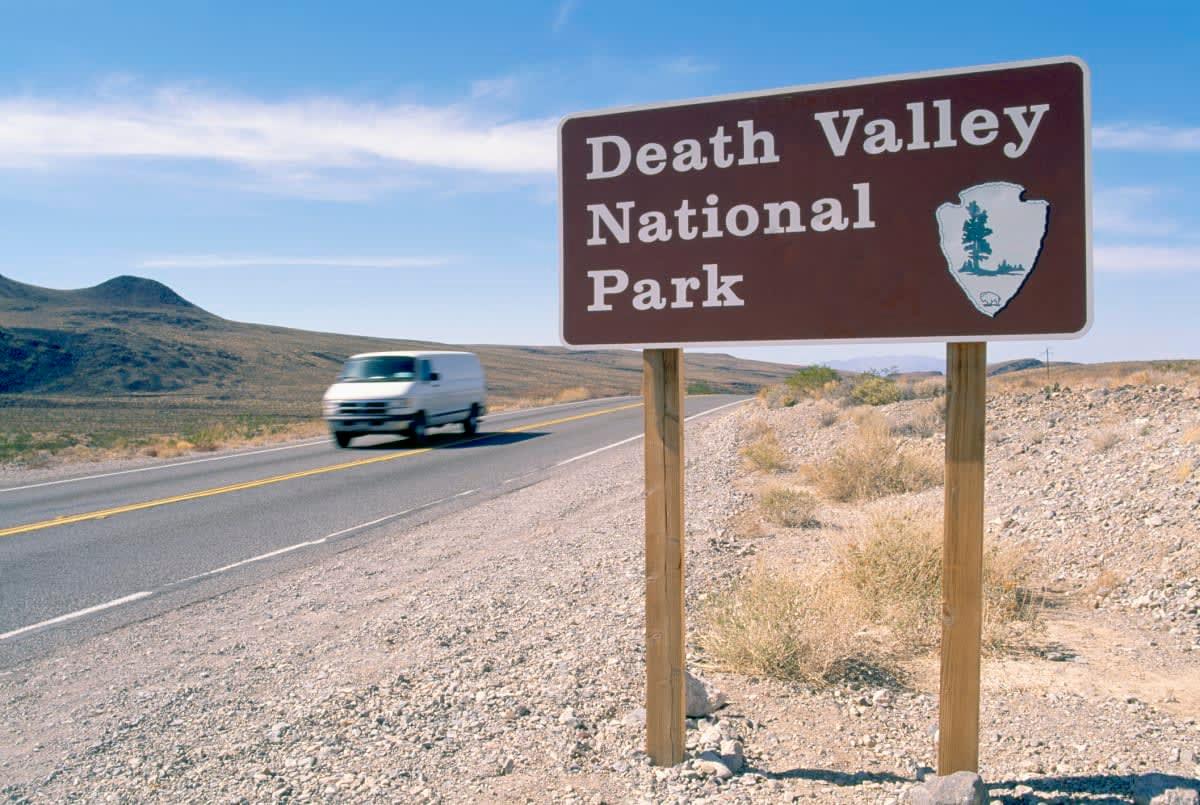
Death Valley National Park signboard standing in roadside sand and a truck passing by on the road
In the park’s January wildflower report, executive director David Blacker said that Death Valley is “poised for a better-than-average bloom, and with a little luck, it could even be better than that.” At this time, he said, there are no large areas of flowers blooming in the park, but there are preliminary signs of an above-average bloom. How long they last, only the weather will determine. “We need mild temps and mild winds,” he shared.
Since Death Valley already remains crowded with visitors, the superbloom offers an exciting opportunity for millions of people to witness something out-of-the-ordinary. NPS urges these visitors to interact with the new blooms with delicacy and caution, ensuring that they don’t trample them under their boots. Stepping into flower meadows wouldn’t be a good idea either, as they suppress the soil and starve flowers of water. Lastly, the flowers are meant to be beheld or to be captured in camera. Plucking them out to take them home is the last thing a true flower-lover would do.