
Western Monarch Butterflies Could Soon Disappear from California’s Coast
Published Jan. 20 2026, 9:35 a.m. ET

Monarch Butterfly on a Black Eyed-Susan Flower, pollinating using his proboscis
California's iconic Monarch butterflies have recently been showing a steep decline in population and wildlife experts are concerned about the long-term health of the planet, according to a tally report by the Xerces Society. Monarchs are some of the most dazzling species of pollinators out there. As they chart the azure skies, their colorful wingspans make them look like little angels with rippling curtains of stained glass. Fluttering their bright orange wings patterned with thick black veins and black dots, they cluster on the cypress, pine, and eucalyptus trees of the south, laying eggs in the milkweed. The toxins in milkweed coat their bodies, acting as a defense mechanism against predators. Most of them pupate in the milkweed bushes, but some are also observed in secluded locations like under thick brambles or under piles of sticks.
Every fall, while they migrate from north to south to spend the winter, the Xerces Society registers the count of butterflies and curates a report. Over the years, sadly, the count has shown a dramatic decline. In the 1980s, there were millions of them. By the winter of 2020, the count plunged to less than 2,000. The years 2021, 2022, and 2023 came as a surprise as the count restored to around 200,000. But then, in 2024, the graph tailed off as the count was recorded to less than 10,000.

Girl looking at a monarch butterfly in garden
Last year, the mid-season count was 9,119, the second-lowest winter numbers recorded since 1997. On December 3, 2025, the society estimated only 8,000. In conversation with SFGate, the society’s executive director, Scott Black, predicted that this year’s total count will be either “second or third lowest on record, unfortunately.”
Biologist Charis van der Heide regrettably said that, “There are just so few monarchs this year, and it’s really sad.” His hopes, he said, are latching on to the assumption that most insects have bouncy populations and therefore, there is a possibility for these butterflies to rebound as well. For Black, however, the possibility doesn’t carry too high a probability.
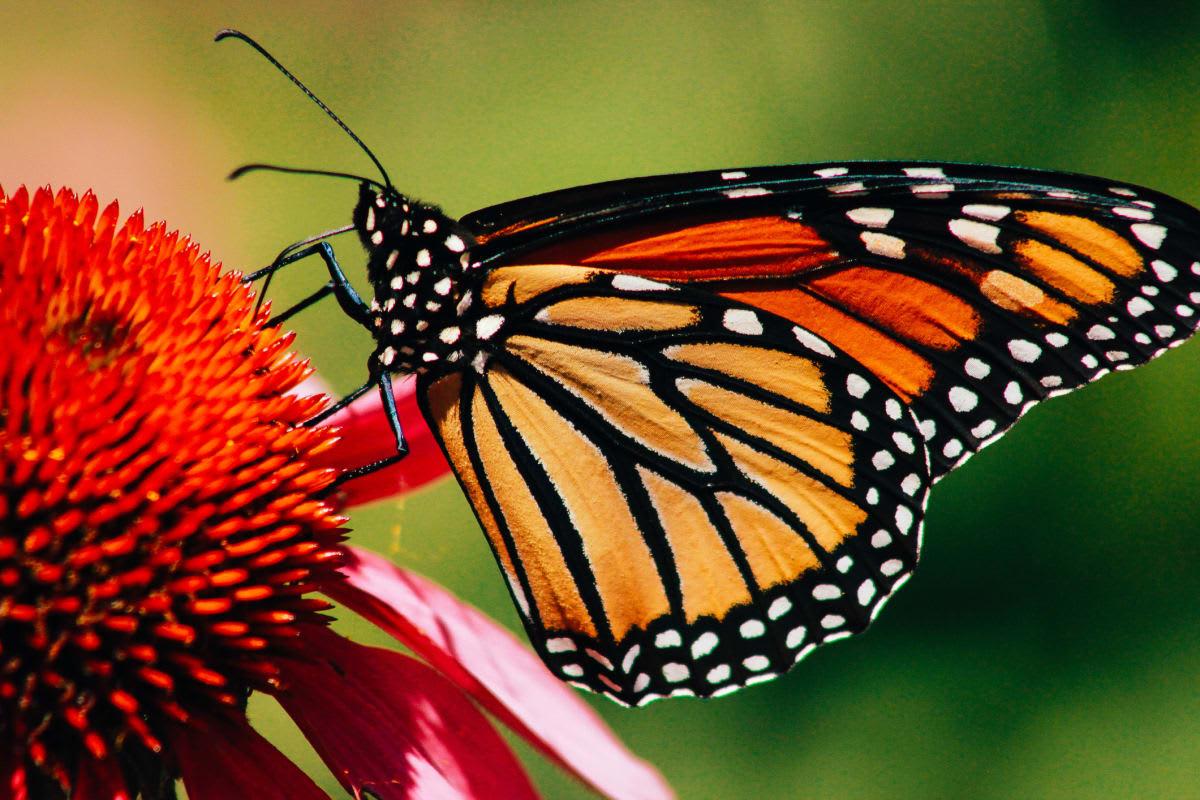
Monarch butterfly pollinating a red flower
As a child, Black was hunting fireflies in his childhood backyard in Omaha when he realized that he was fascinated with insects. In the current doom-and-gloom scenario, he is not very hopeful about the monarchs’ future when it comes to their resurgence. “It’s not like all of a sudden we’re going up to 100,000 monarchs, though that would be nice,” he said.
While the society is working to release the final count for the season by the end of January, California’s iconic butterflies continue to remain a canary in the coal mine. The only hope, Black sighed, is that people will come together for a crowdsourced monarch conservation. Otherwise, the future of this milkweed wanderer is already dipping in bleak shadows.