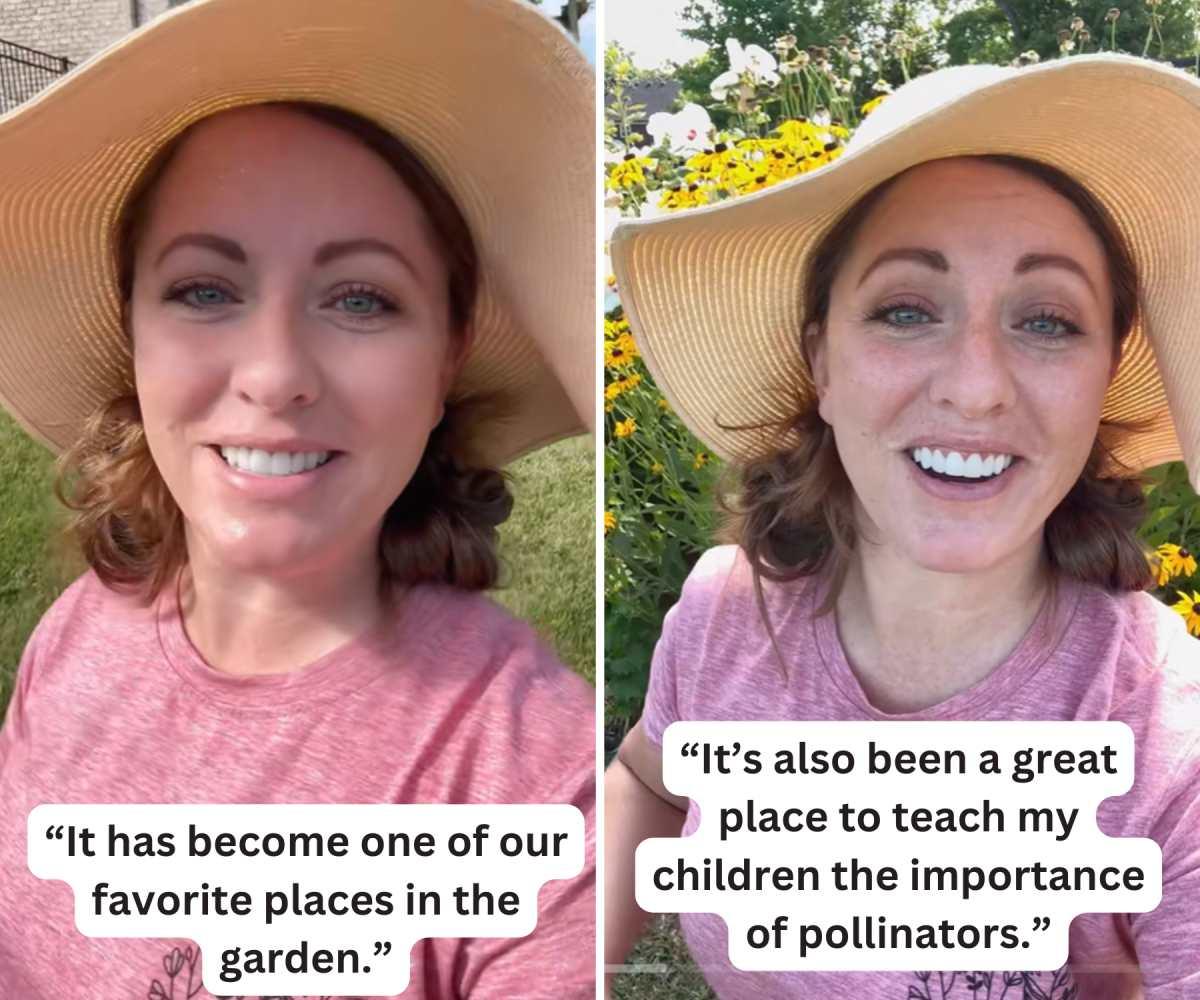
Like Jessica, today, dozens of gardeners are inspired to dedicate their garden spaces to plants and flowers that will help propagate the population of pollinators, which is on the verge of collapse. “It has become one of our favorite places in the garden. And bonus, because it’s encouraging so many pollinators. We’ve noticed a huge increase in the amount of fruits and vegetables we grow. It’s also been a great place to teach my children the importance of pollinators,” Jessica shared with the viewers.
As the name suggests, pollinators are insects and birds that transfer the pollen of the flowers for reproduction. In exchange for a few sips of delicious nectar, they offer their pollinating services to the flowers. @gisou, a honey-infused haircare providing company, shared how they do this with the example of a bee. “Pollination is when a bee helps the flower fertilize through the transfer of pollen. When a bee collects nectar and pollen from a flower, pollen from the stamen sticks to the hairs on her body. When she visits the next flower, the pollen is rubbed off onto the stigma,” the voiceover explained.
The illustration in this video was of a bee, but pollinators can be diverse, ranging from garden tiger moths to butterflies, bumblebees, honeybees, hoverflies, and hummingbirds. According to Better Homes & Gardens (BHG), these pollinators are essential for the reproduction of more than 75% of the world’s flowering plants and nearly 35% of the global food crops. “No pollinators, no flowers,” said @gisou.
With this in consideration, Hannah Dutcher (@hannahdutcher9801) purchased some super-cute flower-shaped pollinator cups from Amazon and embedded them in her raised garden bed like tiny stud earrings. Using a small plastic jug for pouring, she filled these cups with sugar water to attract pollinators.
However, plant expert Mary Phillips said gardeners should better skip keeping sugar water in pollinator cups, especially if the garden space is not very big in size, per BHG. Although pollinators like hummingbirds love sugar water, the alternative is to replace it with natural nectar sources, like nectar-oozing flowers. This way, both they and your garden will be happy. Otherwise, the sugar water may end up inviting unwanted pests like wasps, leatherjackets, yellow jackets, rodents, or ants.
In a video, BBC Gardeners World Magazine (@gardenersworldmag) posted the top three flowers that gardener Carol Klein loves to have in her garden for attracting pollinators. The first one is Astrantia, also known as Hattie’s pincushion or masterwort. “Most varieties are shade-loving and they are resistant to slugs and snails,” she shared while showing the footage of these purply blooms in the backdrop. The other two are “hardy geraniums” and “foxgloves.”
You can follow Hannah Dutcher (@hannahdutcher9801), Jessica (@fromdreamtoseed), Gardener's World Magazine (@gardenerworldmag), and @gisou on TikTok to watch more gardening videos.
Gardener Goes to Capture Their Magnolia’s First Bloom — Finds a Bumblebee Having a ‘Pollen Party’
Walmart Is Selling a Popular Flowering Plant That Helps Attract More Pollinators — And It's Just $27
Environmentalists Urge Bird Lovers to Set Up ‘Insect Hotels’ in Their Garden for One Key Reason