
These Walking Sharks Defy Biology’s Reproduction Rules, Scientists Reveal
Published Jan. 20 2026, 8:45 a.m. ET

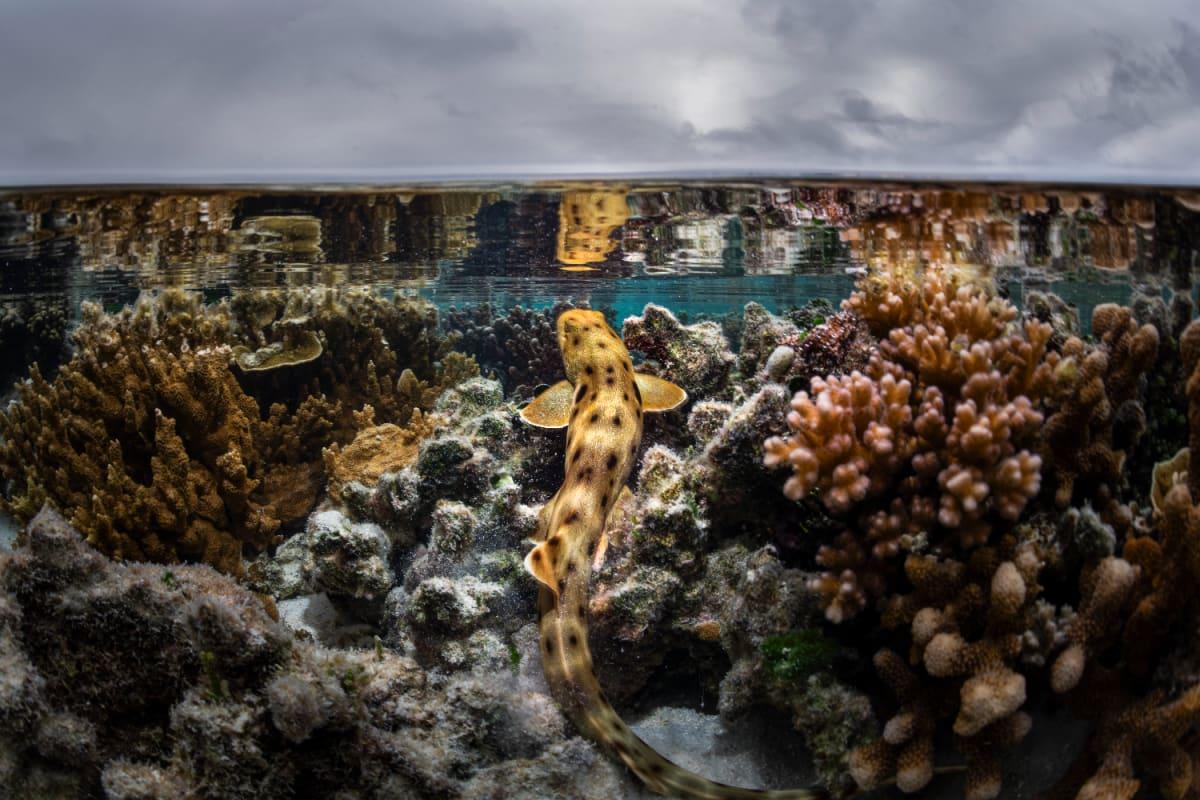
Epaulette shark curled up amongst corals off Heron Island.
Epaulette sharks reproduce effortlessly, without using much energy. The epaulette sharks, also known as “walking sharks,” do not have a rise in energy use during their reproduction cycle, according to a recent study published in Biology Open. “Reproduction is the ultimate investment … you are literally building new life from scratch. We expected that when sharks make this complex egg, their energy use would shoot up,” Professor Jodie Rummer, who led James Cook University’s (JCU) shark physiology research team, said in a statement. “But there was no uptick in energy use, it was completely flat,” Rummer added. For most species, reproduction requires significant energy, and researchers presumed the same about the epaulette. The recent research cleared the misconception and shed light on how epaulettes optimize their energy use.
Epaulette Shark swimming around the corals underwater.
One of the major concerns about the warming sea levels was the reduced amount of reproduction. But the new study suggests that epaulette sharks are unaffected by their environment’s temperature for reproduction, as they do not drain energy. “This work challenges the narrative that when things go wrong—such as warming oceans—that reproduction will be the first thing to go,” Rummer added. It is a sign that the shark species, living within the warming oceans, can be resilient to high temperatures. That is a celebratory discovery, as the high temperatures of the ocean threaten most marine animals. However, there is still not enough knowledge about the threshold of tolerance for the “walking sharks.”
Rummer believes that "it’s important to determine just how resilient to warming oceans these species are.” These shark species produce two eggs per three-week reproduction cycle, and the egg production peaks from September to December. To collect data for the recent study, Rummer and the research team tracked five female epaulette sharks in three different phases of the reproduction cycle: before, during, and after egg case encapsulation. Temperature-controlled tanks were created at the Marine and Aquaculture Research Facility Unit at JCU for the five sharks to complete the reproduction cycle comfortably. The researchers measured their oxygen uptake rates to understand their energy use.
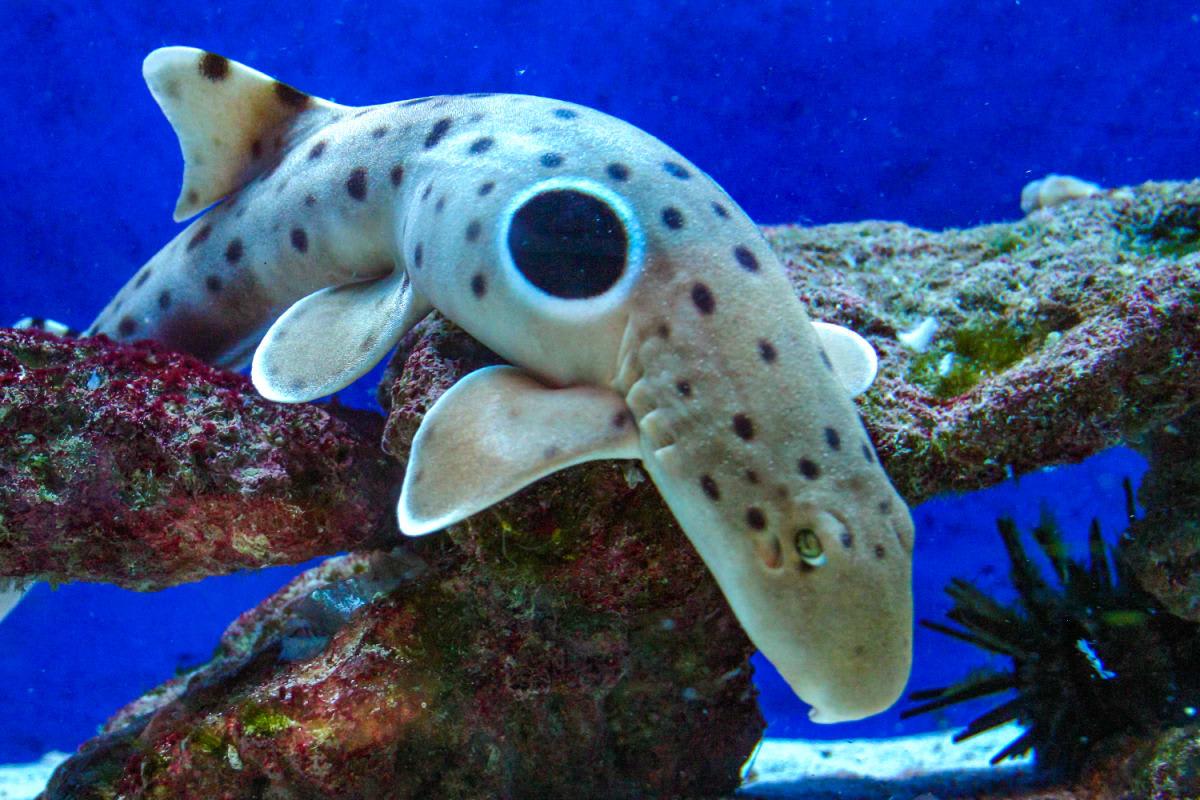
Epaulette shark, a shark walking along the bottom with a black eye in an aquarium.
Because the amount of oxygen used is directly proportional to the energy required by the creature. The researchers also studied the blood and hormone changes that occurred during the egg-laying process. Dr Carolyn Wheeler, a recent JCU PhD graduate, revealed that none of their observations showed significant fast-paced activities that may have required abundant energy. “Everything was remarkably stable,” Wheeler revealed. “So this research challenges our fundamental assumptions about chondrichthyan fishes (sharks, rays, skates, and chimaeras),” she added. The study highlighted what makes these sharks a standout among other species. They are unique not just because they walk instead of swimming like other sharks, but also because they can potentially outlive other warm ocean animals if climate change worsens.
Under environmental stressors like increased temperature of the ocean, animals are forced to choose between fight or flight. They would likely be forced into compromising reproduction to survive or vice versa. But the epaulette shark can continue reproduction and produce eggs even under environmental stress. “That’s encouraging, because healthy sharks equal healthy reefs,” Wheeler added. The epaulette shark’s ability to walk was a unique evolutionary adaptation, as per the Ocean Society. That change was adapted to help the creature easily navigate the obstacles filled coral reef systems through which they move while pursuing their prey.