
Scientists Uncover Hidden Life Defying All Expectations Beneath the World’s Driest Desert
Published Jan. 16 2026, 8:38 a.m. ET

Scenes From The Atacama Desert - The Driest Place On Earth
Eerie, dry, barren are some of the words that describe Chile’s Atacama Desert. Despite sitting in the lap of the Pacific Ocean and towering clusters of the Andes Mountains, Atacama is one of the harshest places for life to survive. It’s the skeleton of a landscape with an environment so extreme that it leaves organisms living here petrified, often starved. Soils are too salty, and water is too little, and this little water is sullied with too much metal.
Although most of the desert remains elusive and mysterious, scientists have a basic understanding of the organisms that thrive above the ground. But those who dwell in the dark underground belly remain poorly understood. In a study published in Nature Communications, scientists used tiny worms called “nematodes” as models to understand the survival mechanisms and reproductive strategies of underground dwellers.
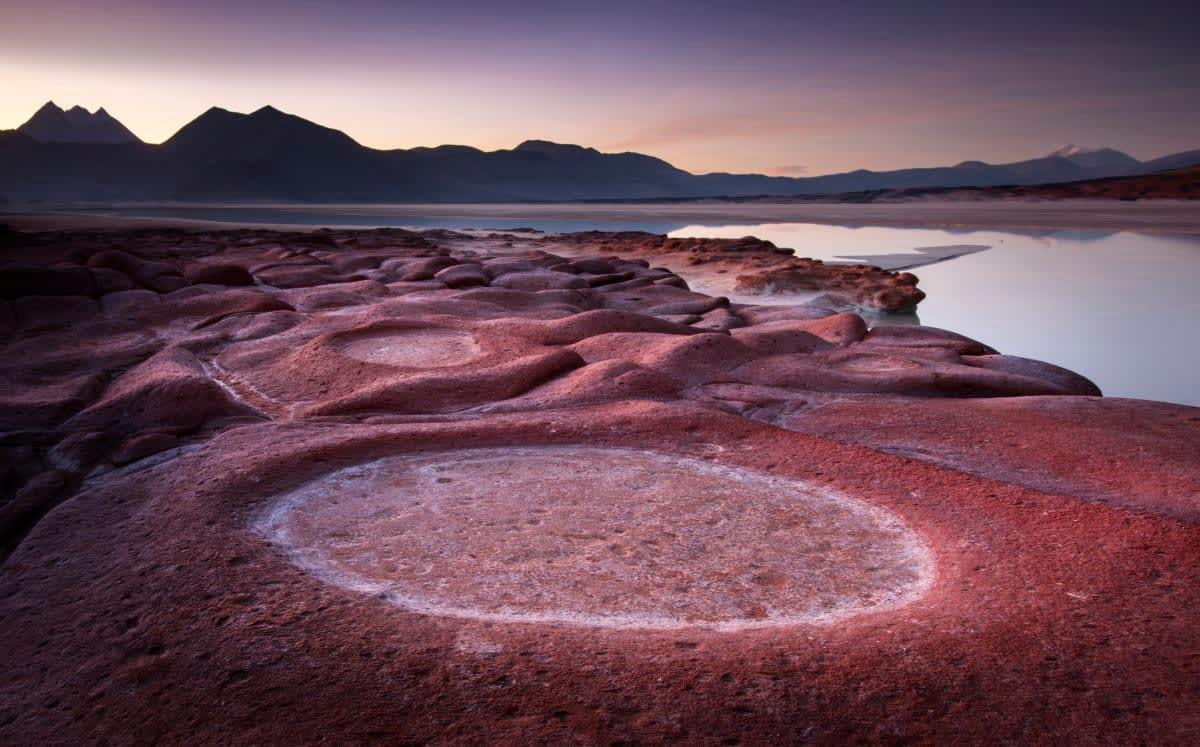
Sand dunes flanked by mountains and a lagoon in a reddish landscape at sunrise
To understand the nature and behaviors of life in a place that is a shadow of lifelessness wasn’t easy. Abrupt weather fluctuations and extreme environments make exploring the arid landscape challenging. That’s why scientists from the University of Cologne started by trying to understand the interactions and relationships organisms have with the desert’s environment, particularly with the soils. “Soils are important for the performance of an ecosystem, for example, for carbon storage and nutrient supply. This is why understanding the organisms, i.e., not microbes, but multicellular animals, that live there is so important,” Dr. Philipp Schiffer, study co-author, said in a press release.
He added that the data on soils in extreme ecosystems like these is pretty scarce, even though at least 58% of the species worldwide live in soils. As they do, they manage biodiversity architecture with processes like nutrient cycling, mineralization, carbon sequestration, and pest control. In this study, researchers took contributions from little creatures called nematodes to understand how they manage the shaping of biodiversity while living beneath the soil.
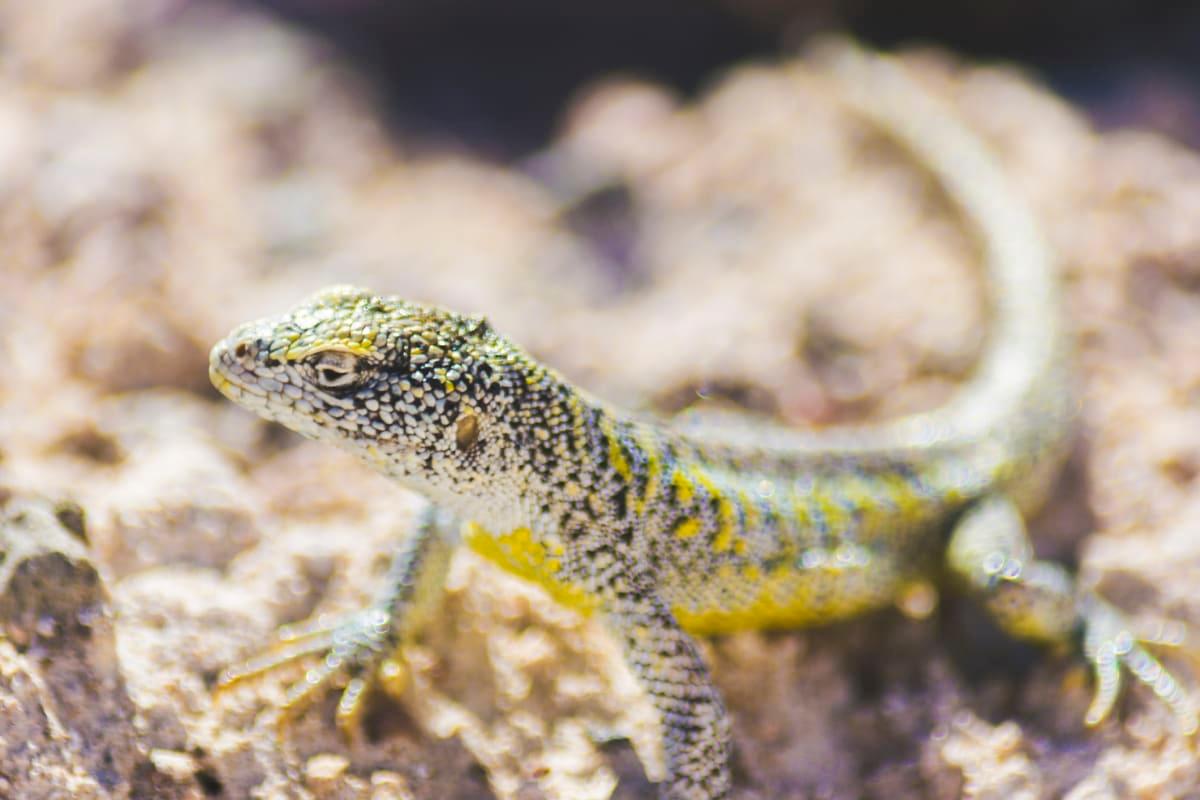
A green-colored lizard in Atacama Desert
The team analyzed several patches of the desert, including dunes, gypsum-laced salt flats, high-altitude mountains, river valleys, fog oases, and salt lakes. Each habitat exhibited a unique configuration of organisms and soil aridity. In many locations, the soils had become scorched with the remains of sulfates, chlorides, nitrates, and arsenic.
The objective was to assess the biodiversity, population structure and reproduction strategies of these tiny organisms. Nematodes, one of the most diverse and abundant organisms on the planet, are reputed for their generous contributions to soil nutrient turnover. They are the engineers who power up the soil synthesis with their exquisite feeding and reproducing strategies. The first factor that nematodes look forward to is elevation, the researchers found. Like floors of a building, elevation and type of soil determines whether the tiny worms will inhabit a location or not. While some worms prefer ground floors, others prefer top floors or high-elevated areas.
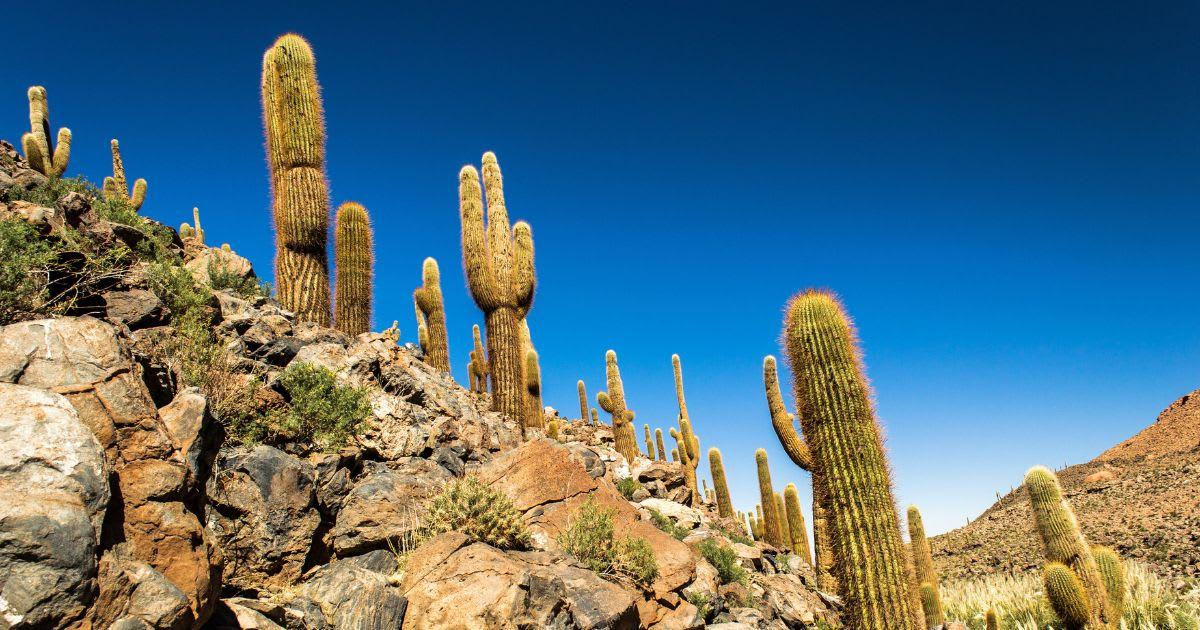
Desert landscape peppered with towering cacti and rocks
Another curious strategy these worms use to enrich the soil is a form of reproduction called “parthenogenesis.” It’s a strategy where the female worm can create an entire colony of offspring without needing the help of a male partner. Also called “virgin birth,” the strategy is a form of asexual reproduction that the mother uses to create clones of herself. In Atacama, researchers found, parthenogenesis is more frequent than sexual reproduction.
Lastly, the worms were found to show behaviors that are influenced by Atacama’s vulnerability to a changing climate. Depending on the climate gradient and Atacama’s reaction to it, the desert-dwelling organisms keep on updating their strategies.