
Scientists Tagged Silky Sharks to Map their Movement— Results Reveal Major Marine Red Flags
Published Jan. 13 2026, 7:54 a.m. ET

Researchers from Charles Darwin Foundation and Nova Southeastern University attach a satellite tag to a silky shark.
Many marine animals around the world are vulnerable to commercial fisheries, and one of them is the silky sharks or Carcharhinus falciformis. The growing worry among experts about the species' survival led to a groundbreaking experiment. According to a study published in the journal Biological Conservation, researchers tracked 40 silky sharks from the Galápagos Marine Reserve (GMR) through SPOT tags. They used handlines baited with yellowfin tuna to lure the sharks to the surface to capture and tag them before re-releasing them into the ocean. The experiment was done to detect the time they spend at the GMR or other Marine Protected Areas (MPAs) within the region. Swimming in these protected regions will be better for their safety, protecting them from commercial exploitation. However, the findings were slightly disturbing.
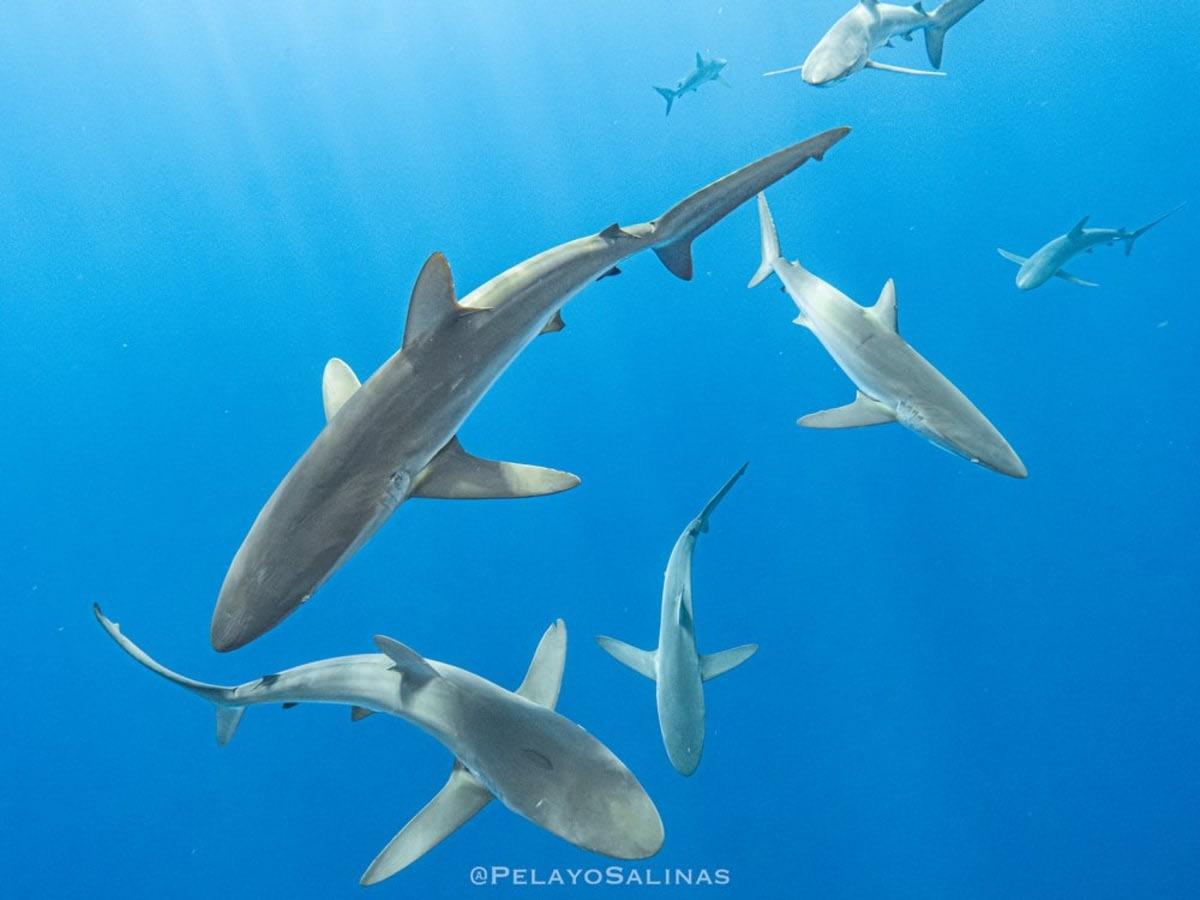
A group of silky sharks underwater.
Out of the 40 adult sharks tagged with fin-mounted satellite tags, 33 were females, and 7 were males, and each could grow at least 11. 4 feet in length. The first 10 were tagged separately off Darwin Island in February 2021, and the remaining 30 were tagged in July that same year. The result, after almost two years of tracking, showed that even though they spent less than half of their time within the 51,352 square miles of the Galápagos Marine Reserve (GMR), they did step out to danger zone. "Silky sharks spent around half their time outside of MPAs and made little use of recently established ones designed to protect areas thought to be a movement corridor of large pelagic species, including sharks," Jeremy Vaudo, the lead author of the study, said in a statement.
Vaudo explained that by leaving the protected areas, the silky sharks enter a zone of terror, being exposed to potential exploitation. " They are among the most heavily fished shark species in the Eastern Tropical Pacific (ETP) ecoregion and not only are they a major victim of the global fin trade, but their tendency to spend time on the high seas outside of the region's MPAs also puts them at risk of being incidentally taken as bycatch by industrial fishing fleets," the researcher emphasized. The experiment, which was a joint effort by the Guy Harvey Research Institute, Save Our Seas Foundation Shark Research Centre, Charles Darwin Foundation, and the Galápagos National Park Directorate, was necessary for the conservation of the species.
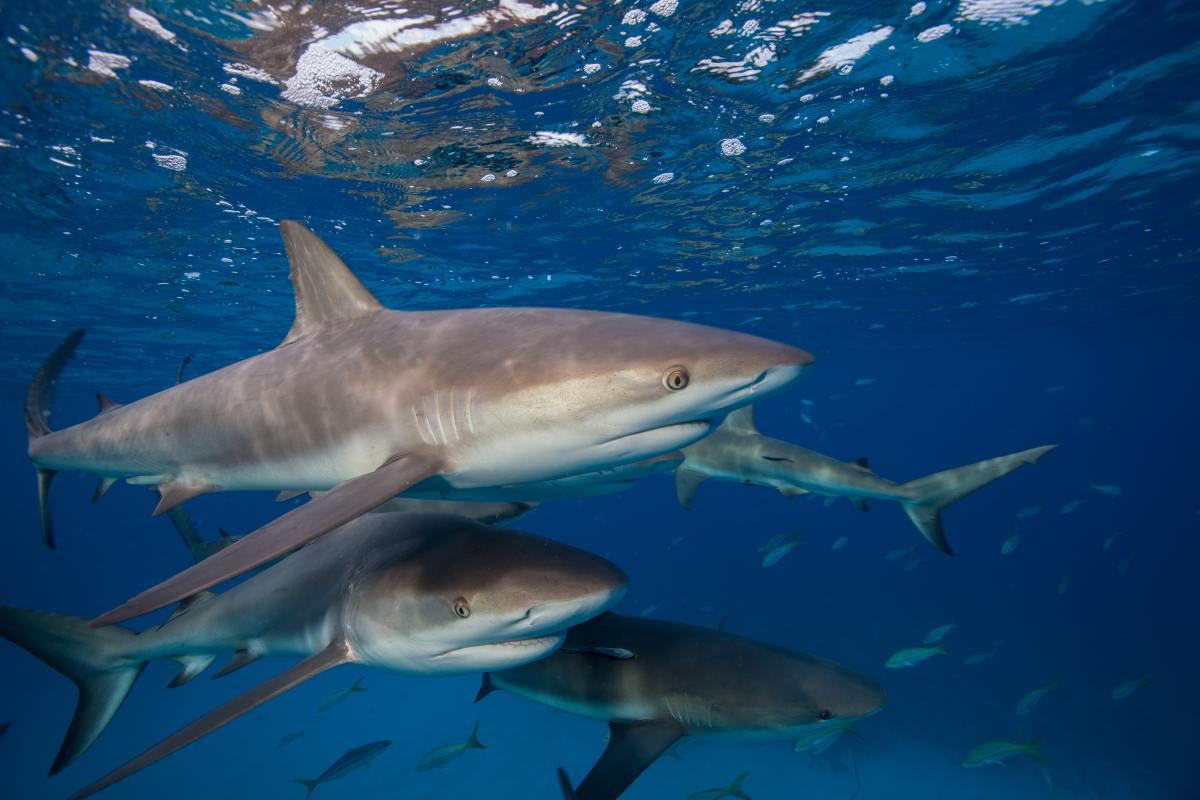
A group of sharks swimming underwater.
This information was especially important considering there's very little known about the species. “Our current level of understanding is so limited we don’t even know where silky sharks mate or give birth," Vaudo revealed. Attaching satellite tags to these species will allow experts to track their movement patterns, a knowledge extremely crucial for improving fisheries management. This will also help assist researchers while assigning future areas as MPAs. According to Dr. Mahmood Shivji, co-author of the study, the recent finding highlighted the positives, like the silky sharks spending nearly 47% of their time within the GMR, but also exposed certain loopholes in the conservative efforts.
"Concerning, however, is the discovery that the sharks, when deciding to migrate, preferentially travelled to the west and northwest rather than east of the GMR, ending up spending a lot of time in unprotected waters where a huge amount of industrial purse-seine and longline fishing occurs," he said. Shivji believes that the protected area needs to be expanded towards the west and northwest to prevent the species—listed as 'Vulnerable' on the IUCN Red List of Threatened Species—from going extinct.