
The Colorado River Now Holds Legal Personhood. Experts Hope It Can Slow a Severe Water Crisis
Published Feb. 16 2026, 6:22 a.m. ET

The Colorado River supplies water to more than 40 million people as it snakes through seven U.S. states, including the part of southeastern Utah seen in this photo snapped by an astronaut aboard the International Space Station.
Indigenous tribes are the heart and soul of cultural preservation. It's through these communities that knowledge of ancient practices or natural resources is passed down to future generations. The Colorado River, known for its dramatic canyons, is among the natural resources that need protection. It's a major source of water for agricultural and industrial purposes and fuels a $1.4 trillion annual economy, as per American Rivers. Moreover, the river generates about $26 billion in revenue from activities like fishing, whitewater paddling, boating, backpacking, wildlife viewing, hiking, and much more. Now, a major declaration has marked a big leap in conservation efforts. The joint effort of indigenous tribes and the Colorado River Indian Tribes (CRIT) that leads these communities has finally paid off.
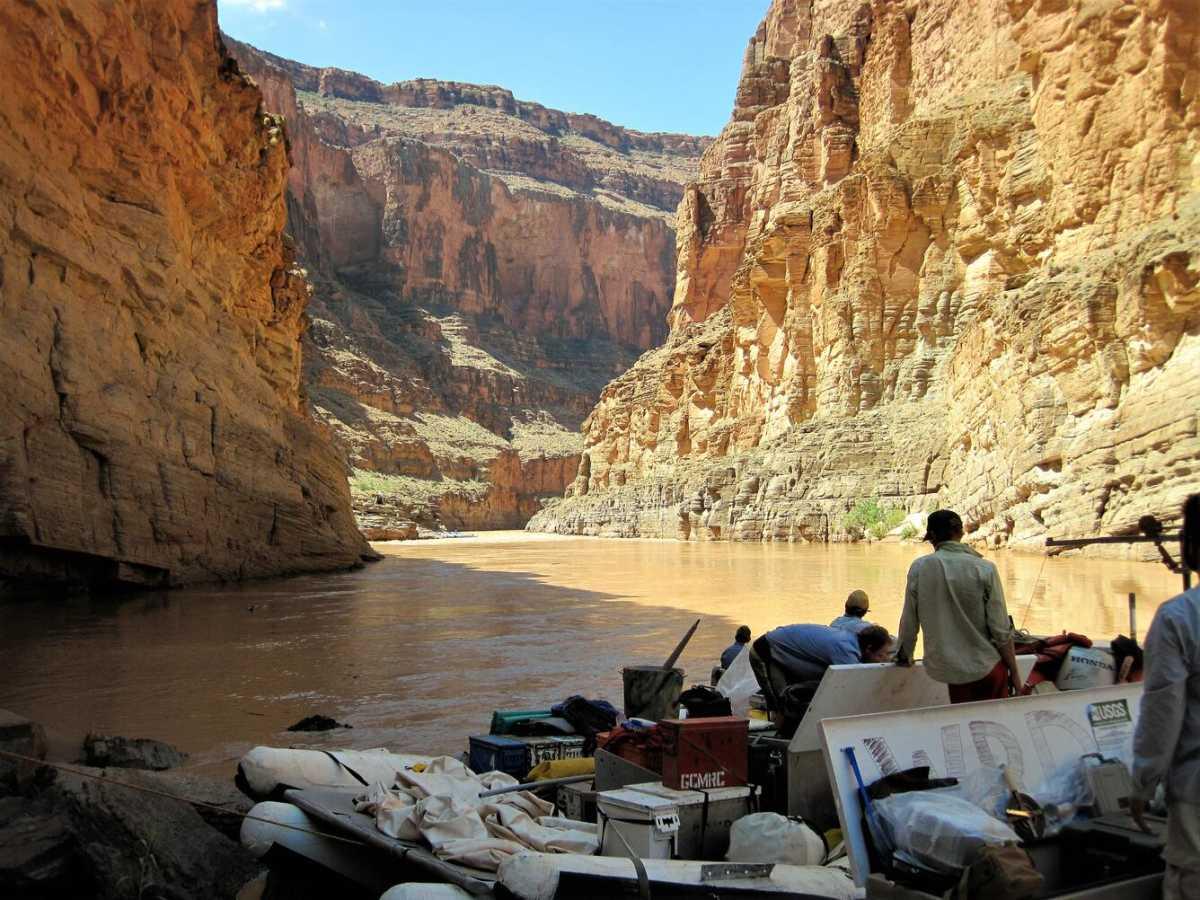
USGS scientists on the Colorado River in the Grand Canyon, Arizona.
According to BBC News, the tribes and CRIT have granted the Colorado River legal personhood. It means recognizing a natural resource as a person under the law. "The river has a right to be protected, and we have neglected that for centuries," said Amelia Flores, a member of the Colorado River Indian Tribes. She revealed that it took them about a year to get the official status legalized. With the personhood recognition comes protection of the iconic river under the tribal law. "Recognizing a river or a mountain as a legal person is to recognize that those entities have rights and standings in the legal system that we as humans created for ourselves," said Stepan Wood of the University of British Columbia.
"This is an initiative of several tribal governments, and each of them will have certain jurisdiction that is defined within United States law," he added. However, Wood fears that the jurisdiction by tribal government would have "limited legal impact" as compared to decisions taken at the state or national levels. Currently, the Colorado River is facing one of the worst droughts in 1,200 years due to long-term climate change, overuse, and over-allocation. Over the years, inefficient water management has led to increased demand and declines in water storage. The storage levels at Lake Powell and Lake Mead are critically low, as per American Rivers. Cities like Las Vegas, Los Angeles, San Diego, Phoenix, and Tucson rely on the Lower Colorado River for sustenance. However, the river has been facing a one-million-acre-foot deficit and is prone to running dry.
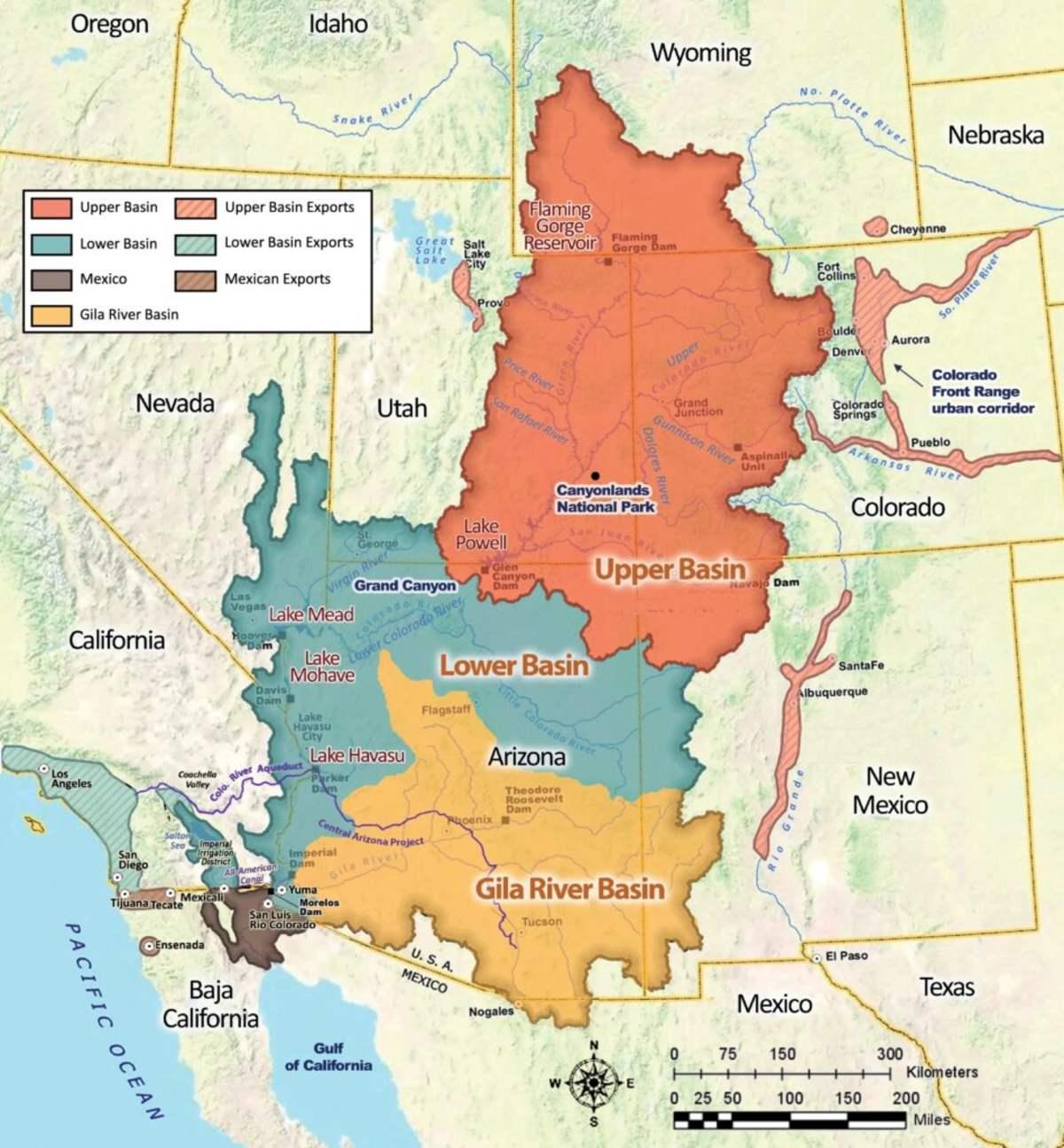
A map of the Colorado River Basin showing the three major sub-basins (Upper Basin, Lower Basin, and Gila River Basin) as well as the Mexican portion of the watershed and the areas that receive water exports from the Colorado.
The increasing climate change can further catalyze the degradation unless efficient conservation steps are taken at the right time. The existing water agreement will lapse by the end of the year. So authorities and decision-makers must conclude the next water agreement, keeping the long-term conservation goal in mind. According to the BBC, the states that manage the river are still at odds about tackling the increasing issue of drought. "The drought is not going away; the climate is getting worse and worse. The river that we do have, we know the urgency to protect it," Flores added.
The CRIT member believes that enforcing the personhood law on the river brings some hope to protect the river for future generations. Wood also admitted that even though there's fear of limited legal impact, such enforcement in the past has made a difference in conservation. "There are examples where some environmental harms have been at least partly prevented or remedied through the enforcement of these laws," he added. "The river has taken care of us; now it's time for us to take care of the river," Flores said.