
Strange Seagrass 'Fairy Circles' Spotted at the Bottom of the Ocean Puzzles Scientists
Published Jan. 21 2026, 10:10 a.m. ET

Stunning seagrass 'fairy circles' captured underwater.
If nature were an artist, these seagrass circles would be one of its finest works. A video over the Sound of Barra in the Outer Hebrides captured an exquisite ring like structures beneath the sea, also known as the “fairy circles.” NatureScot published the stunning video in a recent report titled Review of Scottish Seagrass Declines. What astonished the researchers was the fact that these circles were formed naturally with seagrass but looked as ethereal as a painting. “As far as we know, this is the first video of seagrass fairy circles in Scotland’s seas," said Sarah Cunningham, NatureScot’s Marine Protected Area and Marine Enhancement Manager. “Our marine monitoring team calls them seagrass doughnuts – but whatever you call them, they’re spectacular," she added.
The scenery seems aesthetic from afar, but deep down, it tells the tale of habitat loss in Scotland. Seagrass beds, once commonly found, have become a rare sight now. Earlier, due to the abundance of seagrass, it was used as thatching for houses in Orkney. The report published by NatureScot shed light on the shrinkage of seagrass in the country over the 20th and 21st centuries. That’s exactly why spotting bits and pieces of it excited the researchers. “We were delighted when we spotted them and were able to get some aerial video showing them off!” Cunningham added. Seagrass is a major support system for the environment, or as Cunningham puts it, it’s a “wonder habitat.”
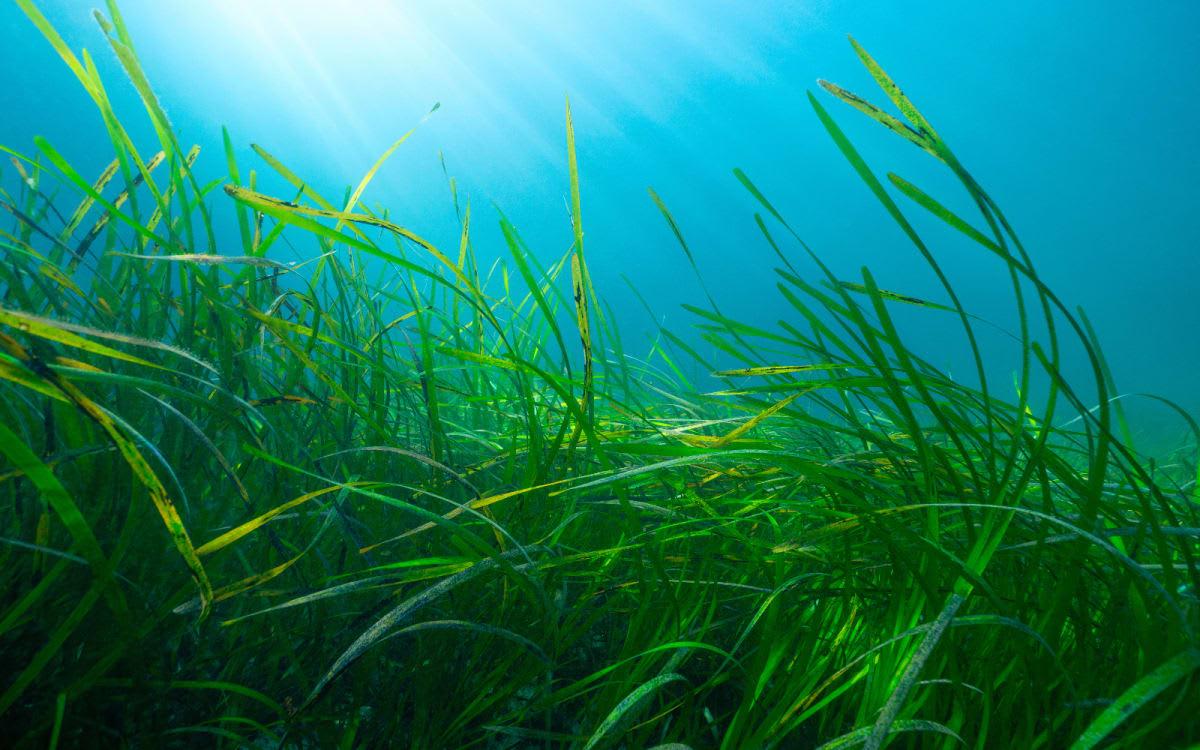
Seagrass underwater with sunlight.
Seagrass is often considered equivalent of a rainforest due to its positive impact on nature and climate. “The lush meadows it creates are home to an amazing array of wildlife. Their leaves and roots also trap carbon, helping tackle the climate crisis,” Cunninham added. Also, they act as a natural filter, reducing pollutants from the water and making the underwater environment healthier and breathable. Seagrass not only improves the livelihood of sea creatures but also safeguards the people living in coastal areas from potential floods. They “act as the first line of defence along coasts by reducing wave energy, protecting people from the increasing risk of flooding and storms," Cunninham said. So, what caused the depletion of the valuable underwater seagrass?
It was the wasting disease epidemic that plagued the underwater habitat in the 1930s. When a marine slime mold sneaked into the healthy habitat and gradually corroded the seagrass beds crucial to the ecosystem. The unfortunate attack started the depleting spiral of seagrass, which worsened to the point of no recovery in some places. Shetland was once abundant with broad-leaved seagrass, which became a hindrance during boating experiences. The long grasses had to be chopped to make way for the boats to move ahead. Unfortunately, the situation worsened over a period of time. Today, only patches of the broad-leaved seagrass are left scattered around limited sea inlets and lagoons.
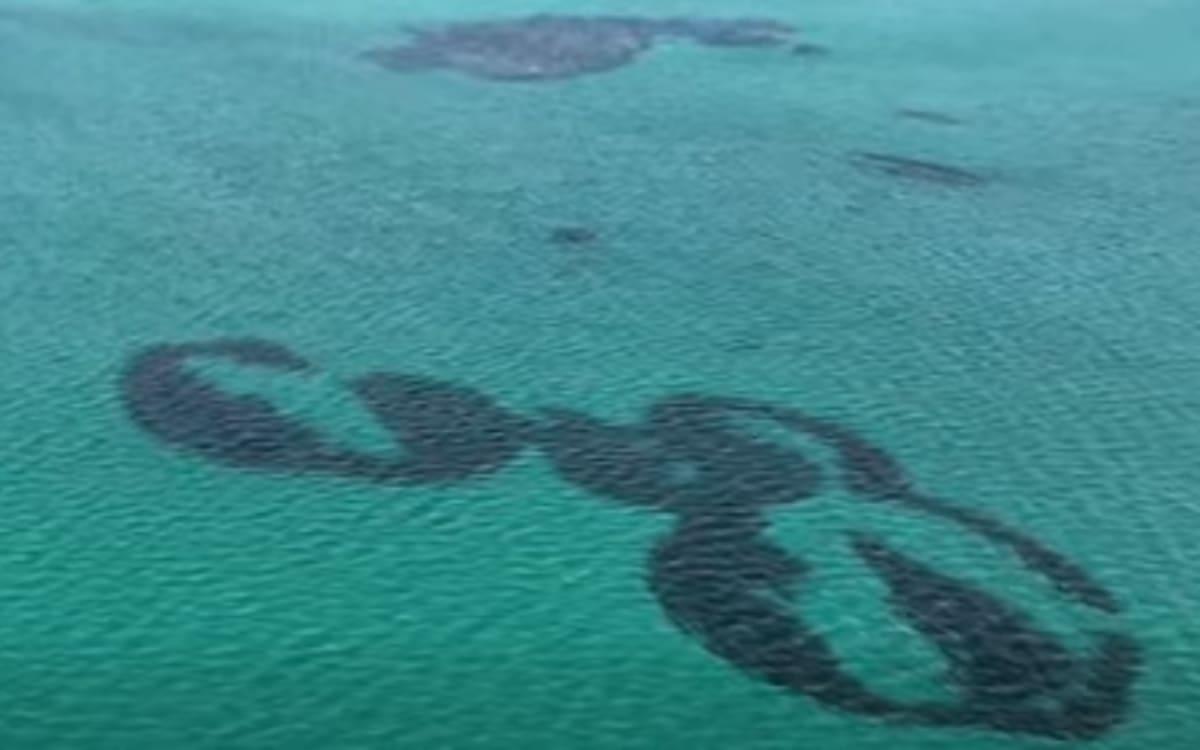
'Fairy circles' captured off Scotland coast.
However, the slime mold was not the only factor responsible for the stark depletion of seagrass; environmental degradation equally contributed to it. Increasing pollution, depleting water quality near cities, construction of coastal infrastructures, and mechanical damage, among others, collaboratively destroyed the majority of seagrass. However, scientists believe there is still hope for recovery because when stressors like human activities are removed or reduced, the water quality evidently improves. So, with reduced pressure from human activity and effective conservation measures, researchers believe that seagrass in the area can be revived.