
Sharing Videos of Punch, The Viral Monkey Isn't Helping Him. PETA Says It's Making Things Worse
Published Feb. 27 2026, 11:53 a.m. ET

(L) Punch seen with other monkeys in the zoo; (R) People line up at the zoo's entrance to see Punch.
Have you seen the baby monkey dragging a stuffed toy around all over the internet? Yes, Punch, the Japanese macaque is the internet’s latest fascination. He gained fame overnight after a video of him getting bullied by older monkeys went viral. However, the animal then turns towards a wide-eyed orange orangutan for safety and security. Abandoned at birth, his only companion is the stuffed toy. The heartbreaking story of Punch became a social media sensation. However, now PETA is urging everyone to stop sharing his videos, and the reason showcases the reality of animals in captivity.
People for the Ethical Treatment of Animals (PETA) is the world’s largest animal rights organization, and they are requesting people all over the world not to engage with Punch’s videos. Moreover, they are also asking not to visit the zoo in person as well. The macaque is currently placed in Ichikawa City Zoo, and ever since his videos went viral, people have been flooding in to see him in person. More than 8,000 tickets were sold just last weekend, which is double the amount that is usually sold at that time. The Asia President of PETA, Jason Baker, said, "There’s nothing heartwarming about a baby growing up behind bars. Zoos are not sanctuaries—they are places where animals are confined, deprived of autonomy, and denied the complex environments and social lives they would have in the wild."
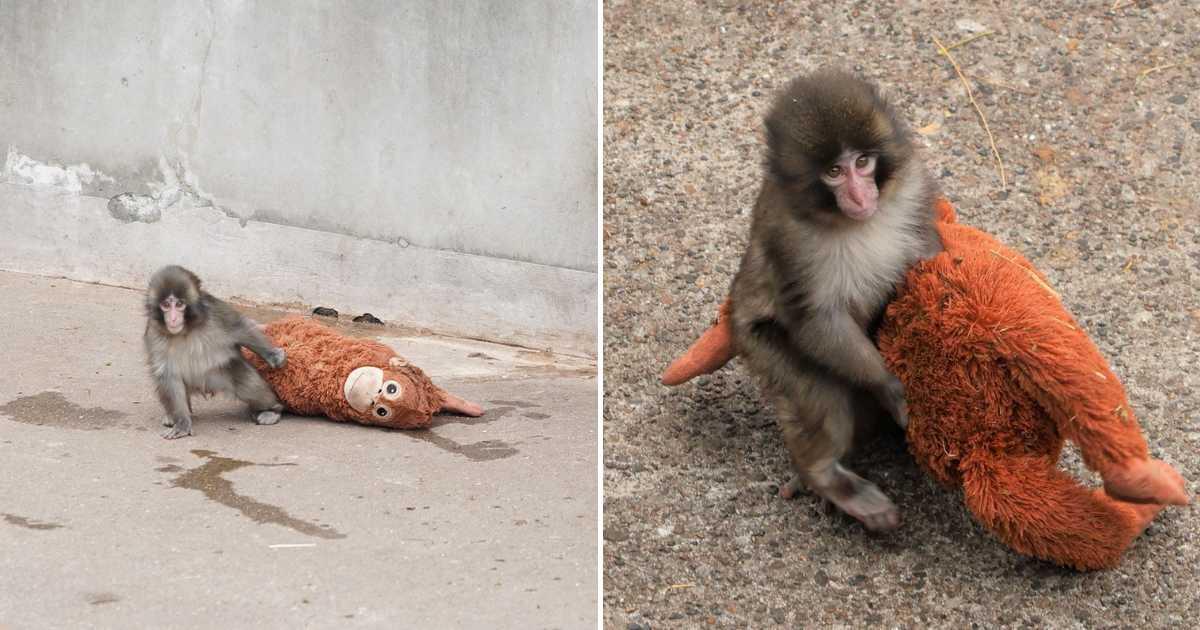
Seven-month-old Punch, the viral Japanese macaque, is pictured with his plushie at Ichikawa City Zoo. (Image Source: (L) Facebook | Ichikawa City Zoo; (R) X | @ichikawa_zoo)
Baker further said that while Punch was clinging to a stuffed toy, people were gathering to see him, which can create a stressful situation. “What some are calling ‘cute’ is actually a glimpse into the trauma of a young, highly social primate coping with isolation and loss,” he added. He also compared the baby macaque’s sudden internet fame to Moo Deng, the pygmy hippo from Thailand’s Khao Kheow Open Zoo. He pointed out that internet fame does not stay forever, but the animals have to remain trapped for life.
Baker said, “Internet fame doesn’t change the reality of captivity. It only fuels a cycle in which facilities breed and display babies to drive ticket sales, while the animals pay the lifelong price.” PETA is now calling on Ichikawa City Zoo to transfer Punch to an open sanctuary where he can live a life with a natural setting. It will also help him to build healthy social bonds with his own kind easily. He added, “Until facilities stop treating sentient beings as attractions, animals like Punch will continue to suffer in captivity,” Baker concluded.
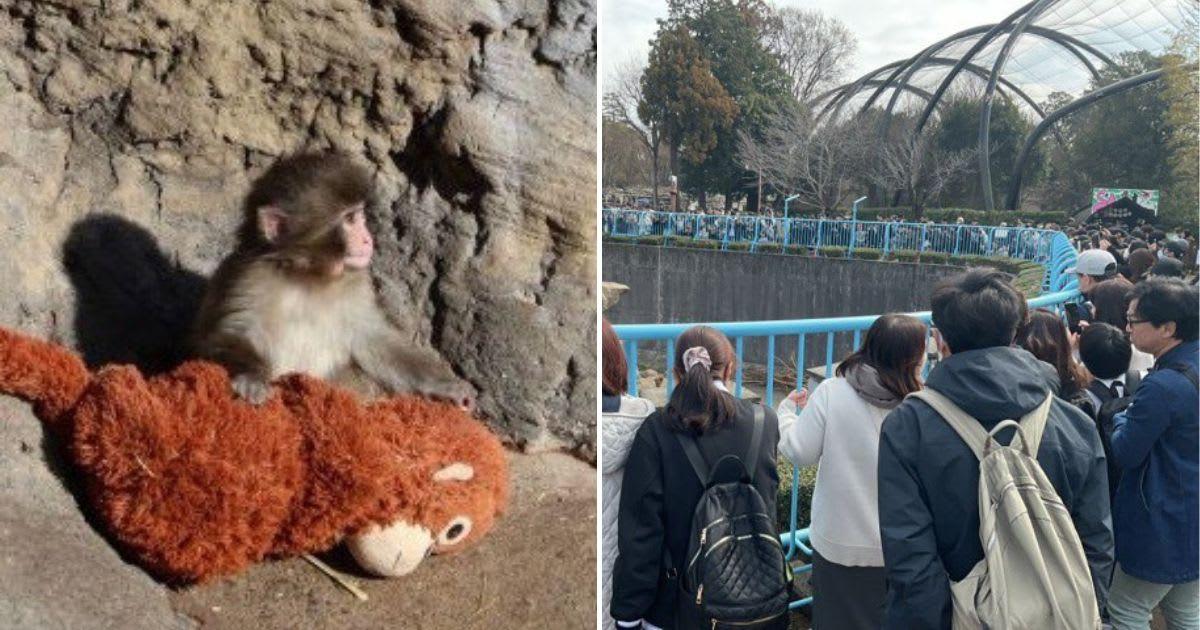
Large crowds gathering to see Punch
It is not the first time that the poor conditions in which Punch lives have been questioned. People online and animal welfare advocates have discussed the lack of an adequate environment that macaques need to develop natural social behaviors. The enclosure does not have enough greenery, and it is primarily made of concrete. It also does not have enough climbing structures and water elements, such as a pond. These features are important for macaques because they heavily rely on interactions. And the conditions inside the zoo can be further harmful for someone like Punch, who was rejected by his mother at birth. Since he was raised by humans, he missed out on early bonding practices.
However, new videos have recently surfaced of Punch interacting and making new friends. Even though he was not able to fully integrate with the troop at first, he is slowly doing so. Punch can still be seen dragging the plushie along, but maybe one day he might not need it anymore.