
Conservationist Claims Moo Deng Is Now Living in 'Sad' Conditions. Viral Hippo's Zoo Responds
Published Feb. 19 2026, 6:25 a.m. ET

(L) A Khao Kheow Open Zoo employee looking after Moo Deng; (R) The viral hippo seen in dirty waters. (Image Source: Instagram | (L) @khamoo.andthegang | (R) @aaron_gekoski)
Moo Deng, the adorable pygmy hippo, has been winning over the netizens' hearts for a while. When conservationist Siranudh Scott called out the tiny mammal's "sad" habitat, it sparked concerns online. Scott had shared pictures of Moo Deng alongside fecal matter in her habitat, the Khao Kheow Open Zoo in Chonburi, Thailand, and titled it, "Let the image speak for itself." People were worried about the one-year-old hippo's health and bombarded the zoo authorities with inquiries. The zoo finally addressed the situation with a statement shared on their official X account. On February 16, the authorities shared a statement, starting by thanking everyone who expressed their concern toward Moo Deng. The statement also cleared the air around the situation, assuring the fans that the creature was taken care of.
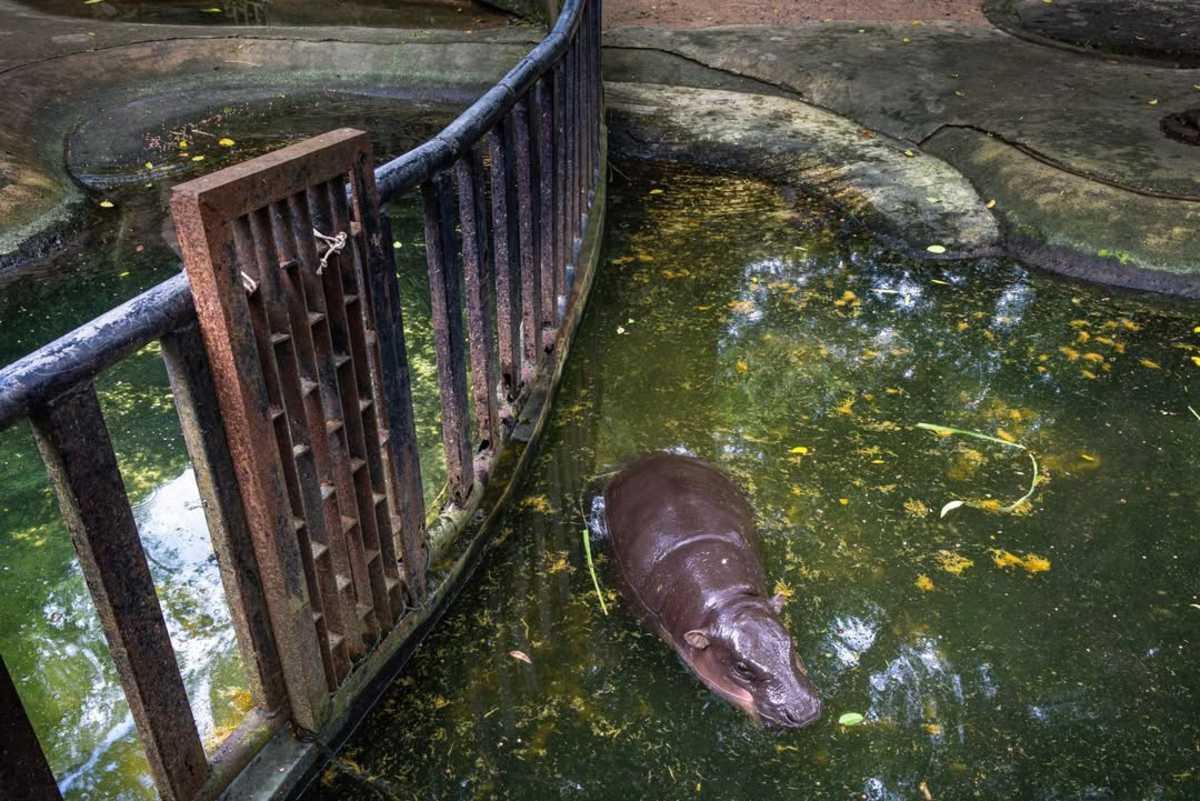
Picture of Moo Deng swimming in dirty waters that sparked reactions online
According to the translated statement, Moo Deng is being looked after "according to international standards.” The authorities also revealed their plans for habitat expansion. "Khao Kheow Open Zoo expresses its gratitude for all the concern and suggestions from fans worldwide," the statement read. The zoo reaffirmed that the happiness and health of its animals are its priority. They also revealed that the habitat that sparked concern is a reflection of the species' natural behavior.
"The images circulating on social media are likely animal feces excreted during the day, which is normal behavior for hippos who typically defecate in water or on land to 'mark their territory,'" the zoo said. Moreover, the authorities clarified that the zookeepers regularly keep the premises clean and "remove the animal feces every morning regularly, in accordance with international animal welfare standards."
The environment of pygmy hippos isn't dirty and is curated to meet their needs. The species requires a high-humidity climate along with soil, mud, and aquatic plants. It is only when these needs are met that these pygmy hippos can exude their instinctive behavior and maintain healthy skin. There hasn't been any negligence, the team reassured.
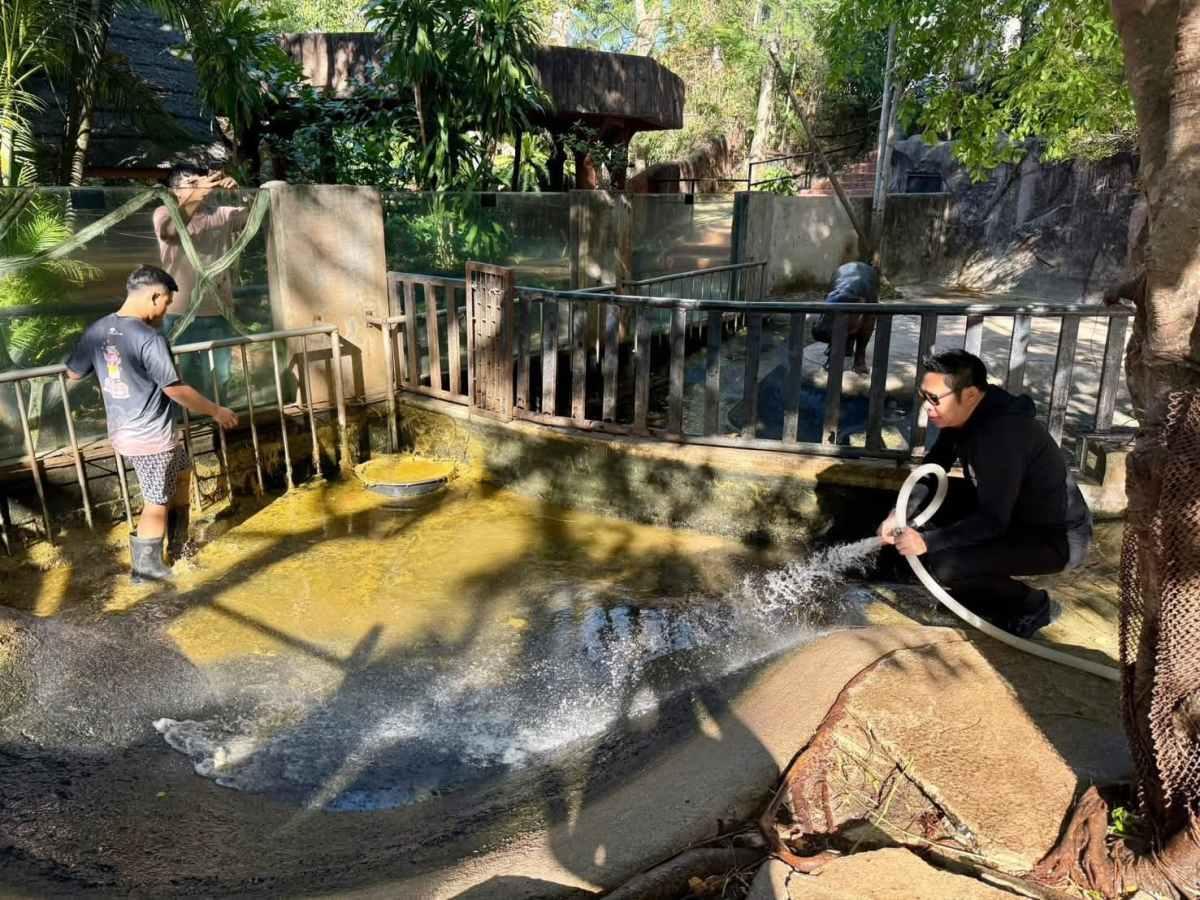
Khao Kheow Zoo authorities cleaning Moo Deng's habitat.
The authorities have planned a "Hippo Village" habitat expansion and developed a new exhibit area project. The design of the exhibit has already been approved by the zoo board. The expanded habitat will be about 4 acres, which will accommodate 6 pygmy hippos and 7 great hippos. They aim to sufficiently provide ecologically appropriate living conditions for the animals. The plan will also take environmental stressors under consideration so that they don't disturb the animals. The zoo also reaffirmed the plan to develop "beautiful and modern exhibit areas" while maintaining the welfare of the animals in the best possible way. Since the concern for Moo Deng was so overwhelming, the authorities welcome suggestions on better conservation.
Later, Scott shared another statement clarifying that it wasn't a criticism. “Everyone! I don't want anyone to misunderstand. I'm not criticizing the Moodeng caretakers or the animals themselves," he wrote. "I'm trying to convey that animals that are recognized worldwide and bring fame to the country should have a quality of life, space, a safe environment, and animal companions that are commensurate with the value they bring to us," he added.