
Why is Punch, The Viral Monkey, Being Bullied? A Strange Animal ‘Hierarchy’ Could Be to Blame
Published Feb. 26 2026, 4:53 a.m. ET

Punch with other macaques in the zoo
The world has fallen in love with the macaque named “Punch,” and the internet cannot stop talking about his heartbreaking story. He was abandoned at birth by his mother, and the zookeepers had to step in and raise him. However, when the monkey was introduced to the troop at Ichikawa City Zoo in Japan, he was not accepted. The older macaques were seen bullying and beating him. Punch instantly went back to his wide-eyed orangutan stuffed toy that he drags around inside the enclosure. The clips of the sight went instantly viral on social media, leading to many questions about why the macaque was not accepted by the group.
With the clips of other macaques acting aggressively towards Punch gaining attention on the internet, people have been wondering why this occurs. According to Alison Behie, a primatology expert at the Australian National University, what people are seeing in videos of Punch is not actually bullying. She explained that the way other monkeys treat him may look harsh to humans, but it is really just normal social behavior within macaque and other primate groups. Japanese macaques live in very structured societies built around strict matrilineal hierarchies. These social rules are constantly reinforced through interactions that can include pushing, chasing, or correcting younger monkeys. These behaviors might seem aggressive, but are actually part of everyday troop dynamics.
Since macaques live in matrilineal hierarchies, their social rank comes from the mother’s family line. In a study, it has been observed that higher-ranking families get priority access to food and space, and often receive more grooming from others. On the other hand, lower-ranking monkeys are expected to show submission to avoid conflict. Mothers also help teach their young how to behave and where they fit within the troop’s social order.
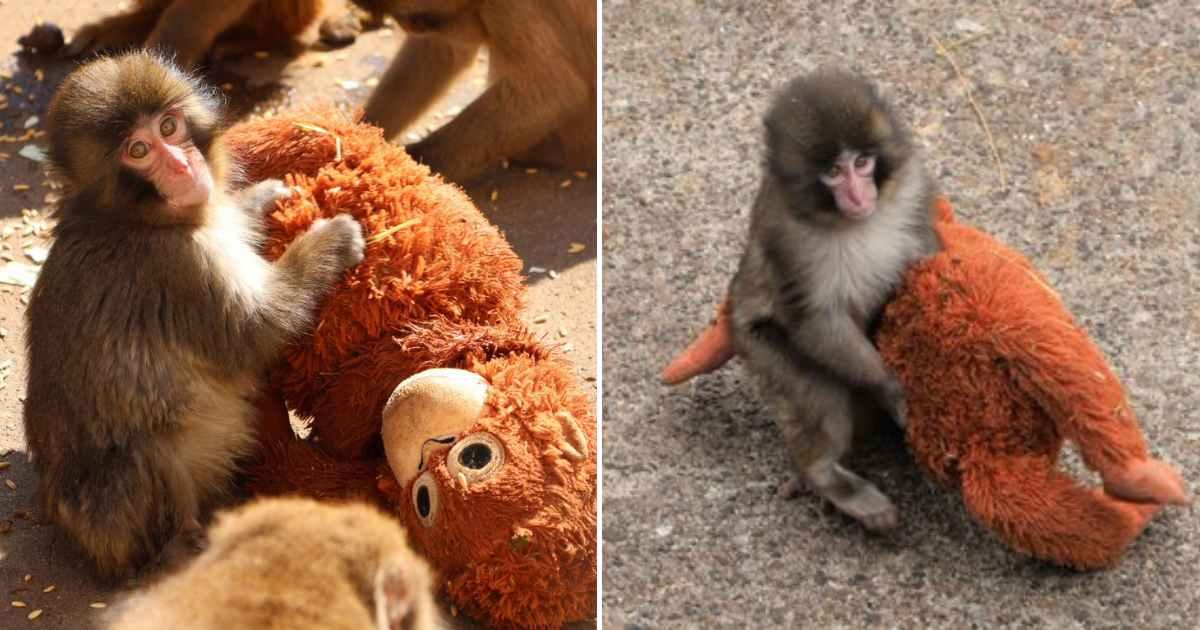
A baby Japanese macaque named Punch with his plushie.
Behie noted that even if Punch had stayed with his mother, he likely would have faced some level of dominance from other monkeys anyway. However, the real concern now is that he is growing up without maternal guidance. “Punch may not develop the appropriate subordinate responses to show they submit to the dominance, which could have ongoing implications for the way they integrate into the group as an adult,” she added, per The Guardian. Zookeeper Kosuke Shikano said that since Punch was born during a heatwave, it put extra stress on the new mother, which led to abandoning him. “Baby Japanese macaques immediately cling on to their mother’s body after birth to build muscle strength. They also get a sense of security through holding on to something. However, because he had been abandoned, Punch had nothing to grip on to,” he said.
Furthermore, the zoo also released a statement after the clips of an older macaque dragging Punch went viral. They went on to explain that the incident occurred when a mother monkey stepped in to protect her own baby after Punch kept trying to play and unintentionally annoyed them. Even though it seemed rough, zookeepers said it was actually a normal response within macaque social groups. “While Punch is scolded, he shows resilience and mental strength. When you observe these disciplinary behaviors from other troop members toward Punch when he tries to communicate with them, we would like you to support Punch's effort rather than feel sorry for him,” they wrote.
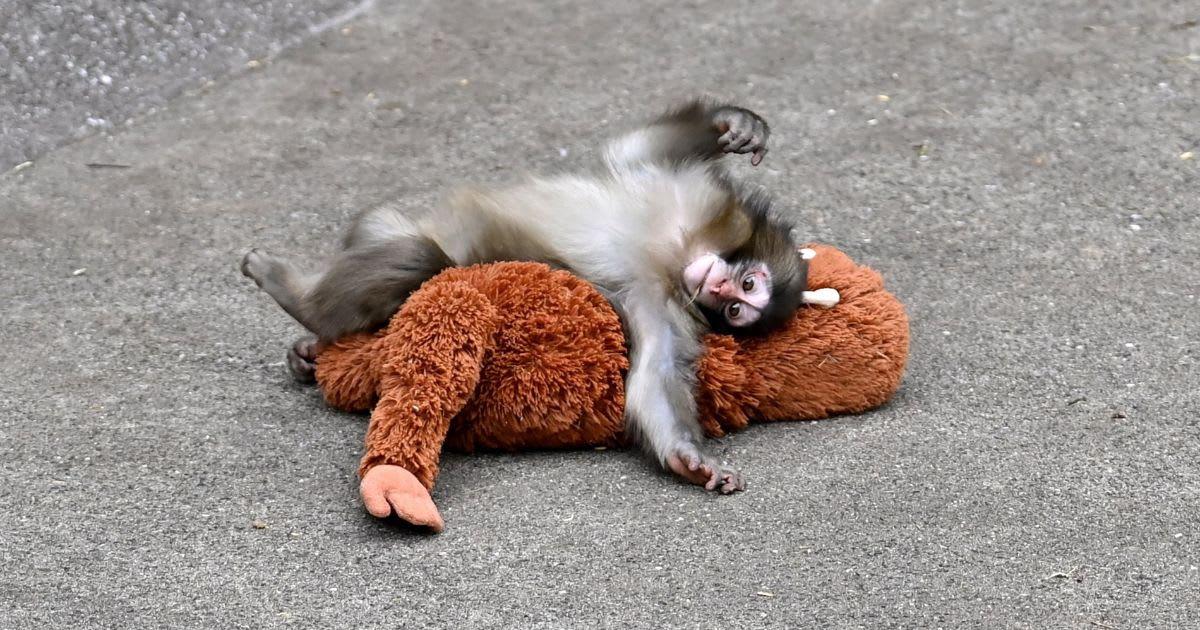
Punch playing with his stuffed toy
Because Punch was separated from his mother at birth, zookeepers had to step in. The team tried to find a comforting replacement at birth, which includes rolled towels and various plush toys. However, they finally found the perfect substitute in an orangutan plushie from IKEA. The monkey began to find comfort and security in the stuffed toy’s presence. “We thought that [the toy] looking like a monkey might help Punch integrate back into the troop later on,” Shikano said. In the recent clips, Punch can be seen making new friends and finally socializing with the group. Even though he still carries his plushie around, he may not need it anymore one day.