
Experts Reveal Cracks in Antarctica's 'Doomsday Glacier' are Causing Faster-Than-Expected Collapse
Published Dec. 2 2025, 7:57 a.m. ET

People are seen observing a huge glacier.
Many of the most important glaciers across the world are now facing danger as rising temperatures and other issues have started melting them faster than they can recover. It is an extremely concerning scenario as these glaciers act as vital water sources, climate regulators, and even natural barriers that help keep the global sea levels stable. In recent news, it has been revealed that over two decades of satellite and GPS data now reveal troubling changes at the Thwaites Eastern Ice Shelf, also known as the Doomsday Glacier. One part of this glacier floats atop the ocean and stays partly pinned by a crucial spot along its northern edge.
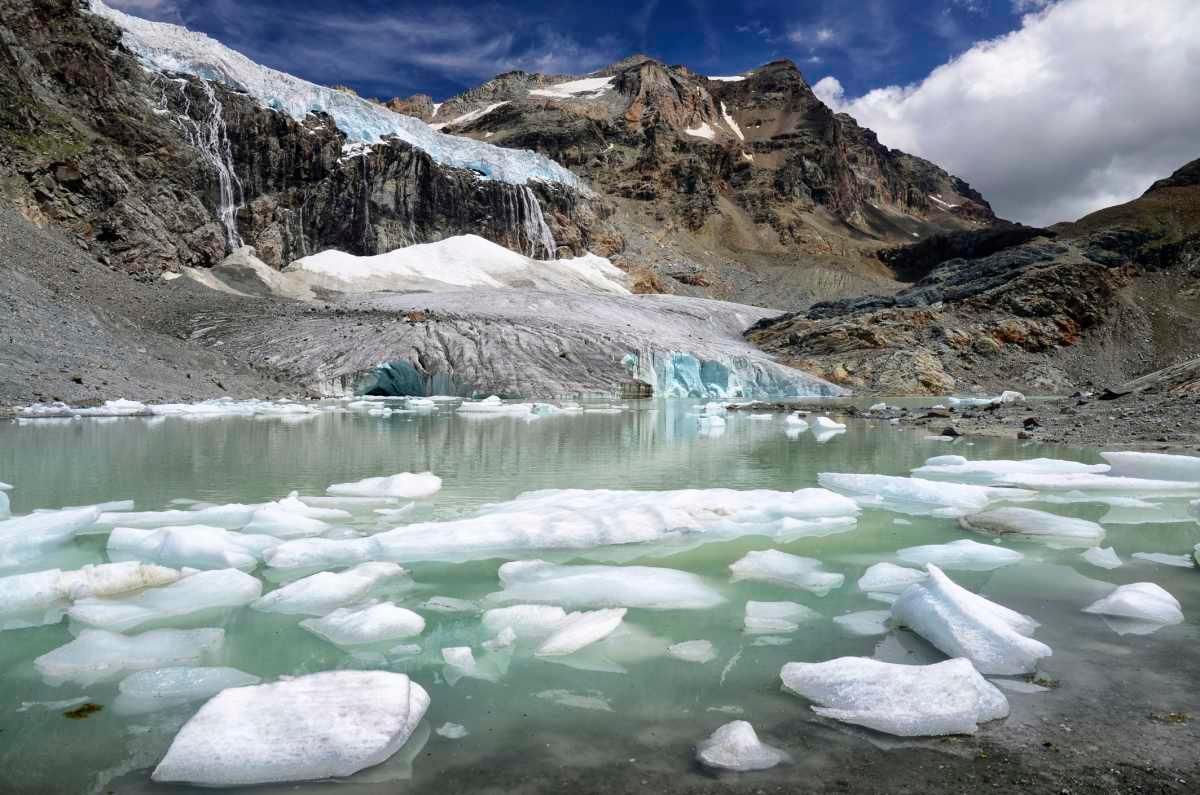
A melting glacier
But in the last two decades, this shelf has begun to develop several cracks, especially near the pinning point. These findings were revealed in a study titled ‘Evolution of Shear-Zone Fractures Presages the Disintegration of Thwaites Eastern Ice Shelf,’ which was published by the Journal of Geophysical Research: Earth Surface. By analyzing the satellite images, ice-flow velocity measurements, and GPS readings from 2002 to 2022, scientists found that the cracks have been impacting the shelf’s movement, and the ice has slowly detached from its anchoring point. This, in turn, has increased the pace of ice flowing upstream and weakened the overall stability of the shelf.
The cracks occurred in two ways: first, long fractures stretched out in the same direction the ice was moving, following which, a second set of shorter fractures formed perpendicular to the ice flow. Additionally, the researchers discovered that cracks in the ice and the speeding up of the glacier were forming a type of feedback loop. As the cracks increased, ice moved faster — and as it moved faster, cracks grew even more, as reported by SciTechDaily. If such floating ice shelves keep breaking down, it could significantly contribute to the global sea level rise in the years ahead.
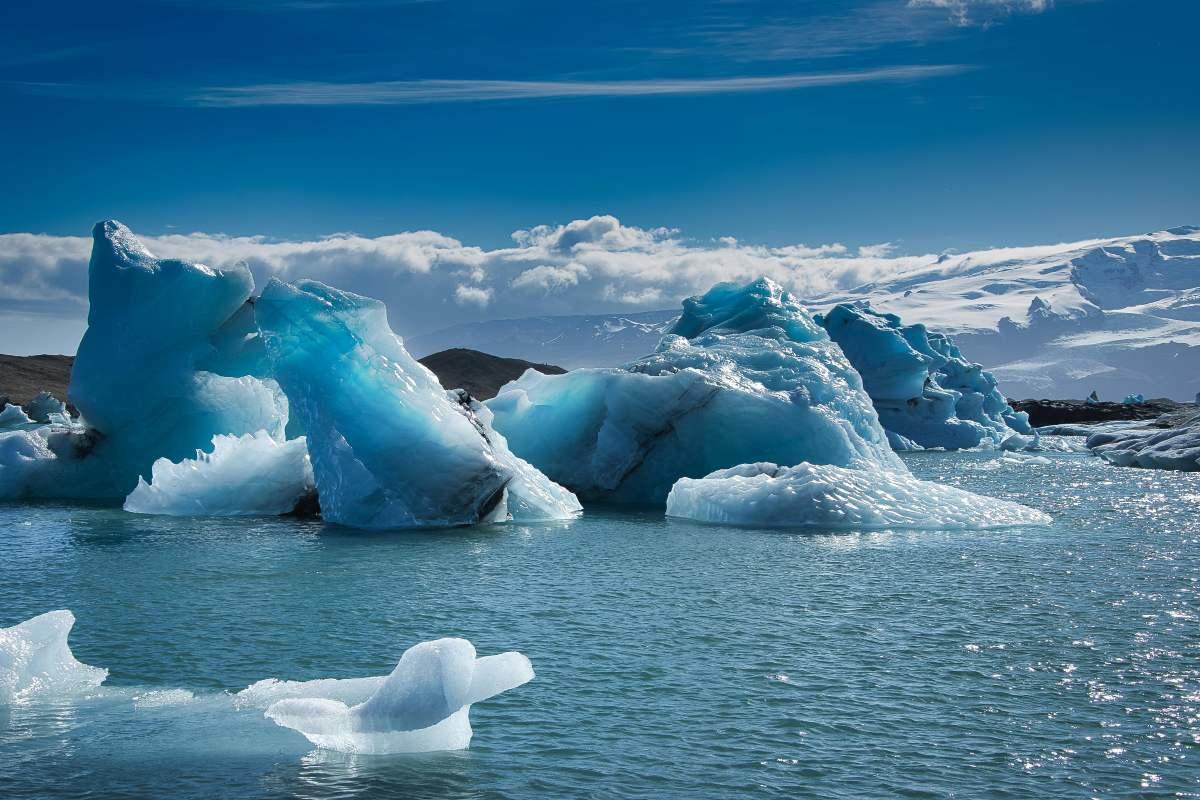
Icebergs collapsing. Melting sea ice triggered by global warming.
Scientists also warn that this pattern of weakening could be an early warning sign for other Antarctic ice shelves as well. The research was conducted at the Centre for Earth Observation Sciences (CEOS), being led by a recent graduate student, Debangshu Banerjee, along with Dr. Karen Alley, an assistant professor at CEOS, and Dr. David Lilien, an assistant professor at Indiana University Bloomington and a former CEOS research associate. It's also worth noting that this research is an important part of TARSAN (Thwaites-Amundsen Regional Survey and Network), a U.S.-U.K. project analyzing what’s causing changes in Thwaites Glacier.
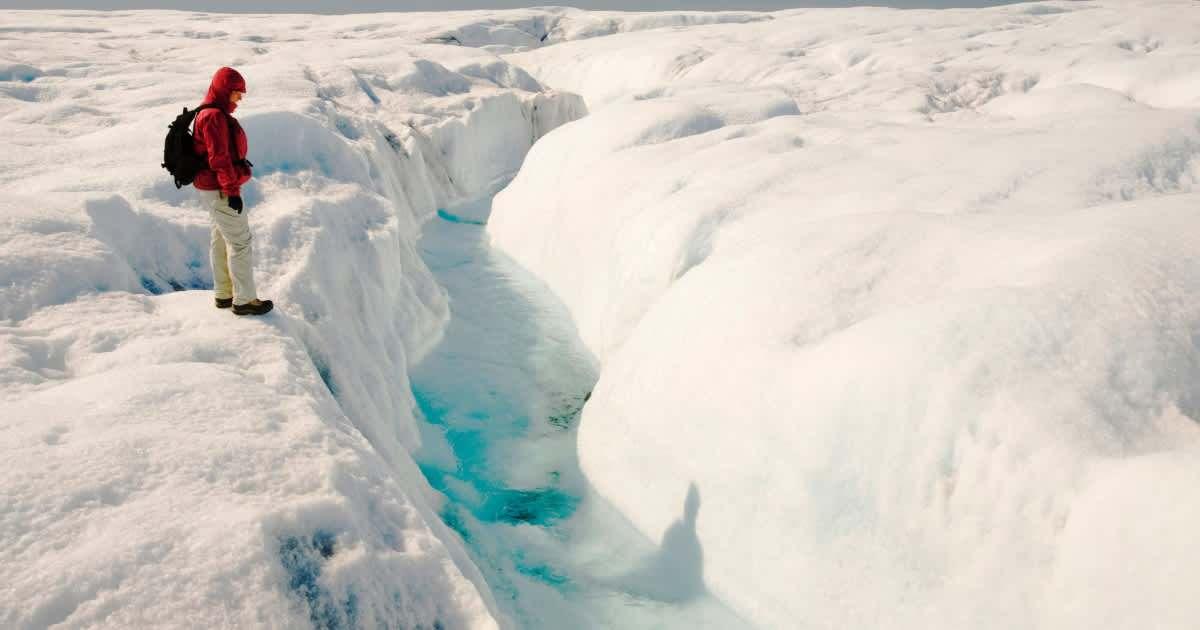
A man observing a melting glacier.
Meanwhile, last year, experts found out that the Doomsday Glacier was melting at a rapid rate. Christine Dow from the University of Waterloo said, “Thwaites is the most unstable place in the Antarctic and contains the equivalent of 60 centimeters (2 feet) of sea-level rise. The worry is that we are underestimating the speed at which the glacier is changing, which would be devastating for coastal communities around the world." As reported by USA Today, this concerning scenario will mainly affect low-lying areas like Vancouver, Florida, Bangladesh, and low-lying Pacific islands like Tuvalu and the Marshall Islands.