
Scientists Try Unique Method to Keep Sharks Off Fishing Hooks in Florida. Surprisingly, It Works
Published Feb. 24 2026, 5:56 a.m. ET

A blacktip shark swims among fish with a hook still in its mouth
Sharks unintentionally getting impaled by fishing hooks has been pushing several species to the brink of extinction. However, a recent study has come up with a solution that's inexpensive yet efficient. According to the study, published in the Canadian Journal of Fisheries and Aquatic Sciences, adding inexpensive inputs like zinc and graphite creates an electric field around the fishing hooks that's evidently enough to prevent the unintentional catching of sharks. In the coastal waters of Florida, these rigged fishhooks showed impressive results, reducing shark catch by about two-thirds. “This study was part of an effort to reduce the number of sharks that are caught and killed as incidental bycatch in commercial fisheries,” Stephen Kajiura, a professor of biological sciences at Florida Atlantic University and lead author of the study, told Mongabay.
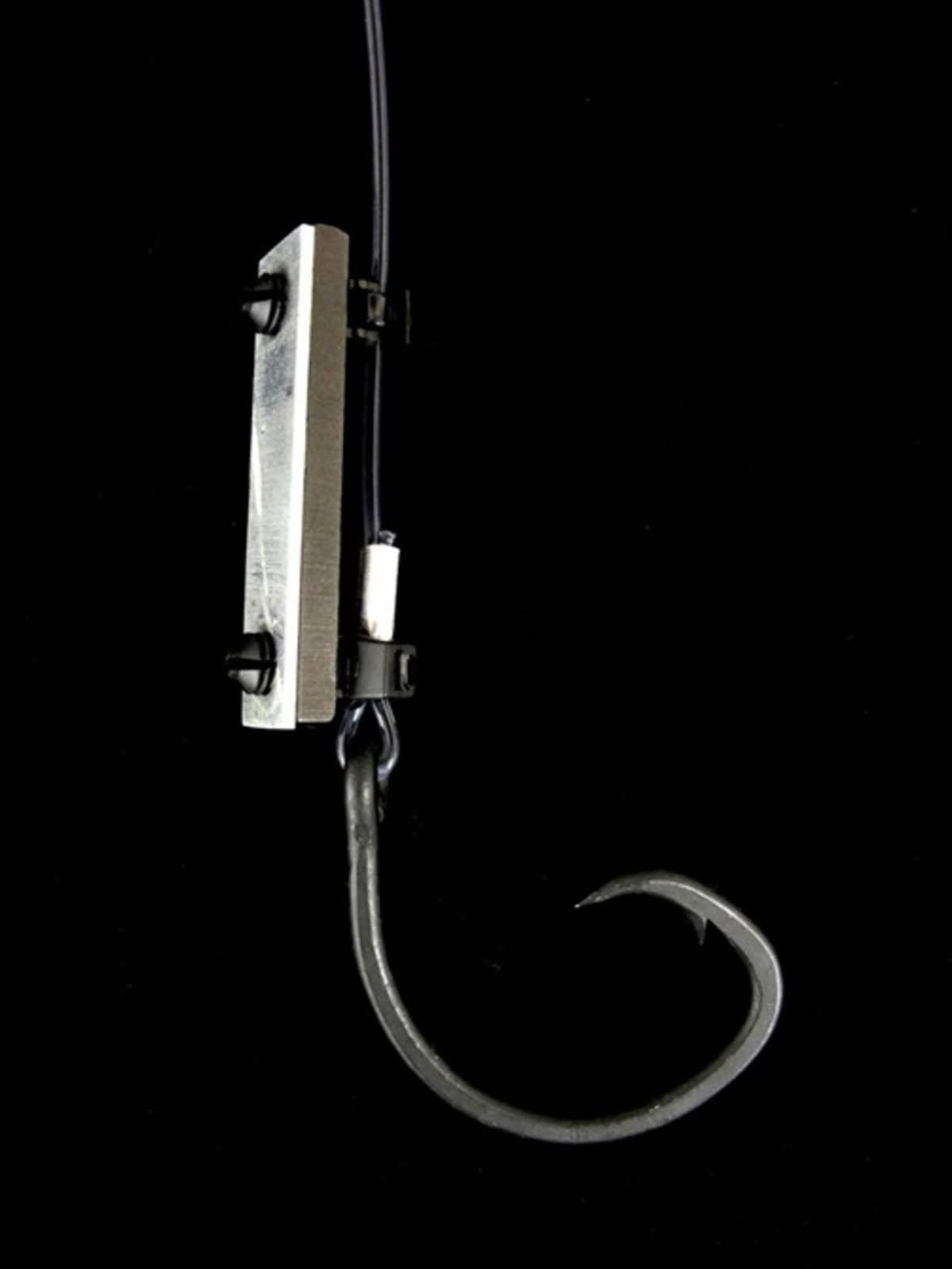
Fishing hook paired with zinc-graphite block.
The study focused on finding an inexpensive solution to make it easily affordable to fishermen. This method could allow them to keep the sharks at bay while catching the fish or other species they target. “It’s no good if it impedes the fisherman’s ability to get what they want. And that’s the cool thing about this type of repellent … it only repels sharks and not anything else," Kajiura added. How is the tiny electric field keeping sharks off the hook? According to the researchers, sharks and related species are extremely electrosensitive. This has been a long-known fact that researchers have tried to leverage in the past. Out of the many techniques tested in the past, some included magnets or rare elements, but the results were mixed.
Kajiura believes that magnets are unreliable for this technique, as they can stick to several other objects, like the fishing gear, tools, and even the boat. On the contrary, the zinc-graphite treatment is non-magnetic, cheap, and easily accessible. This technology was designed to be used on the longline fishing vessels that drop hundreds or thousands of hooks to target tuna and swordfish but often accidentally impale sharks. While there are several intentional shark catches that go unnoticed, the unintentional ones are imposing more threat to the species. In the recent study, the researchers used small, brick-shaped blocks made of zinc and graphite and placed them on each fishing line. As a result, a small electric field, almost the size of a beach ball, was created.
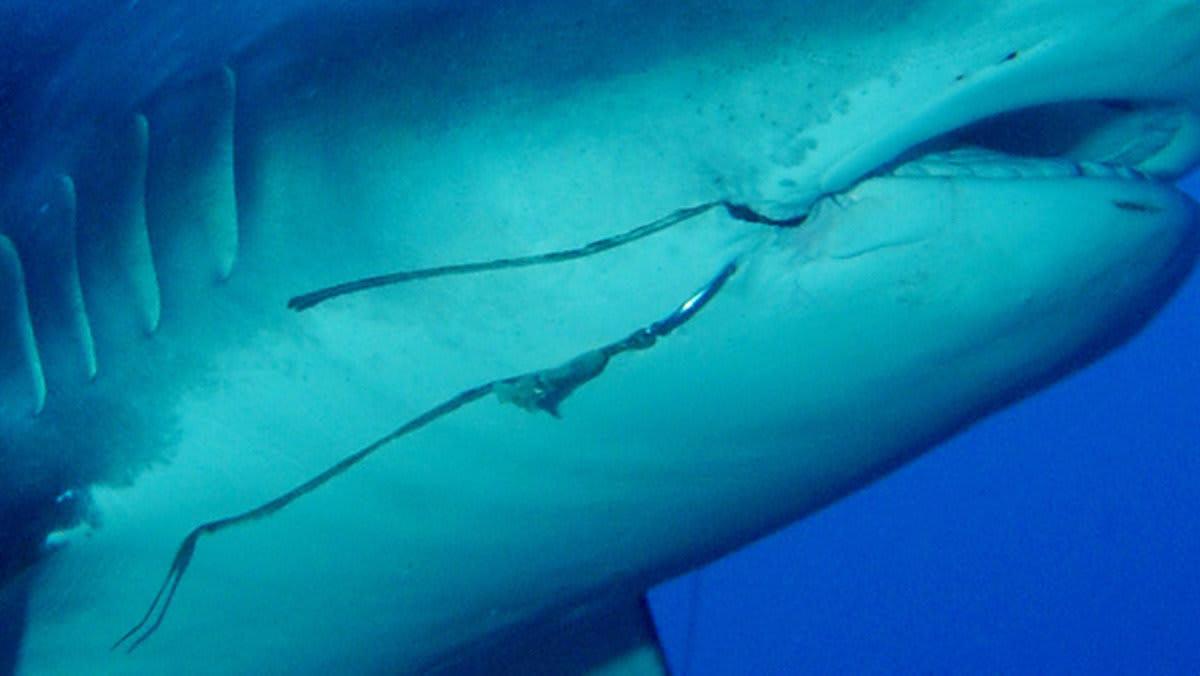
A sharp fishing hook pierced the skin of a shark.
For precise observation, the researchers used three configurations during their experiment in coastal Florida. Some fishing lines were attached with a block of zinc and graphite, while a few were attached to a similar-looking plastic block that produced no electric field, and lastly, a few fishing lines were not attached to any blocks. The hooks next to the zinc-graphite block only caught 58 sharks, much less compared to the 155 sharks caught by hooks with plastic blocks. The hooks with no block caught the most sharks: 190. Clearly, the electrosensitivity of the sharks can be used against them, protecting their lives and eventually safeguarding the species. When they tested the method in the waters off Florida, the results were satisfying.
However, the same method didn't work in demersal Massachusetts waters. There, every hook, regardless of the type of block, had a piked dogfish, a species within the Squalidae family of sharks. “The species of sharks that are predominantly captured in demersal fisheries are distinct from those captured in blue-water pelagic fisheries,” Gilman told the outlet.