
New Ocean Map Pinpoints 800+ High-Priority Areas Crucial for Shark and Rays Protection
Published Feb. 5 2026, 5:09 a.m. ET

ISRA's E-Atlas highlights important shark and ray vulnerability areas.
A team of experts has specified certain ocean areas that should be protected to increase shark and ray populations. They identified 816 areas and described them in a report published by the IUCN. The report, titled “Ocean Travellers,” calls them “Important Shark and Ray Areas” (ISRAs). All of these areas host key activities for at least one threatened shark or ray species. This finding is crucial, as shark and ray populations have been struggling worldwide due to exploitative activities, such as overfishing. These ISRAs are publicly available in an online atlas. The authorities conducted the evaluation to guide future policy decisions.
The investigation has been conducted in the ocean's nine regions, and the ISRAs make up less than 3% of these regions. It signifies that the recovery of sharks and rays is not a difficult pursuit and can be encouraged with little effort. At present, these creatures are not a conservation priority. However, IUCN officials believe that this status quo should change. “We want to change the narrative, but to do that, we need the data, and this is the core of this project,” shared Rima Jabado, chair of the IUCN’s Shark Specialist Group, per Mongabay. “We’re doing the work for the government, so they don’t need to do it.”
Researchers believe the locations identified in the report are the most important abodes for sharks and rays in the world. It provides the most detailed picture to date of where threatened species of these creatures live, eat, and migrate. The report pinpoints several aggregation hotspots, feeding zones, breeding grounds, and migratory corridors. Mapping showcases that both sharks and rays travel far and wide from remote seamounts to coastal waters throughout their life. However, as years have passed, this journey has become increasingly arduous. More than 1,330 scientists from 100 countries contributed their valuable insights to complete the report.
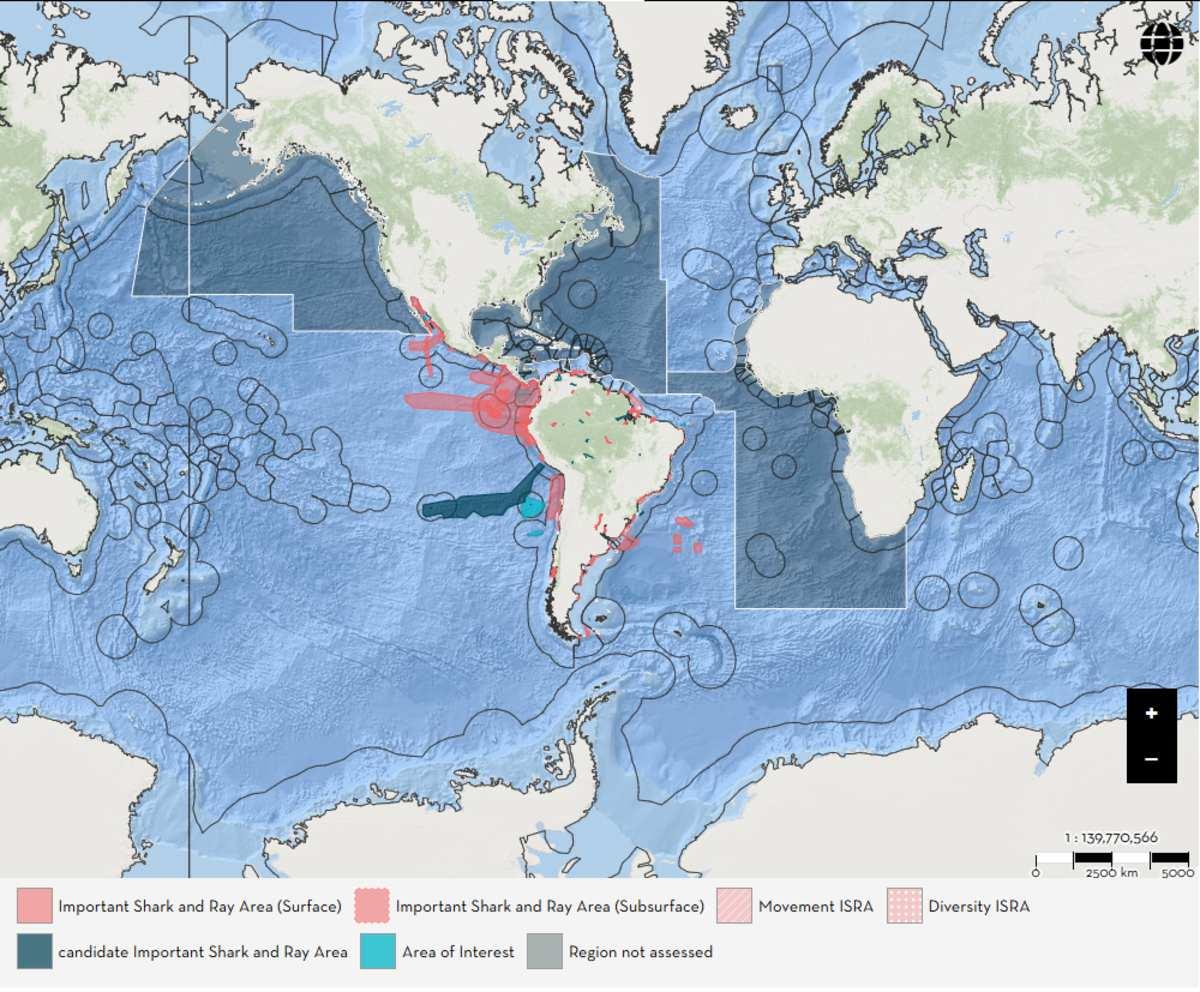
ISRA's ocean map pinpoints important shark and ray vulnerability areas.
The investigation also reveals how deeply connected the ocean is. Sharks and rays congregate in culturally significant sites of the Pacific Islands, yet exhibit unique behavior in far-flung archipelagos, like French Polynesia. Migratory corridors stretch from South Africa to Mozambique, existing alongside productivity-rich upwelling systems in the Eastern Tropical Pacific. Many habitats specified in the report are some of the busiest and most exploitative regions of the ocean, such as offshore development zones, shipping lanes, and industrial fishing grounds.
This finding stresses the necessity of immediate action to align the ocean’s biodiversity needs with human usage. Climate change and habitat loss, combined with exploitative actions such as overfishing, made sharks and rays the second most threatened group of vertebrates on Earth. One-third of these creatures are currently facing extinction. Many species have been pushed to new areas, as their previous habitats became toxic. This report highlights these future refuges and resilience hotspots that need protection.
Researchers believe the map will serve as an essential tool for authorities, aiming to safeguard sharks and rays with climate-adapted conservation strategies. “Migratory sharks and rays depend on healthy, connected ocean habitats. ISRAs give governments and stakeholders a powerful tool: a clear map of important habitats, the conservation of which international collaboration is essential. This work strengthens the scientific backbone of CMS and will help governments translate commitments into concrete actions both within national waters and on the high seas,” Amy Frankel, Executive Secretary of the Convention on Migratory Species (CMS), shared, per Oceanographic.