
Researchers Find Alien-Looking Sea Creatures in Colombia's Seas That Predate Dinosaurs
Published Feb. 18 2026, 7:29 a.m. ET

One of Colombia’s elusive comb jellyfish.
Lovingly nicknamed “sea gooseberry,” it glides through waters like a squishy crystal or a blimpy iridescent water balloon. It has been observed in deep ocean trenches and coastal waters across the world and has also been spotted in the Black, North, and Baltic Seas. The moment this gelatinous creature is removed from the water, it collapses almost instantly, disappearing like it never existed. For years, this made things difficult for the scientists who keenly desired to witness this creature that has been living on Earth even before sponges and dinosaurs.
That’s why they had only one option: to study it up close without touching or disturbing it. That is, through images. In a new study, scientists utilized a handshake of underwater photography art with scientific rigor to document these mysterious creatures. To their surprise, they ended up detecting six new species of ctenophores in the Colombian waters.
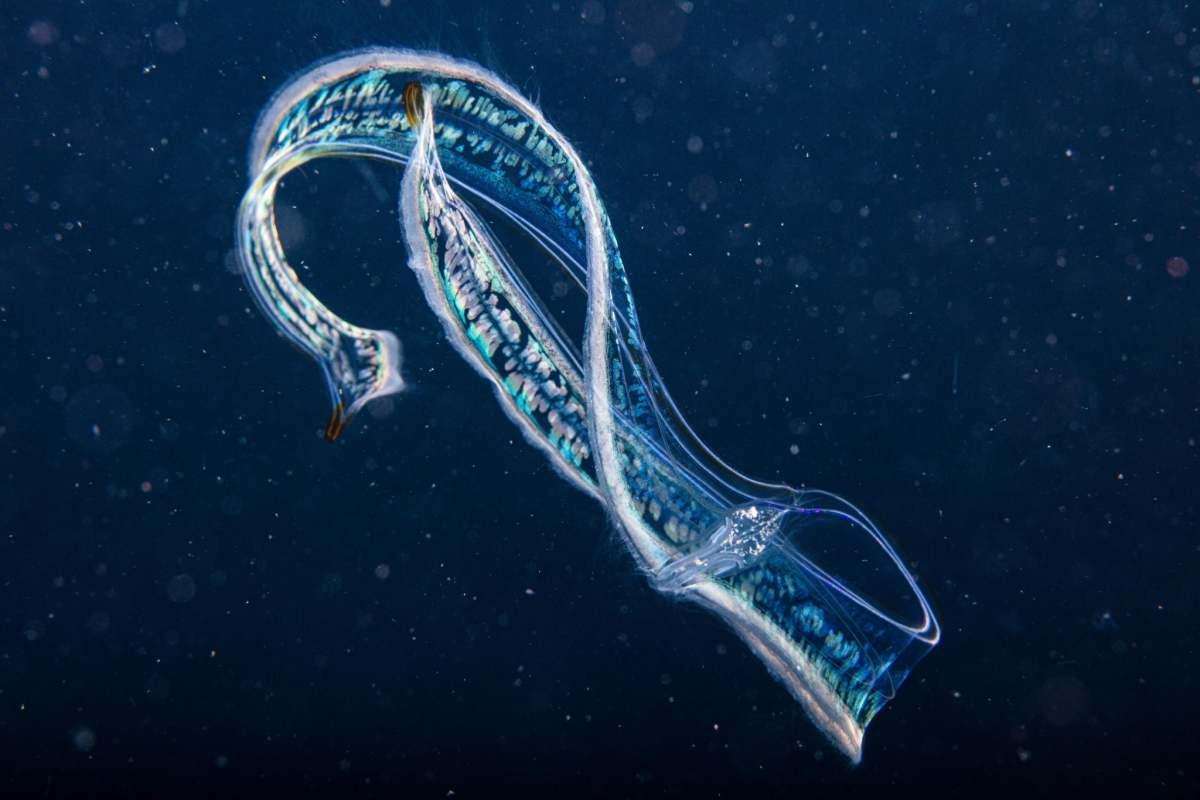
Ribbon-like shimmering comb jelly pulsing through the Colombian waters
Ctenophores, dubbed “comb jellies,” might sound like relatives of jellyfish, but they are actually an entirely different species. As the Smithsonian National Museum of Natural History also noted, these jellies have a distinctive set of strategies they use for hunting, eating, movement, reproduction, and predation. Embossed within their shimmering ribbon-like bodies is a pattern of eight fused bands, called combs.
As they waft through the waters, they slap and beat these cilia to propel their bodies forward. Pulses of glowing electric light travel through these combs as they move forward. Unlike jellyfish, they don’t use their tentacles to sting. Instead, when triggered, their tentacles release powerful bursts of sticky cells called “colloblasts,” which act like glue to trap the prey. Once the prey is trapped, they use the tentacles to bring the food to their mouth. Comb jellies are active predators that voraciously feed on fish eggs, zooplankton, and crustacean larvae. The light they emit when disturbed or poked is not bioluminescence, however, as detailed in the descriptions of photographs captured by researchers from Colombia’s marine research institute, INVEMAR.
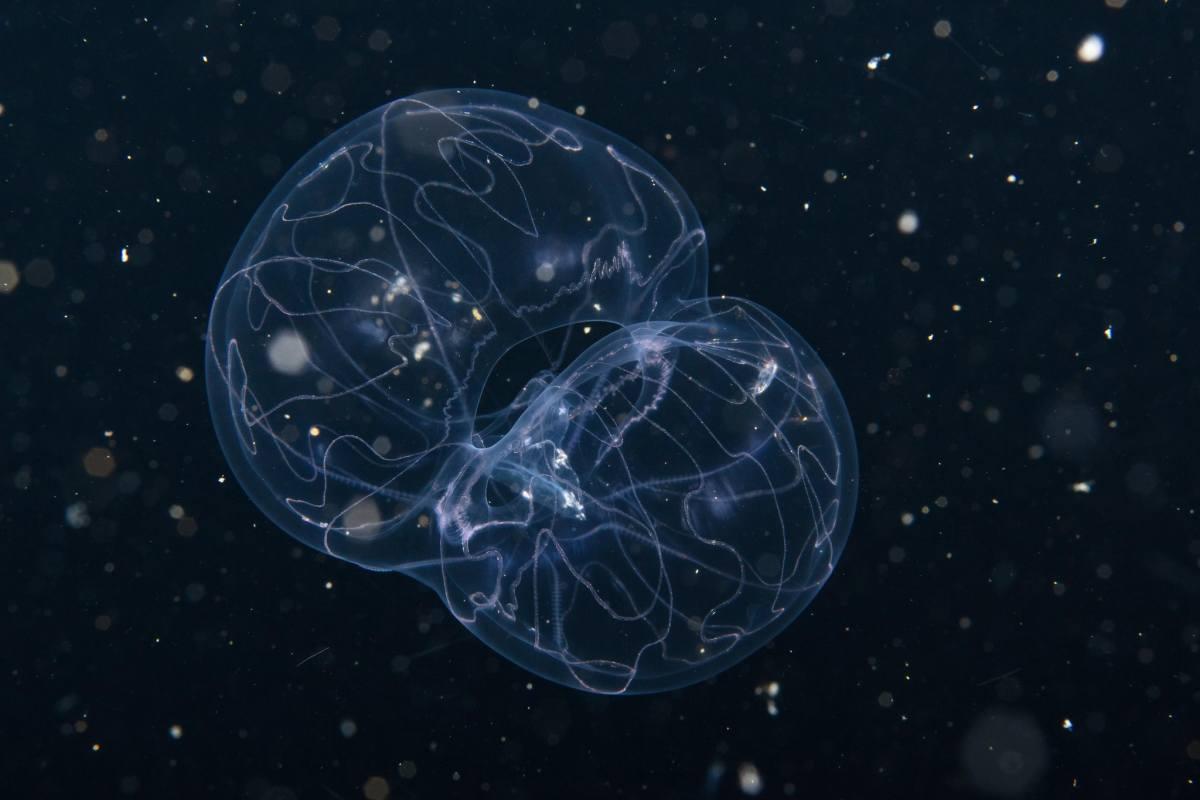
Comb jelly drifting through the Columbian waters
Researchers combined the material collected by scientists of the National Geographic Pristine Seas during a 2022 expedition. These scientists employed professional-grade equipment to capture high-resolution underwater photographs. In the recent episode, researchers used this photograph collection to compile the “country’s first inventory of these species.” The inventory catalogues 15 ctenophores, 13 of the class Tentaculata and two of the class Nuda. By creating a national checklist for the slippery species, scientists are excited to document the creature they have been wanting to investigate for so long.
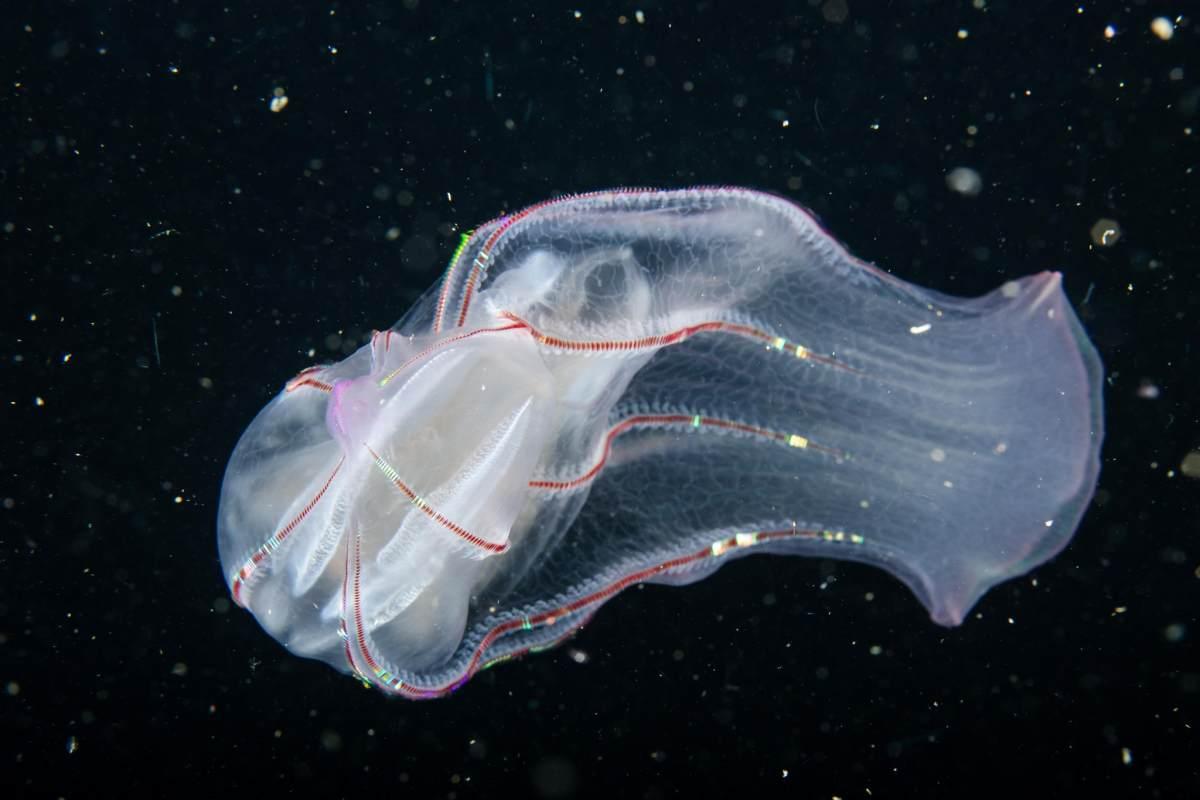
Gelatinous comb jelly in Colombian waters
Juan Mayorga, a National Geographic Pristine Seas marine scientist and one of the study’s authors, highlighted that the study establishes the taxonomic basis of this group of gelatinous plankton, providing data on its “presence” and laying the foundation for future ecological research, using “non-invasive” methods. This is also a remarkable step to strengthen the knowledge of marine biodiversity lurking in remote waters, whilst also addressing a long-standing information gap on the existence of these lesser-known, sensitive organisms.