
Scientists Dropped a Camera Into Antarctic Waters and Saw a Mysterious Deep-Sea Shark for First Time
Published Feb. 11 2026, 4:12 a.m. ET

A baited camera captured a sleeper shark in the Southern Ocean for the first time.
Through the depths of Antarctic waters, engulfed in frozen silence and darkness, a shadow drifted across a camera. It wasn't a fish but a sleeper shark, in a place it rarely ventures. Meandering along the ocean currents, more than 500 species of sharks are free to roam anywhere, but the far south of the Antarctic waters is an exception. Over the years, merely five sharks have been spotted that close to the South Pole, where the temperature plummets below freezing. A baited camera from an Australian expedition to the Southern Ocean surprised scientists with a sleeper shark roaming 1,607 feet deep beneath the cold waters. First appearing as a shadow against the ocean's deep blue, the sleeper shark revealed itself almost cinematically and nudged the camera before turning its back against it.
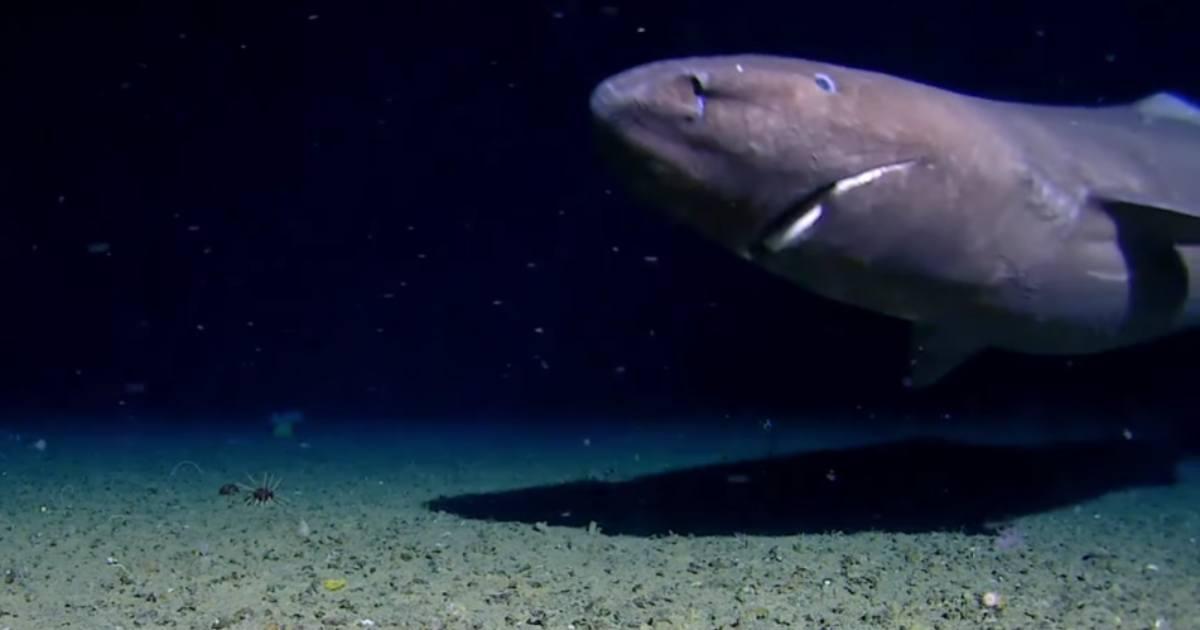
A deep-sea camera captures a sleeper shark roaming in the Southern Ocean.
Oceanographer Jessica Kolbusz, from the Minderoo-UWA Deep-Sea Research Centre, knew that the sighting near the South Shetland Islands, off the Antarctic Peninsula, was historic. "It was surprising since this is the first footage obtained of a somniosidae [sleeper shark] or any elasmobranch [shark or ray] in situ in the Southern Ocean," she said, per ABC News. Spotting a sleeper shark anywhere in the oceans is a celebrated feat, let alone in the abandoned and freezing waters. The exact species of the sleeper shark couldn't be determined from looks alone. Scientists required DNA tests to conclude it might have been a Southern sleeper shark (Somniosus antarcticus).
"The Southern sleeper shark is the most southerly occurring shark species, but this, I believe, is the first record of it—and any shark—in Antarctica itself," said Peter Kyne, a Charles Darwin University adjunct conservation biologist who wasn't involved in the research. "It is well known from the sub-Antarctic area—Macquarie Island, Heard and McDonald Islands," he added.
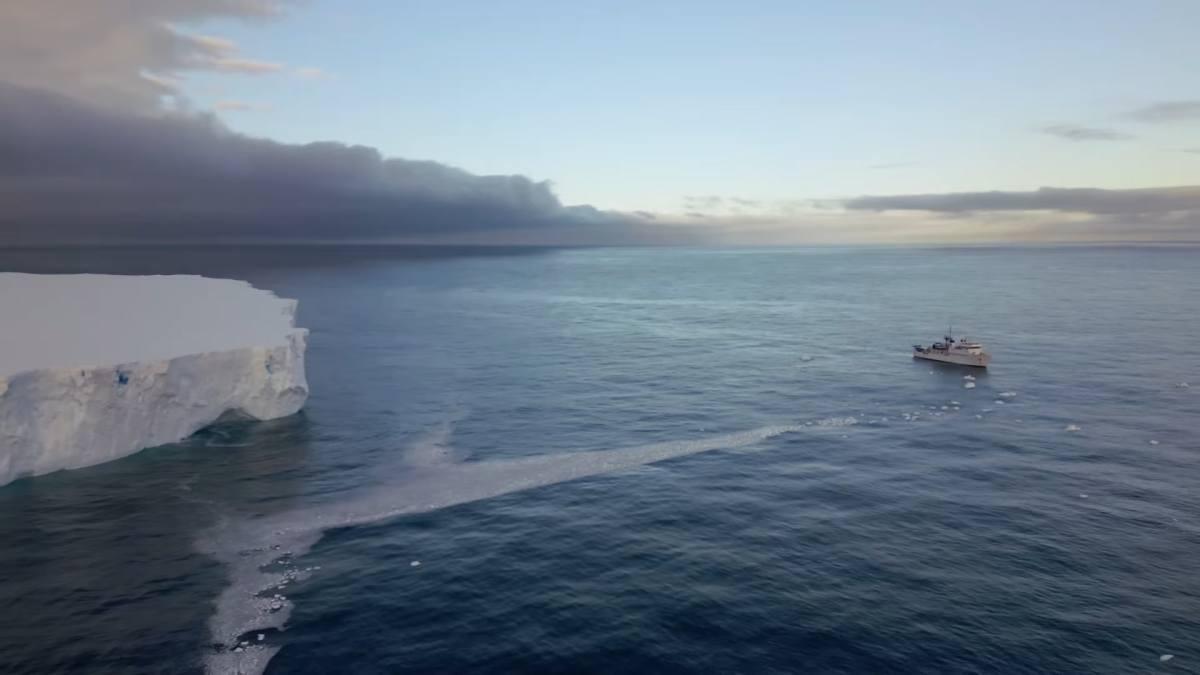
South Shetland Islands, Antarctica, where the shark was filmed.
The physical features that distinguish sleeper sharks are their mottled skin and small fins. Usually large in size, these creatures often prefer to dwell thousands of feet below the ocean surface. One of the well-known sleeper shark species is Somniosus microcephalus, or the Greenland shark. Found in the Northern Hemisphere, this species can live for as long as 400 years. In the southern hemisphere, two similar-looking species, the Southern sleeper shark and the Pacific sleeper shark (Somniosus pacificus), are believed to exist.
Little is known about the temperature tolerance of Southern and Pacific sleeper sharks. However, their Arctic cousin, the Greenland shark, is known to withstand -2°C (28.4°F). The complex compounds trimethylamine N-oxide and urea present in their muscles are believed to act as a natural antifreeze, allowing the species to survive against the odds. The region where the sleeper shark footage was captured was about 1.27°C (34.2°F), slightly warmer than the freezing layers above and below.
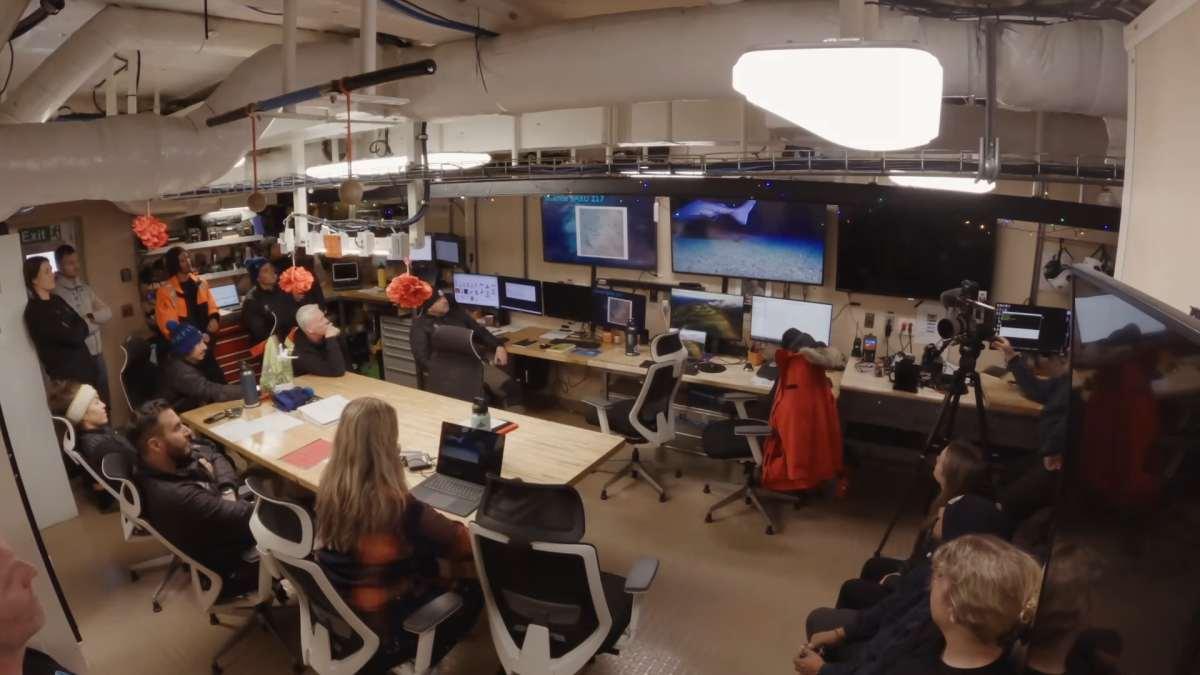
Researchers watch the footage of the sleeper shark.
The knowledge of sleeper sharks is limited; hence, researchers are hoping to fill the gaps with findings of this study. "Genetic analyses are scheduled to begin in mid-2026 and will include, for the first time, the two missing pieces of the puzzle: genetic data from the South Atlantic and Indian Oceans," said research scientist Erwan Saulnier from the Falkland Islands fisheries department. The research made scientists rethink shark distribution around the world and foresee what changes might occur from climate change in the future. "With the rate of warming and the likely wide-ranging thermal tolerance of the species, it's most likely their distribution would stay consistent," Kolbusz said.