
Scientists to Turn Abandoned U.S. Coal Mines Into Massive Underground Water Batteries
Published March 5 2026, 8:42 a.m. ET

Abandoned underground coal mine
Abandoned coal mines across the United States might just get a second life thanks to the researchers at Oak Ridge National Laboratory (ORNL). Using advanced computer modeling, the team is learning how these long-unused underground spaces can be turned into giant underground energy storage sites. Using their models, it is simulated how the water will move through the old mine tunnels and react with the minerals found there. This will help experts understand whether the mines could safely be used for pumped storage hydropower. If this idea works, it will not only provide a way to store large amounts of renewable energy but also repurpose the old mining regions.
Pumped storage hydropower, or PSH, is often nicknamed a “water battery” because it stores energy using water. The system works with two water reservoirs placed at different heights. When there is extra electricity available, water is pumped to the higher reservoir. Later, that water is released back down when electricity demand rises. 90% of the large-scale energy storage in the United States is already done by PSH. The problem that comes with building these facilities is that it usually requires mountains. However, the problem could be solved by taking the system underground. It could also reduce construction costs and make it easier to roll out projects faster.
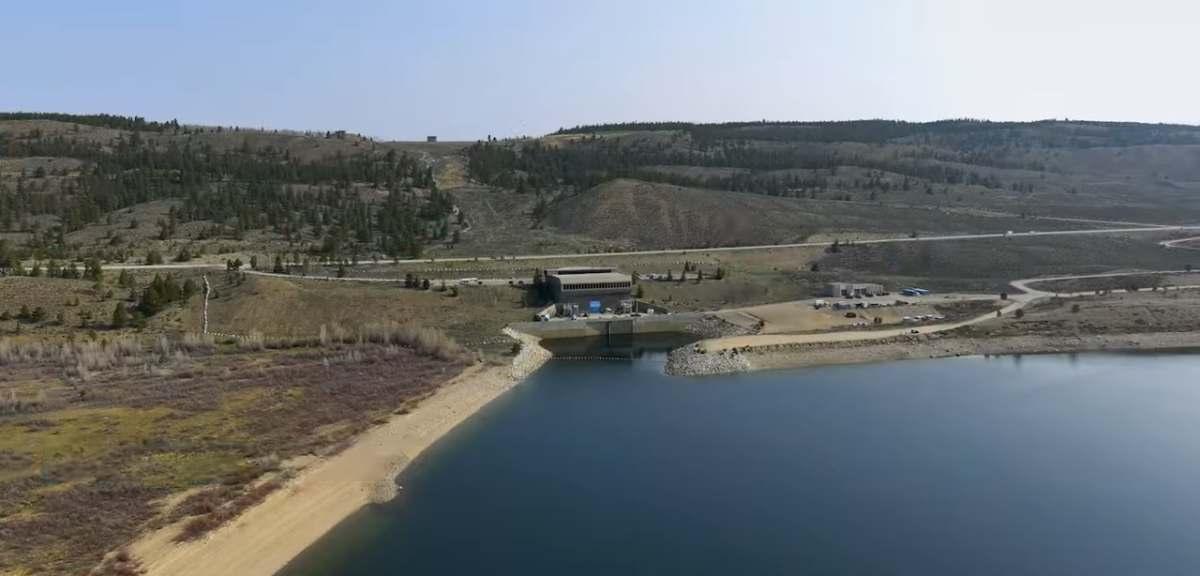
Hydropower facility
However, turning an old mine into an energy storage system is not as easy. Even though the idea looks promising, there are many hurdles to solve, according to ORNL senior researcher Thien Nguyen. One concern is chemical wear and corrosion. The lab’s modeling tools could solve this problem. By creating simulations, engineers will be able to study how water would actually flow through the mine’s tunnels and shafts. It can also help them to see how the water might interact with minerals underground and whether that could lead to corrosion problems. Simulations will also help check how strong the structures are and if water under pressure could stress the walls of the tunnels. “Underground PSH is an exciting opportunity, but we have to overcome challenges like chemical erosion and structural stability,” said Nguyen, per Interesting Engineering.
The ORNL team is now moving ahead to check how practical these projects are in the real world. Their modeling tools are expected to help industry partners evaluate potential risks and make more informed decisions. According to ORNL science writer Galen Fader, “Our modeling tools will help industry partners evaluate these risks and make informed decisions about facility design, construction, and operations at specific locations of interest.”
New studies will be conducted by experts to check the efficiency of these underground systems. By analyzing different scenarios, they hope to identify the best ways to construct and run these facilities depending on the location and the mine’s structure. If this idea works according to plan, then abandoned coal mines will no longer be an environmental problem. It will become something useful instead of sitting unused. These old sites could become part of the country’s energy infrastructure. In a way, the same mines that once powered the industrial age with coal may soon help support a cleaner and more stable energy grid.