
UK Company Develops Breakthrough Tech That Turns Used Nappies into Fuel Within 72 Hours
Published March 2 2026, 8:33 a.m. ET

Used diapers ready for disposal.
Waste management has become one of the major problems that we are currently facing. Out of it, one of the toughest types of waste to deal with is disposable nappies and sanitary products. It is particularly difficult because they are contaminated with human waste, most of them cannot be recycled, and are thrown out with regular trash. The trash usually ends up in landfills, where it can take hundreds of years to break down while releasing methane, a powerful greenhouse gas that contributes to climate change.
However, Derby-based company Go4Greener has come up with a unique solution. According to the firm, this difficult waste can actually be turned into a more sustainable fuel source. It has invested $1.67 (£1.25) million in new technology that uses aerobic digestion to safely remove contaminants. The process leaves behind a non-organic material that can then be reused. “We're loading nappies and hygiene products into a shredder to get to the right particle size and then into this box, where the biology works its magic,” the manufacturer of the machine, Lee Knott, CEO of Advetec, said, per the BBC.
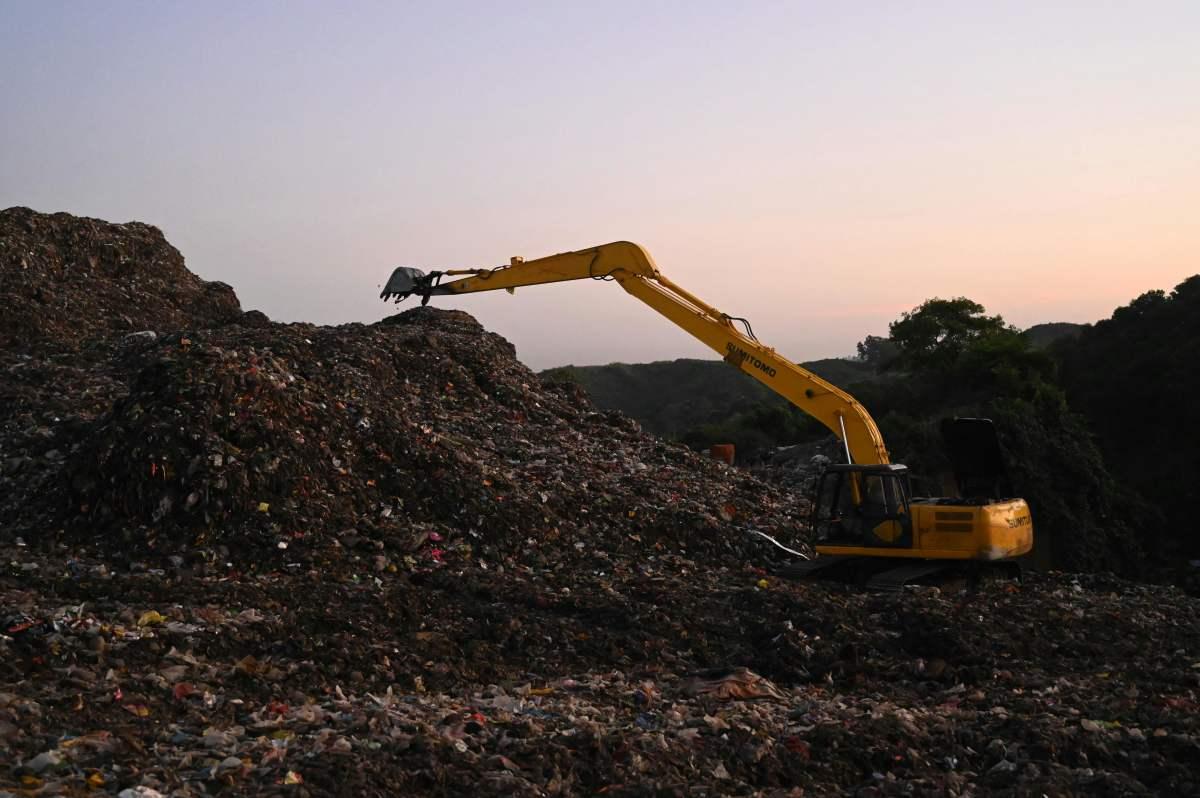
Disposable nappies are one of the hardest wastes to deal with.
Knott explained that a stimulant is added to speed things up, allowing the entire process to be completed within 48 to 72 hours. The material moves through four separate chambers, where it is continuously broken down and dried using biological methods. By the end, visible floc or clusters of particles are produced as the waste is processed. “What’s remaining there is a very high-calorific-value product which can be used as a coal replacement,” he said. The machine can convert around 4,000 tons of nappy waste into approximately 2,000 tons of alternative fuel each year.
He also stressed that nappies and other absorbent hygiene products are not going anywhere anytime soon. This makes it even more essential to find a more cost-effective and greener solution, which he believes this technology provides. “Nappies and absorbent hygiene products are never going to go away, so we do need to innovate and find a more cost-effective and environmentally friendly way of dealing with it, and this is it,” he said. The process helps to reduce both the mass and overall volume of waste. This, in turn, lowers the cost of transportation and the emissions generated during waste transport.
Samantha Turton, Go4Greener’s managing director, said that the machine, called “XO22,” is a huge milestone for the waste industry. “We’re proud to be leading the way in turning one of the hardest waste streams into fuel and reducing waste to landfill in the process,” she said. The machine processes waste collected from nappy and sanitary bins in public spaces such as shopping centers, leisure venues, care homes, schools, and nurseries. XO22 can handle up to 4,000 tons of waste each year, but the waste produced is much higher. Reports reveal that the UK discards around 400,000 tons of nappies annually, and even that figure is somehow dated.
The nappy problem is widespread, and tackling it will require broader changes in how everyday rubbish is sorted and disposed of. Turton also revealed that a shift is happening, and many of her customers inquire about carbon footprints and sustainability efforts. With this machine, it is possible to bring big changes and possibly a greener and brighter future.