
8,000-year-old Pottery Reveals Advanced Math Hidden in Flower Art
Published Dec. 30 2025, 7:52 a.m. ET

Artworks featured on the fragments archaeologists discovered in a pottery shard belonging to the Halafian culture dating to 8000 years old
In the center is a tree from Domuztepe. The trunk is perfectly centered, the leaves organized. On either side, the tree is surrounded by buildings that resemble multistorey huts with triangular tops. In the background are mountains and rows of animals that look like swans. The huts are flanked by checkerboard patterns and overhanging trellis made of tiny triangles. In between the huts are little diamond-shaped structures, probably flowerpots. This is just one of the many artworks doodled on a piece of clay, among the 700 fragments archaeologists recently examined from a prehistoric pottery shard.
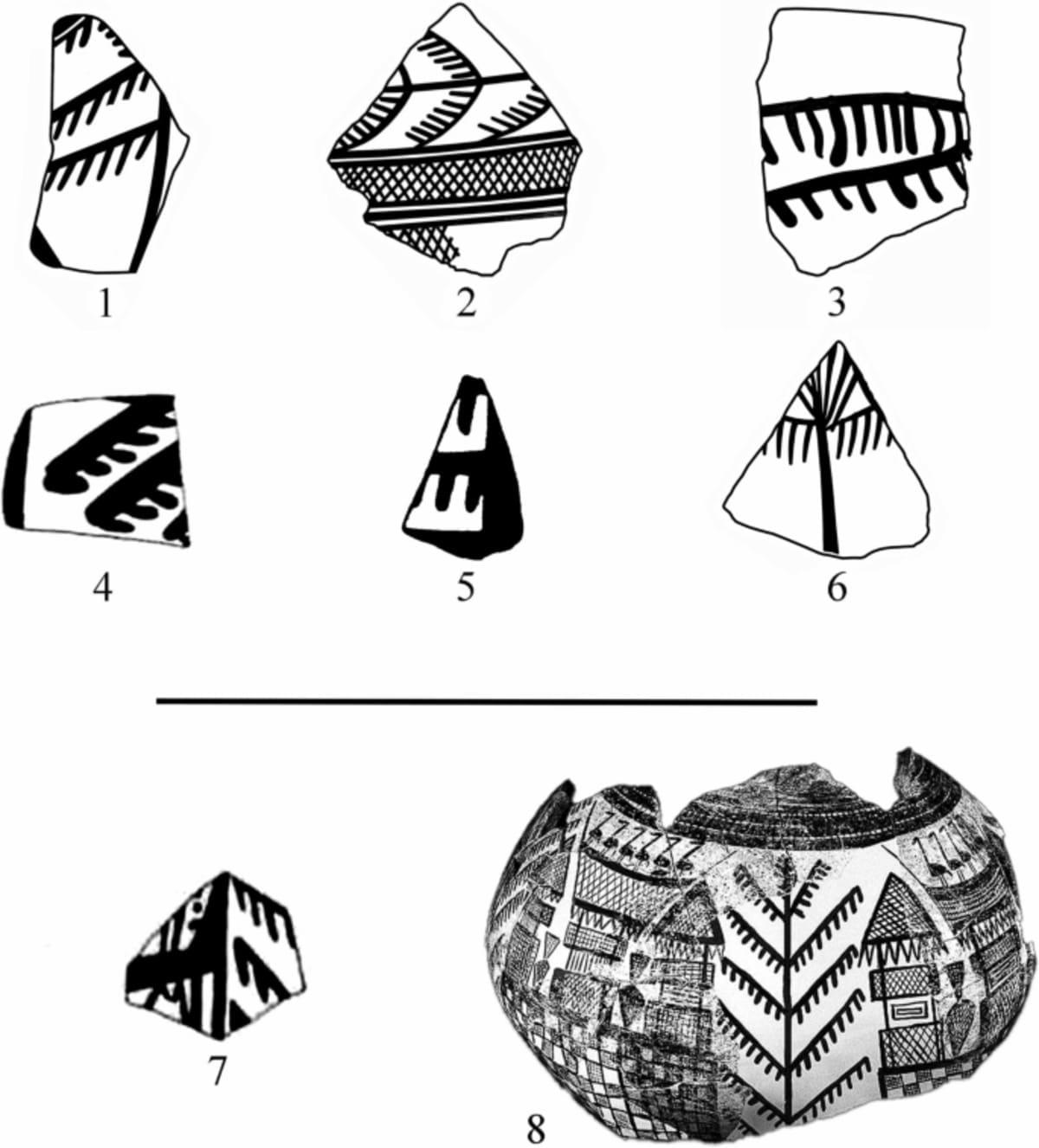
Artworks featured on the fragments archaeologists discovered in a pottery shard belonging to the Halafian culture dating to 8000 years old. The 8-numbered artwork is of a Domuztepe tree
Documenting their findings in the Journal of World Prehistory, they speculated that, at a time when there were no calculators, graph papers, or abacus sticks, humans were already doing math. Not just doing, they were using it to create art – pretty and beautiful flowers.
Artworks featured on the fragments archaeologists discovered in a pottery shard belonging to the Halafian culture dating to 8000 years old
The study was led by archaeologists Yosef Garfinkel and Sarah Krulwich of the Hebrew University of Jerusalem, who examined the pottery shards across 29 archaeological sites and unfurled a collection of over 700 pieces of prehistoric art, painted on fancy vessels belonging to the Halafian culture of northern Mesopotamia, dating around 8,000 years ago. The artwork depicted a symmetry that seemed way beyond just decoration or aesthetics. Long ago, the humans who created these doodles were already developing the seed of mathematical thinking.
The artwork could just be an expression of their visual perception or likely a cultural training they practiced for special rituals. The intricate repetition of motifs, the neat, rhythmic patterns of stems and branches, precisely geometrical architectural elements, intelligent division of space; for features like these to appear, even before the advent of formal mathematics, is nothing short of astonishing. “These patterns show that mathematical thinking began long before writing,” Krulwich said in the press report.
Artworks featured on the fragments archaeologists discovered in a pottery shard belonging to the Halafian culture dating to 8000 years old
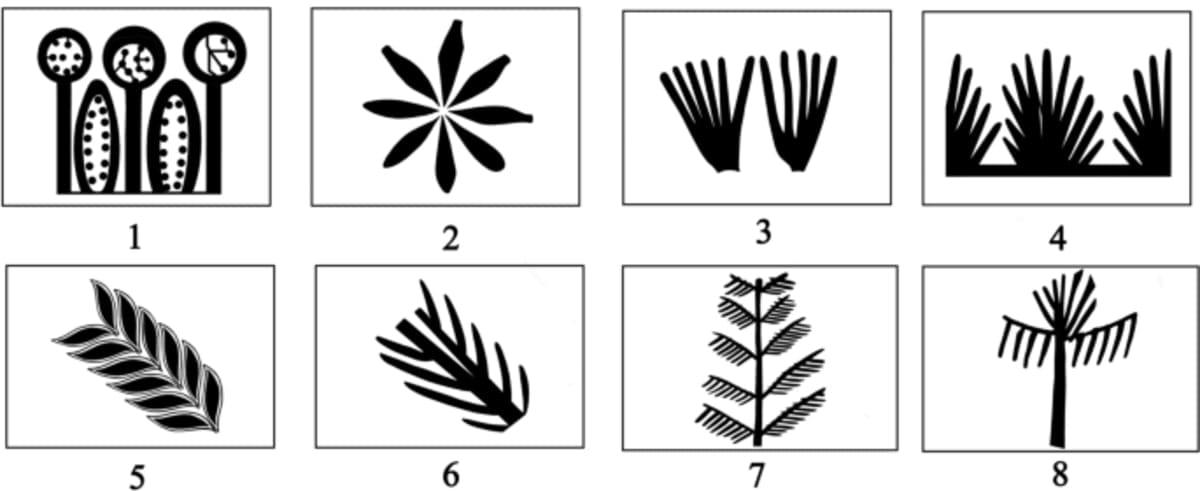
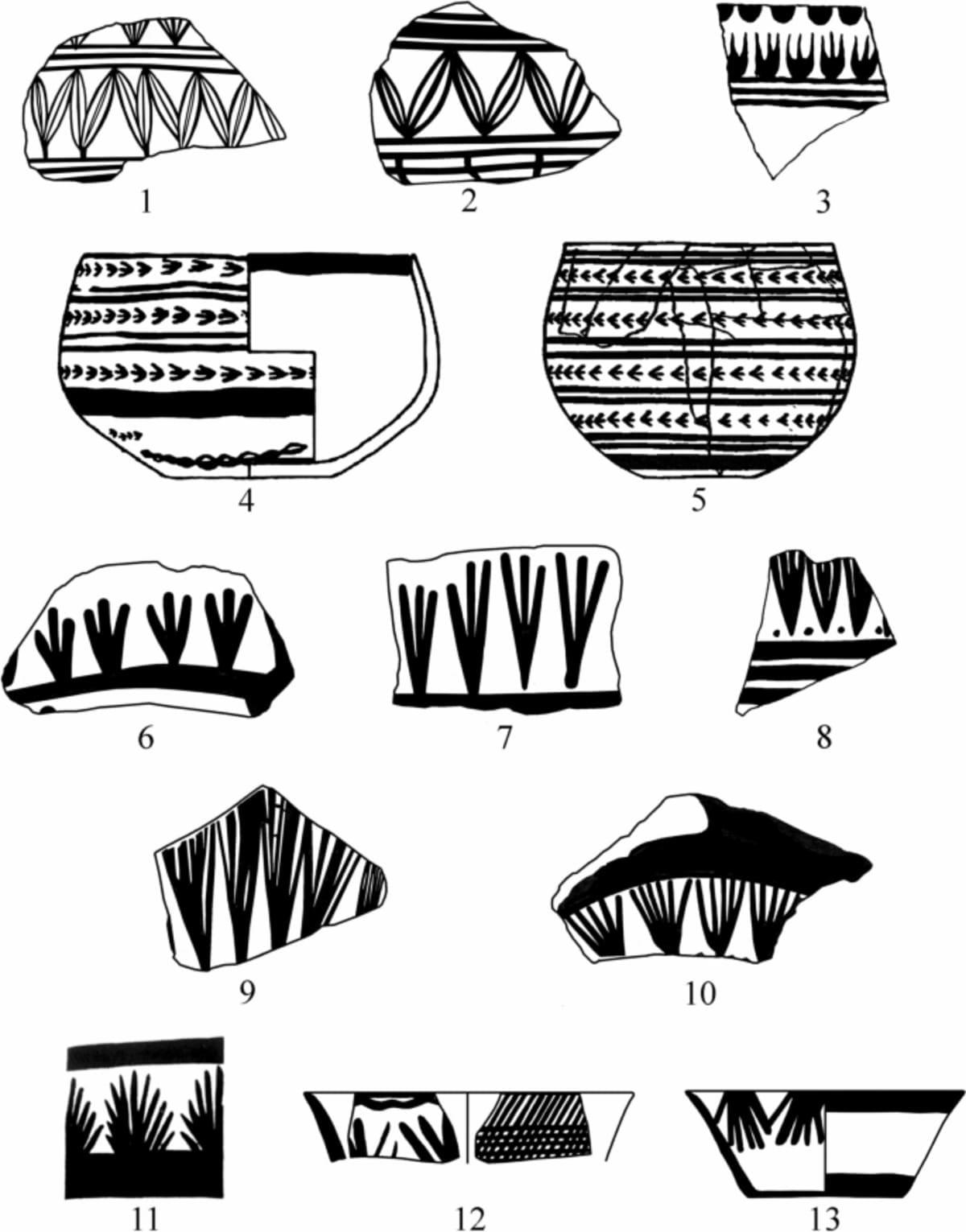
Until the discovery of these art pieces, historians didn’t have any evidence that could indicate the prevalence of mathematical thinking in this era. At most, they had some clues from previous research that analyzed art from southern Mesopotamia, when the proto-cuneiform number signs evolved for the first time around 5,000 years ago. The Halafian pottery shard came as a total surprise. Garfinkel and Krulwich noticed that the artworks featured four main types of motifs, including flowers, shrubs, branches, and trees.
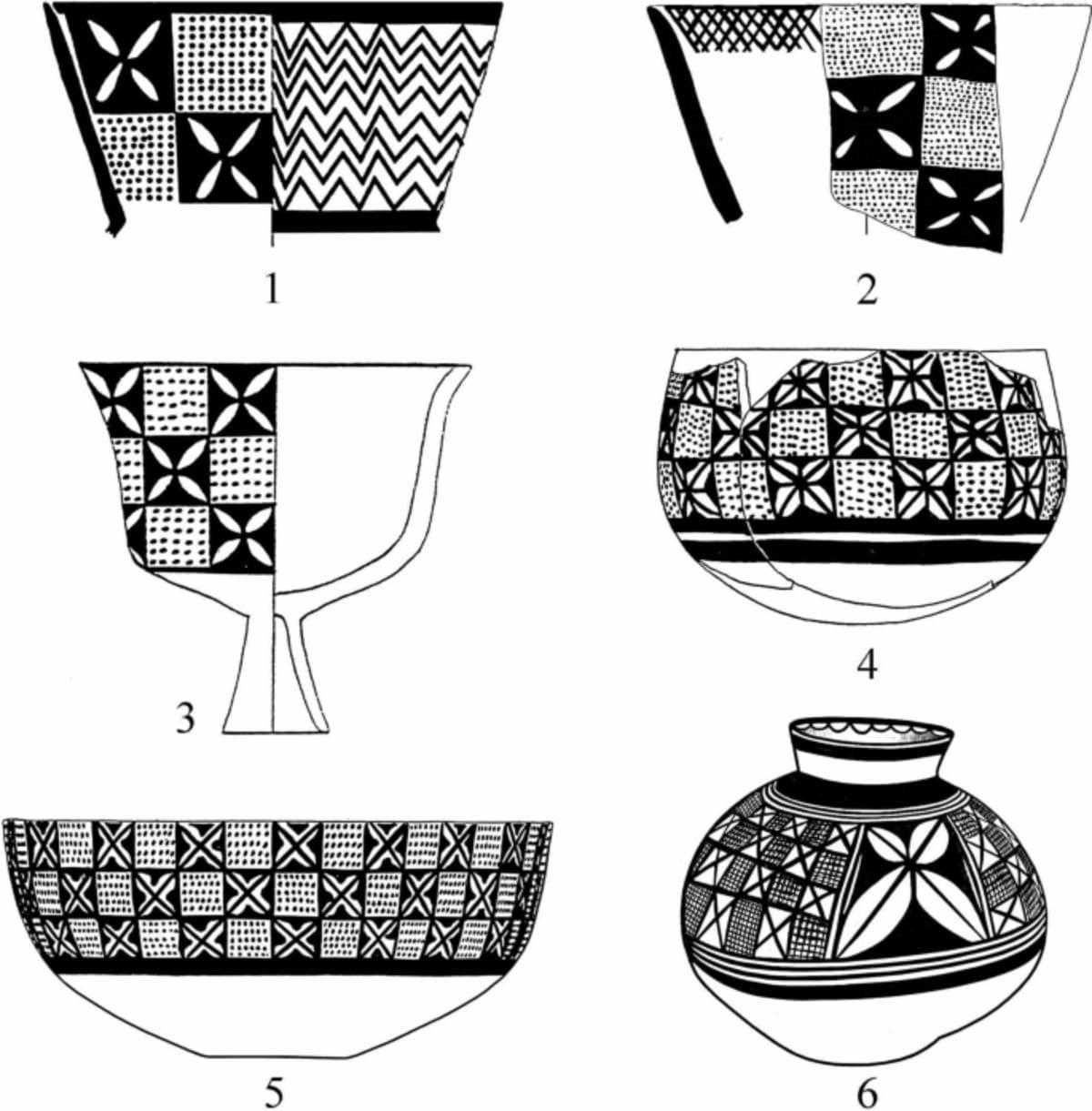
Flower petals showcased a precise numbering system, arranged in sequences of 4, 8, 16, 32, and 64. Gorgeous flowers with four petals were tucked inside black squares of a checkerboard pattern. Another remarkable feature was that they didn’t depict animals or humans. Not even edible plants or cereals. This was something the team had not expected given that most of the prehistoric artworks are characterized by images of humans and grinning animals. This made scientists think that flowers evoked extremely pleasing emotional response in them that they chose them as the primary visual for artistic expression.
Artworks featured on the fragments archaeologists discovered in a pottery shard belonging to the Halafian culture dating to 8000 years old
"Identifying artistic motifs involves a certain degree of interpretation," the archaeologists said. “We see here cognitive development in aspects relating to aesthetics and to the advance of mathematical knowledge.” This discovery, researchers noted, contributes to “ethnomathematics,” a field that explores mathematics through culture rather than formal training. But it could also be related to “biomathematics,” a field that explores connections between mathematics and structures of living systems.
These artworks are illustrious evidence of what your school’s math teacher might not have told you. Cognitive awareness and intellectual expression might not be stemming from formal training, but rather from an ancient period where humans were attuned to nature and its keen observation. Mathematical thinking goes way beyond textbooks, it’s a cosmic thing, it’s the way nature expresses itself, and it’s the way humans perceive nature’s beauty.