
New Fossil Study Challenges Human Origins Theory— Claims Lucy Might Not Be a Direct Ancestor
Published Dec. 25 2025, 2:43 a.m. ET

The face of "Lucy," an Australopithecus afarensis
Lucy's position in the history of human evolution is currently being challenged. The Lucy fossil species, or Australopithecus afarensis, was long believed to be an ancestor species that humans directly descended from. Although there's been debate, there was never enough evidence to dismiss Lucy's significance until recently. New research published in the journal Nature last month has put forth a strong argument against Lucy. The scientists found evidence to support the claim that an older species, Australopithecus anamensis, was the direct human ancestor and not Lucy. This shift in human evolutionary history emerged when researchers unearthed remains of another early hominin species, Australopithecus deyiremeda, at the Woranso-Mille region of the Afar Rift, as per Archaeology News. The remains were ultimately linked to the “Burtele foot,” a 3.4-million-year-old partial foot.

Prehistoric caveman family.
The fossils of A. deyiremeda show that it lived at the same time as Lucy. But anatomical features like teeth and feet suggest that A. deyiremeda had retained more primitive features from an earlier ancestor than Lucy did, proving that the latter wasn't the only hominin existing at the time. Researchers argue that A. deyiremeda may have descended from the older species, A. anamensis, which lived in East Africa between approximately 4.2 million to 3.8 million years ago. If that is true, then the older species is more likely to be a direct human descendant rather than Lucy. Fred Spoor, a professor of evolutionary anatomy at University College London, was not involved in the research that led to the discovery of species tied to the Burtele foot, but he believes the discovery to be a revelation.
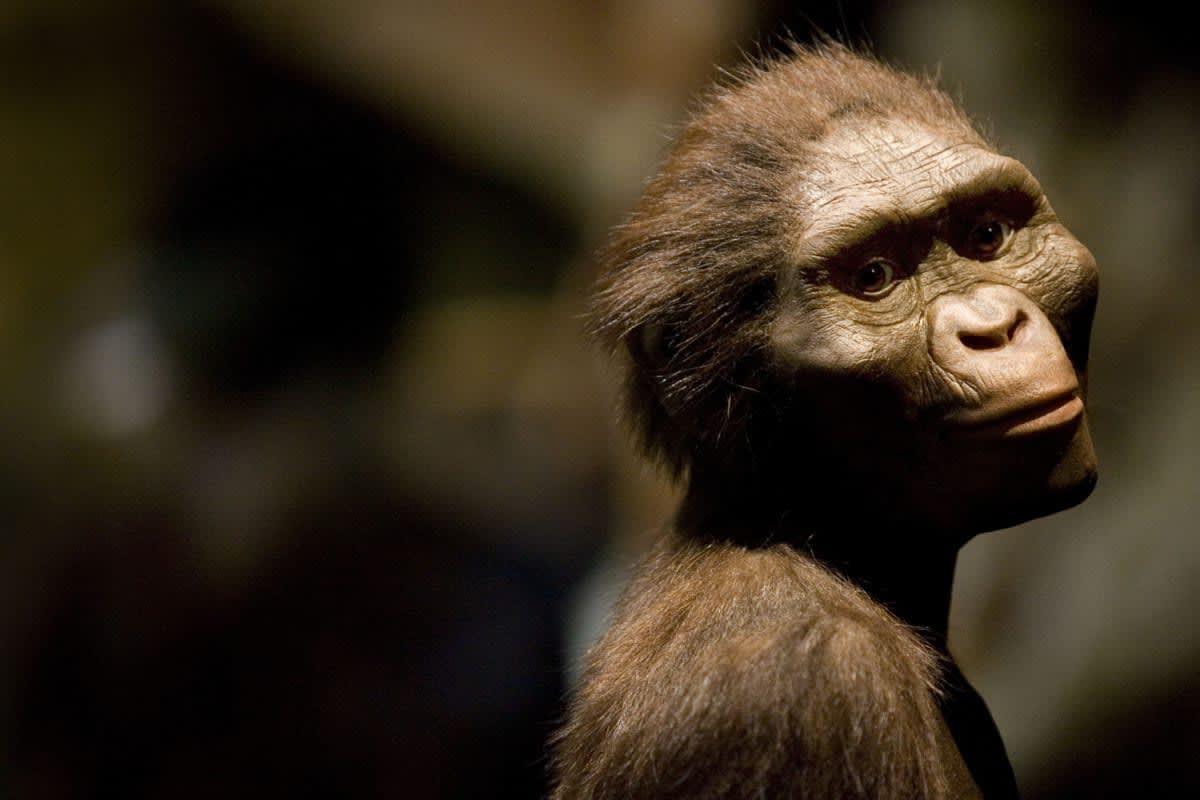
Sculptor's rendering of the hominid Australopithecus afarensis, aka Lucy.
"If this is correct, A. afarensis will lose its iconic status as the ancestor of all later hominins," he told Live Science. The new suggestion has prompted a massive debate amongst anthropologists. While some appreciated the questioning of Lucy's role as the "missing link" in human ancestry, others found the proposal preposterous. Scientists like Spoor strongly supported the new claim, whereas others revolted against it, calling it "far-fetched" or a "stretch to put it mildly." Why are many experts not convinced by the new claim? That's because Homo Genus is believed to have arisen in East Africa. The oldest known Homo fossil dates back to 2.8 million years, and it's a jawbone from Ethiopia. This species is believed to have emerged about 0.5 million to 1.5 million years ago.
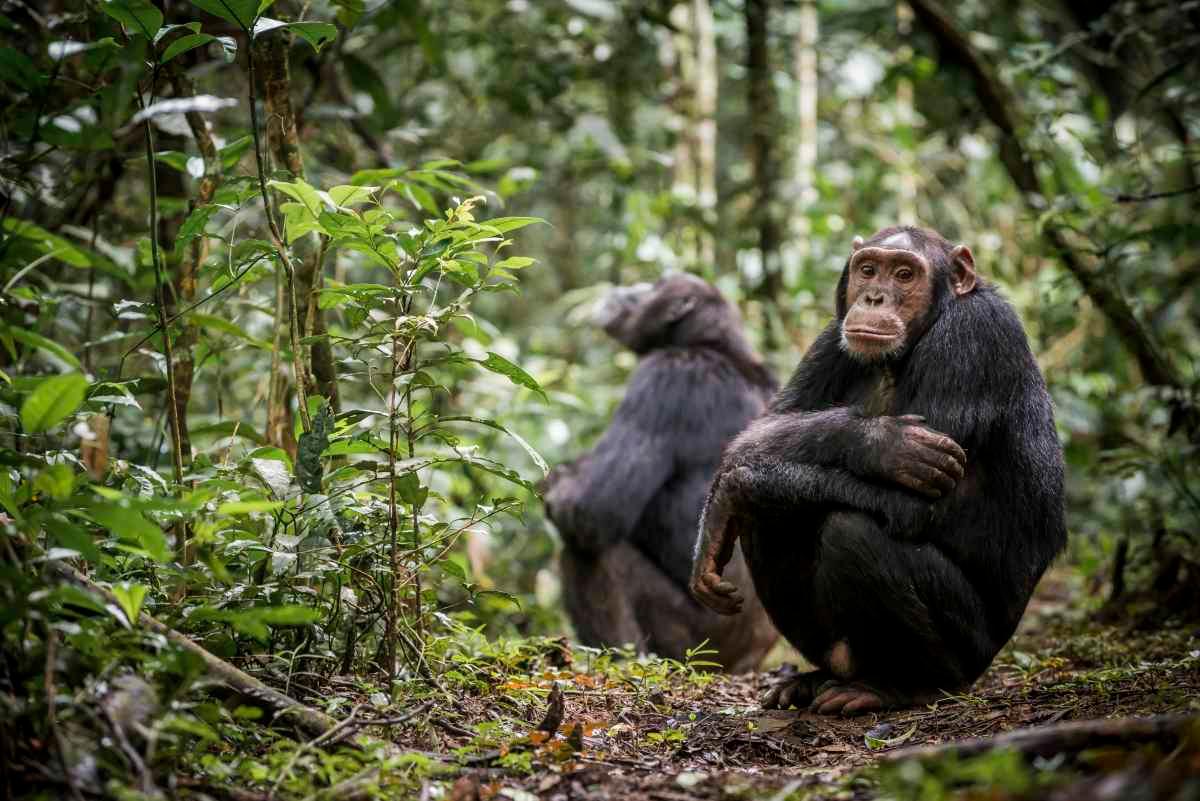
Chimpanzees - the closes relatives of humans among primates- in Kibale National Park.
In contrast, the earliest South African hominin fossils are much younger. That's the reason why Carol Ward, the Curators' Distinguished Professor of pathology and anatomical sciences at the University of Missouri, believes that the older species can not be a direct human ancestor. Despite the new research, Lucy's not out of the picture. Many anthropologists believe that the idea of Lucy being the oldest known direct human ancestor can't be completely ruled out. "Early Homo could have emerged from a broader, pan-African pool of australopith diversity. So yes, Lucy’s species is still a candidate, but no longer the candidate," said Lauren Schroeder, a paleoanthropologist at the University of Toronto Mississauga.