
A Critical Antarctic Glacier is Breaking Apart. And Its Melting Ice Faster than Expected
Published Feb. 9 2026, 9:02 a.m. ET

Pine Island cracked
Some massive changes have reportedly taken root in Antarctica. Researchers claim that ice flow has accelerated at Pine Island glacier in West Antarctica, triggering the disintegration of the ice shelf in front of the glacier. It will eventually raise the sea level faster than the present rate. After considering all the readings, the study claims that not only is the Pine Island glacier the fastest-flowing glacier in the entire continent, but it is also the largest contributor to sea level rise. Findings have been published in the journal Earth ArXiv.
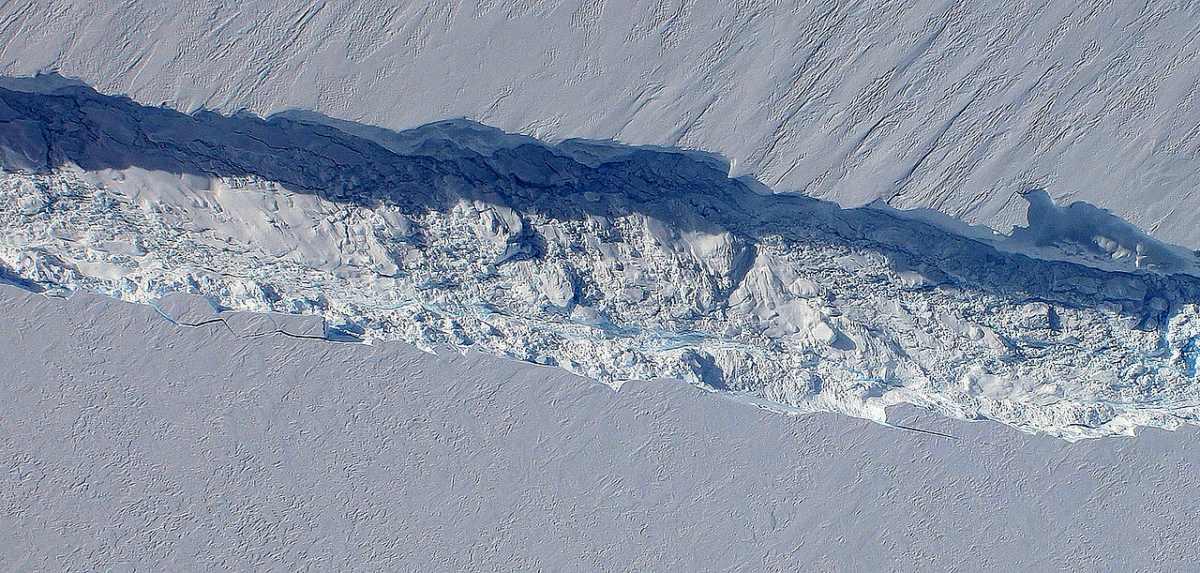
This close-up of the rift opening up across the Pine Island Glacier ice shelf
Researchers claim that ice flow at the Pine Island glacier has accelerated dramatically at least since 2017. The study suggests that the rate has increased because the floating ice shelf in front of the Pine Island glacier can no longer hold back ice as it did before. This ice shelf is also called the Pine Island ice shelf. This finding has concerned researchers, as the Pine Island glacier is a pivotal part of the West Antarctic ice sheet. If the glacier were to disintegrate completely, it could raise the global sea level by 17 feet. The Pine Island ice shelf is spread throughout the ocean. The ice shelf apparently keeps a lot of inland ice in check, protecting it from warm water. The amount of ice it protects can facilitate a foot-long sea level rise.
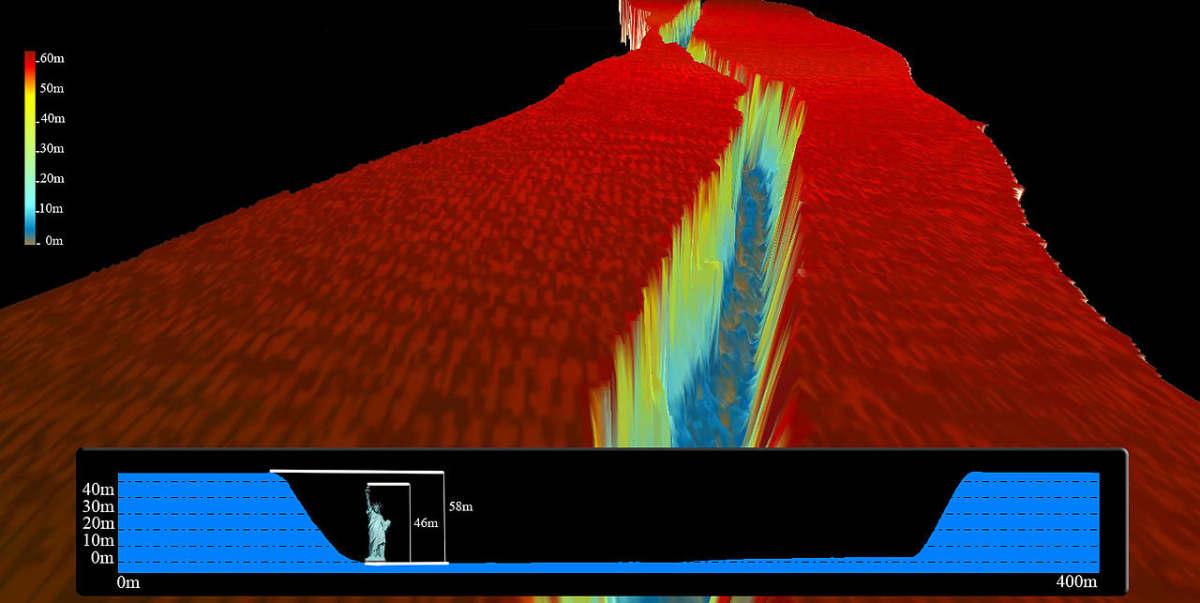
Pine Island Glacier ice shelf rift
Researchers monitored the Pine Island glacier using Copernicus Sentinel-1 satellite images and insights collected during the 1970s. The data suggest that ice flow at Pine Island glacier increased from around 7,200 feet per year in 1974 to 13,000 feet per year in 2008. The team noted a dramatic increase of around 16,000 feet between 2017 and 2023, equivalent to a 20% increase. There was apparently a 113 percent increase in ice flow from 1973 to 2023. Researchers concluded that the ice discharge rate increased by more than three-quarters from 1973 to 2013.
The rapid acceleration caused the glacier to retreat 98,000 feet away from the grounding line, the area where the ice shelf begins to float. These readings were contrasted with insights collected by computer models. The results indicated that ice flow acceleration occurred and continues to happen, due to ice shelf thinning, a result of the ice shelf’s interaction with the warmer seawater. The seawater is stripping away the Pine Island ice shelf from its surrounding ice, weakening its structural integrity in the process. As a result, the ice shelf is now unable to provide the required support to the upstream ice, which in turn is increasing ice loss across West Antarctica.
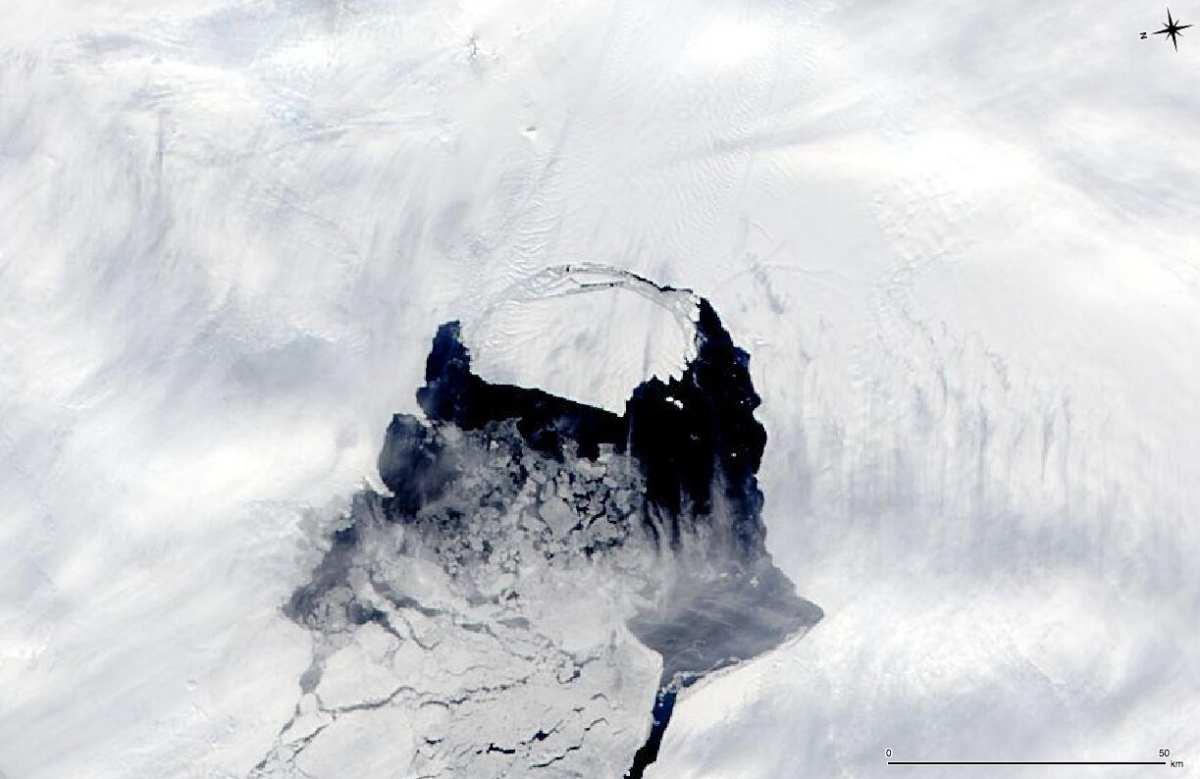
This MODIS image taken by NASA’s Aqua satellite on Nov. 10, 2013, shows an iceberg that was part of the Pine Island Glacier
Sue Cook at the University of Tasmania in Australia long argued that the popular assertion of ice calving as the sole reason for ice flow acceleration at Pine Island glacier was wrong. This study verifies her argument, as it suggests that increased damage to the shear edges, the surrounding ice, is the bigger culprit. Nerilie Abramova from the Australian Antarctic Division shared that the study reveals how quickly the Pine Island glacier is going out of the picture, and it is the need of the hour that its global consequences are considered. “There is no doubt that ice loss from this region will continue to affect the world’s coastlines for decades and centuries to come,” shared Abramova.