
Scientists Develop DNA-Based ‘Cassette Tape’ — and It Can Store Over 3 Billion Songs
Published Jan. 20 2026, 10:18 a.m. ET

A cassette tape.
The modern world brings modern problems, and a lack of digital data storage is one of the most recent ones. However, the issue might not take long to be solved, as researchers from Shenzhen, China, come to the rescue. The team has created a new kind of “cassette tape” that stores digital data using DNA instead of magnetic tape. Onto a thin plastic film, the data is written, and information is stored as tiny strands of synthetic DNA. The prototype alone can hold 36 petabytes of data, which is about one million gigabytes. It is enough to store up to 3 billion songs on the device.
The study was published in the journal Science Advances, and the authors wrote, “DNA has the potential to become the next-generation information storage medium due to its high storage density.” They further added, “The rolled configuration of the DNA tape efficiently maximizes the spatial utilization of the material, enabling portability and extending the number of available areas and storage capacity by increasing its length.” The project was led by Xingyu Jiang, a biomedical engineer at the Southern University of Science and Technology (SUST) in Shenzhen.
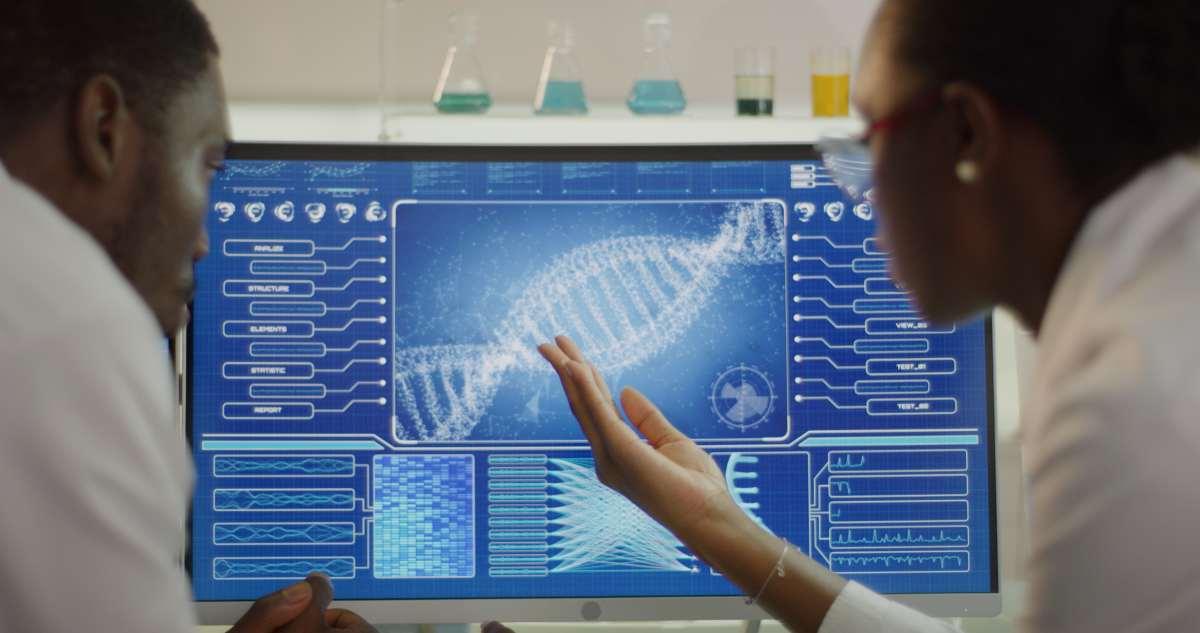
Scientists are analyzing DNA samples.
Researchers turned digital files into DNA letters, A, T, C, and G, to make this work, which replaces the zeros and ones used by computers. Then they print these short DNA strands as tiny dots on a flexible plastic sheet. Just like a traditional cassette, that sheet is then cut and rolled into a slim tape that moves smoothly between reels. Moreover, they designed the cassette so it would work with existing lab equipment. It allows standard DNA writing and reading machines to access each section of the tape one by one, without needing entirely new technology.
Also, the team made certain specifications, such as adding white sections along the tape, which absorb the DNA liquid. Meanwhile, black stripes coated with water-repelling ink keep the liquid from spreading sideways. This design stops different DNA samples from mixing together. Furthermore, each white section holds its own piece of DNA, which creates a small, separate storage space on the tape. Researchers have estimated that there are about 550,000 individual file slots on a tape that is just over 16,405 feet (5,000 meters). A small optical scanner reads barcodes printed on it. The correct storage section is identified as soon as the motor spins and its barcode appears.
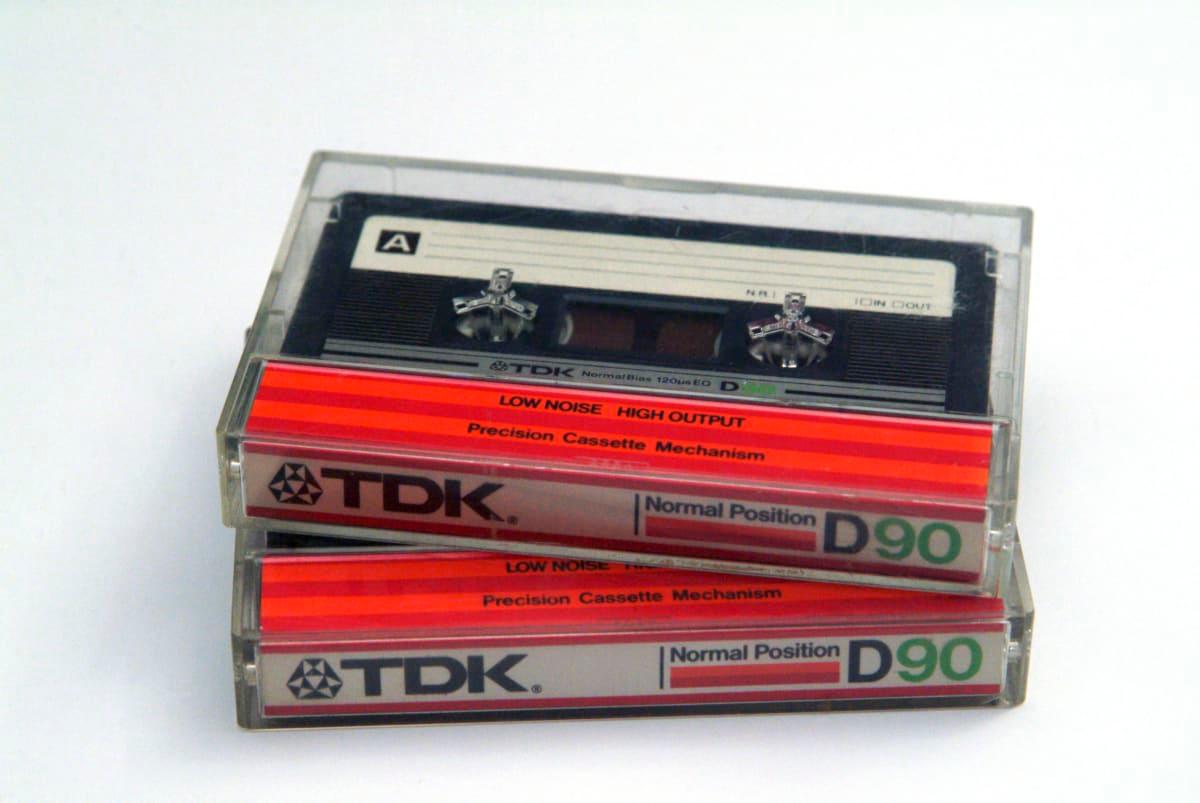
Cassettes on a table
Storing data is increasingly becoming a problem, and it can affect us in more ways than previously thought. As more people stream videos and music, shop online, and connect everyday devices to the internet, digital global data keeps growing faster. According to an analysis, the total amount of stored data could reach around 175 trillion gigabytes by the mid-2020s. Storing all this data requires massive amounts of electricity, and it can impact the environment negatively.
DNA can be introduced as an efficient alternative, as it has the capacity to store an enormous amount of data in a very small amount of material. Furthermore, the research team also said that one gram of DNA could hold about 455 exabytes, which translates to roughly a billion gigabytes of information. DNA is also surprisingly durable. Scientists estimate that DNA has a half-life of about 521 years, which means it takes that long for half of the DNA molecules to decay.