
NASA Turns 25 Years of Kepler's Supernova Data Into a Stunning 40-Second Video
Published Jan. 8 2026, 2:53 a.m. ET

A still from the video showing changes in Kepler’s Supernova Remnant using data from NASA’s Chandra X-ray Observatory.
The expansion of Kepler's Supernova Remnant over the past 25 years is summed up in 40 seconds in a new video released by NASA. The stunning time-lapse was created using data from NASA’s Chandra X-ray Observatory. It goes back to 1604, when the German astronomer Johannes Kepler discovered the supernova in the sky. Thus began the research, and scientists learned that Kepler's Supernova (SN 1604) is a Type Ia supernova, where a little white dwarf star exploded after exceeding a critical mass. In the aftermath, it either pulled materials from a companion star or combined with another white dwarf. The remnants or debris left behind after an explosion glow in X-ray light because of the high temperature—some millions of degrees—they attained from the blast.
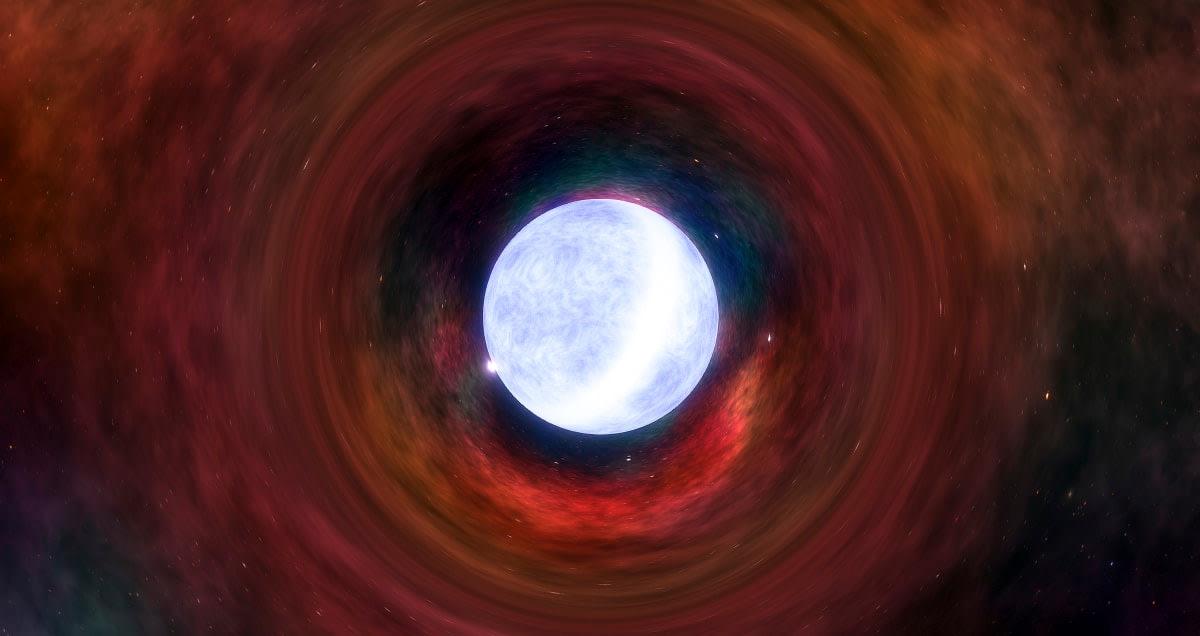
Kepler's Supernova with a neutron star spinning at the center.
According to NASA, these remnants have remained afloat in space, about 17,000 light-years away from Earth. The Chandra X-ray Observatory has been tracking the supernova debris and has recorded detailed images of its changes over the years. However, the latest time-lapse video of Kepker's Supernova Remnant is one of its kind as it's the longest-spanning video released by Chandra. The footage included X-ray data from 2000 to 2025.
In 2013, the agency determined that the Kepler's Supernova was triggered by "interaction between a white dwarf and a red giant star." This conclusion was drawn after a disc-shaped structure was spotted near the center of the remnant. However, that's just one part of the mystery unsolved, as scientists believe there's much more to explore about the supernovas. “The plot of Kepler’s story is just now beginning to unfold,” said Jessye Gassel, a graduate student at George Mason University in Virginia, who led the work.
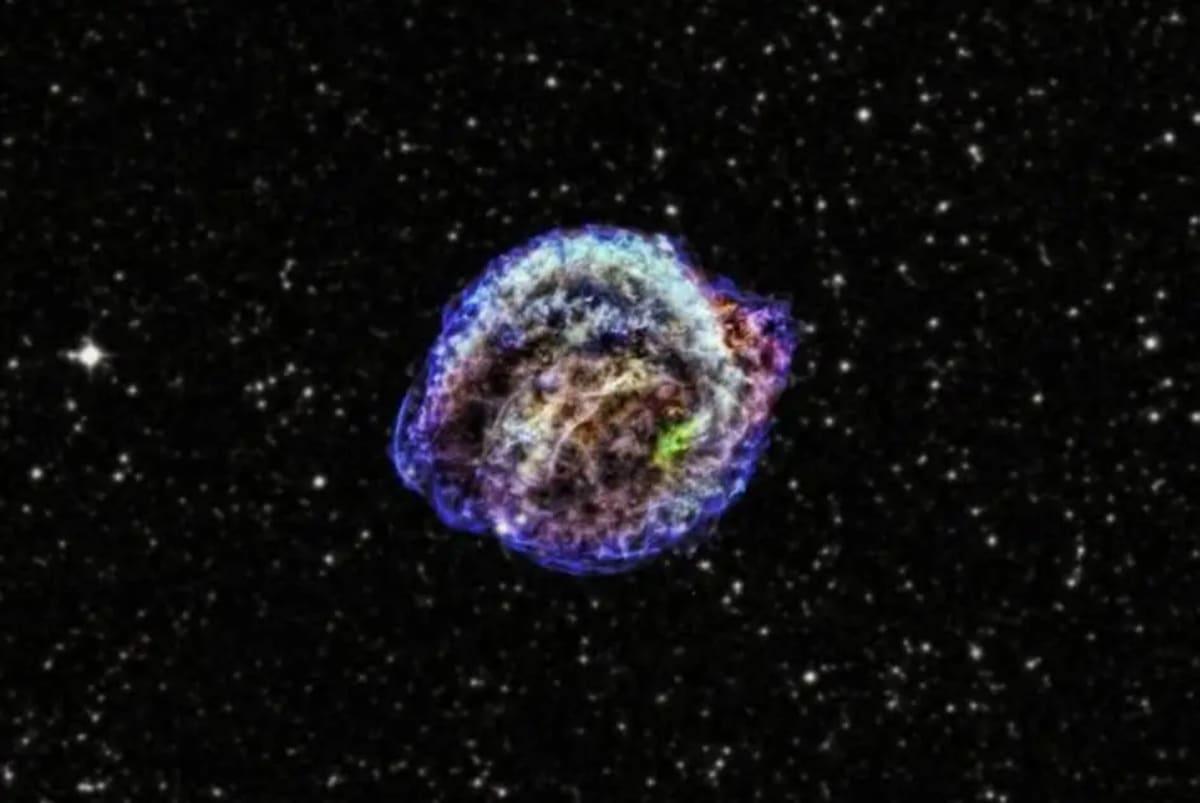
This is the remnant of Kepler’s supernova. The red, green, and blue colors show low, intermediat,e and high energy X-rays observed with NASA’s Chandra X-ray Observatory.
“It’s remarkable that we can watch as these remains from this shattered star crash into material already thrown out into space,” Gassel added. There's still much left unexplored about the supernova debris. Scientists believe that these leftovers may have crucial elements that are essential for planets. Hence, more discoveries and knowledge about the remnants will provide powerful insight into the behavior of celestial phenomena.
“Supernova explosions and the elements they hurl into space are the lifeblood of new stars and planets,” said Brian Williams of NASA’s Goddard Space Flight Center in Greenbelt. He is also the principal investigator of the new Chandra observations of Kepler. “Understanding exactly how they behave is crucial to knowing our cosmic history," Williams added. The remnant of Kepler's Supernova or SN 1604, as captured in the video, expanded and contracted over more than two decades.
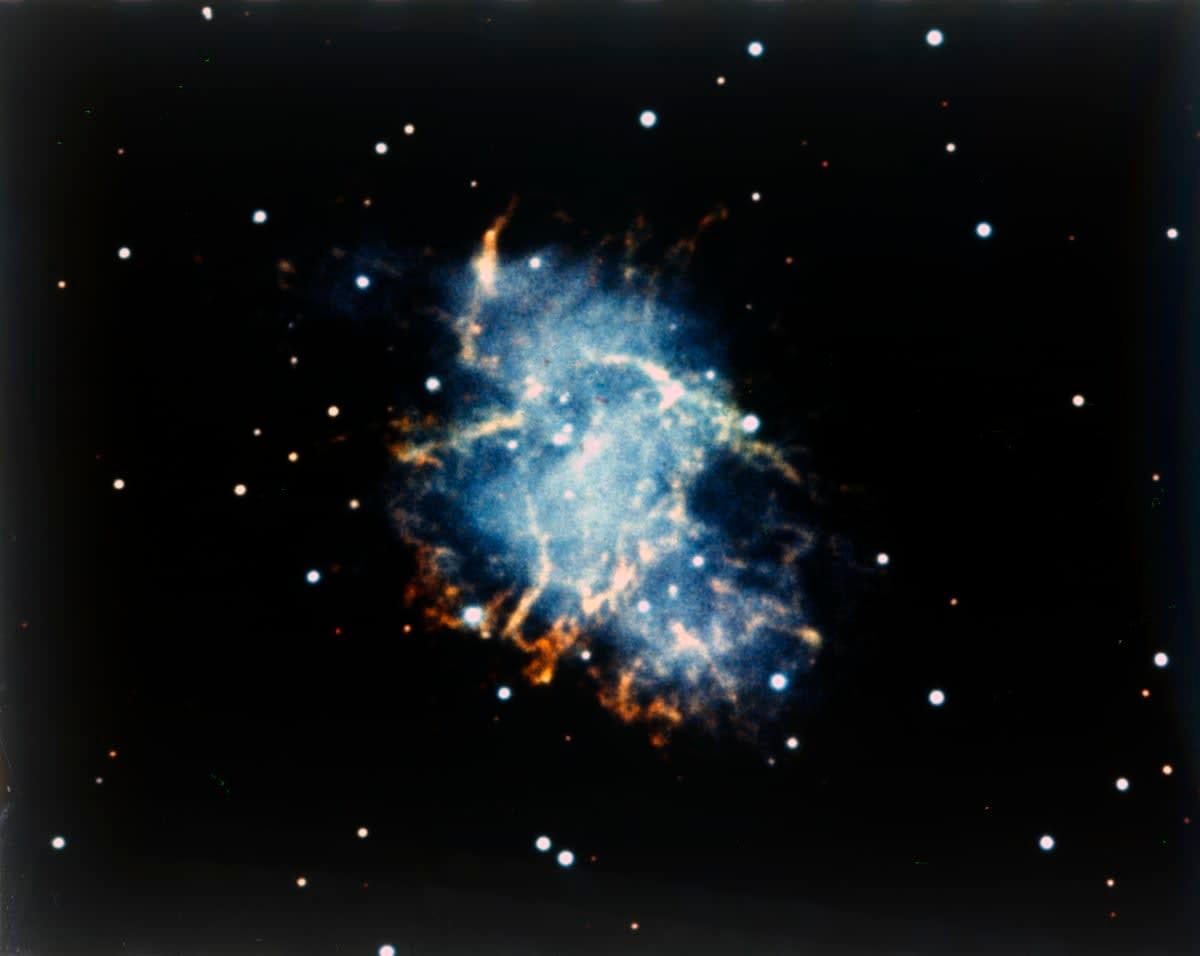
A supernova remnant in space.
The space agency observed that the remnant particles accelerated at different speeds, making the expansion irregular. The fastest parts of the remnants are located at the bottom, traveling at about 13.8 million miles per hour, whereas the slower parts are traveling towards the top at 4 million miles per hour. The drastic diffrence is speeds is due to the density of gas varying towards the top and the bottom of the remnant. "This gives scientists information about the environments into which this star exploded," the agency said.