
Construction Workers Stumble Over 150-Million-Year-Old Dinosaur Fossil at Utah National Park
Published Jan. 19 2026, 4:14 a.m. ET

Construction workers in Colorado's Dinosaur National Museum's quarry uncovering a giant sandstone chunk bearing dinosaur fossil
Between mid-September and mid-October last year, around five construction workers in lemon-grey-colored vests and yellow safety helmets were working on a routine parking lot project in Colorado’s Dinosaur National Monument when their tools stumbled upon something. With a blue fiberglass ladder, a red electric hammer, and other tools scattered on the dusty ground, they unloaded bucket after bucket of soil. As they stripped away the layers of asphalt, they noticed a giant 12-foot-thick hunk of sandstone sticking out of the ditch.
Immediately, they abandoned their tools and the task they were involved in, and called the park’s paleontologists to investigate what they assumed was a dinosaur bone. Their hunch proved correct. Embedded within the large plastered rock was the enigmatic fossil of a dinosaur that roamed this land 150 million years ago, according to a report by the National Park Service (NPS).
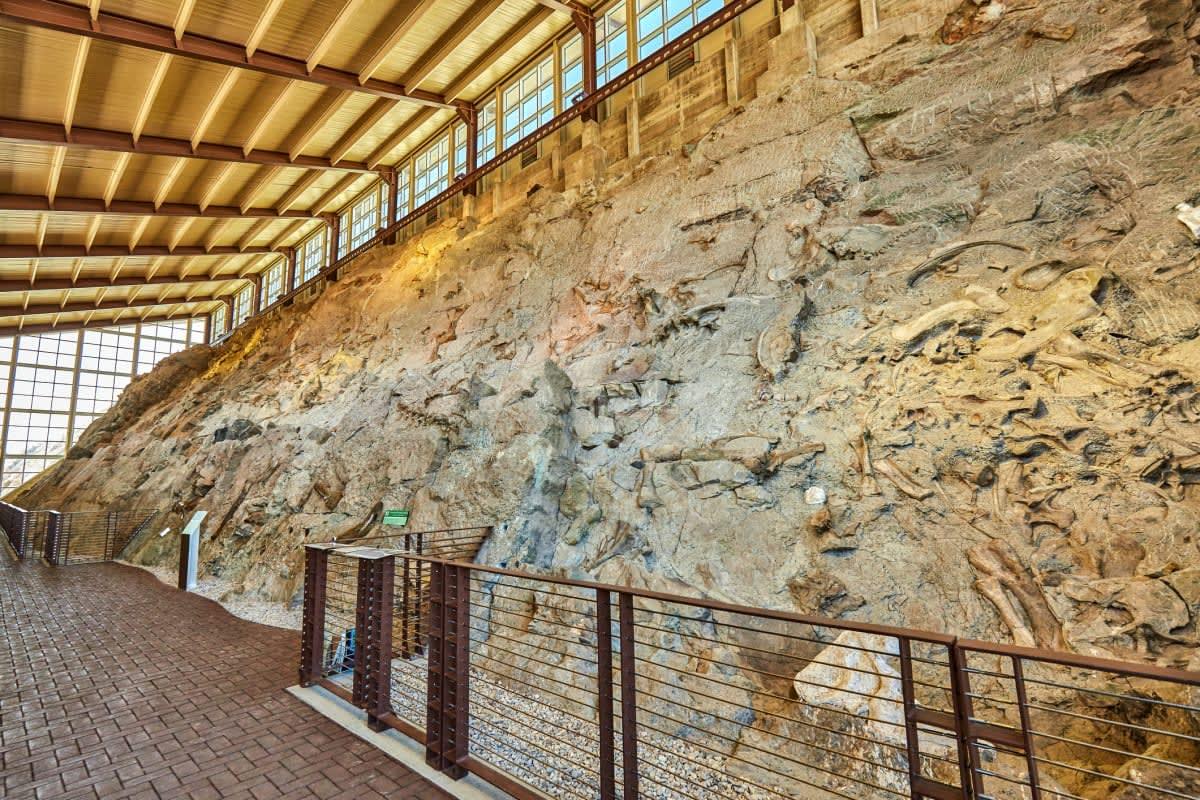
Dinosaur Monument Quarry wall shows visitors dinosaur fossils still half buried in stone of mass dinosaur grave
Colorado is a hotbed of dinosaur fossils. Millions of years ago, it was the set of a Jurassic Park movie navigated by those sneery-looking dinosaur species. Sitting in the eroded canyons of this territory and straddling the Colorado and Utah border, the dinosaur monument cradles a stockpile of these prehistoric reptiles’ bones. This fossil, in particular, was discovered in the monument’s Quarry Exhibit Hall, a large building located at a 3-minute drive from the visitor center. Dubbed the “Wall of Bones,” the hall features glass windows and sweeping mezzanines that showcase everything from the legs of ancient lizards to different types of dinosaurs.
The workers bumped into these fossils after scooping out roughly 3,000 pounds of fossil and rock pieces from the quarry. When ReBecca Hunt-Foster, the park paleontologist, arrived at the scene, she realized that the sandstone chunk carried a tibia, the innermost and largest bone located between the knee and the ankle. Additionally, the discovery included 14 tail vertebrae, a humerus, a radius, an ulna, a fibula, and a few toes, Hunt-Foster shared with The Colorado Sun.
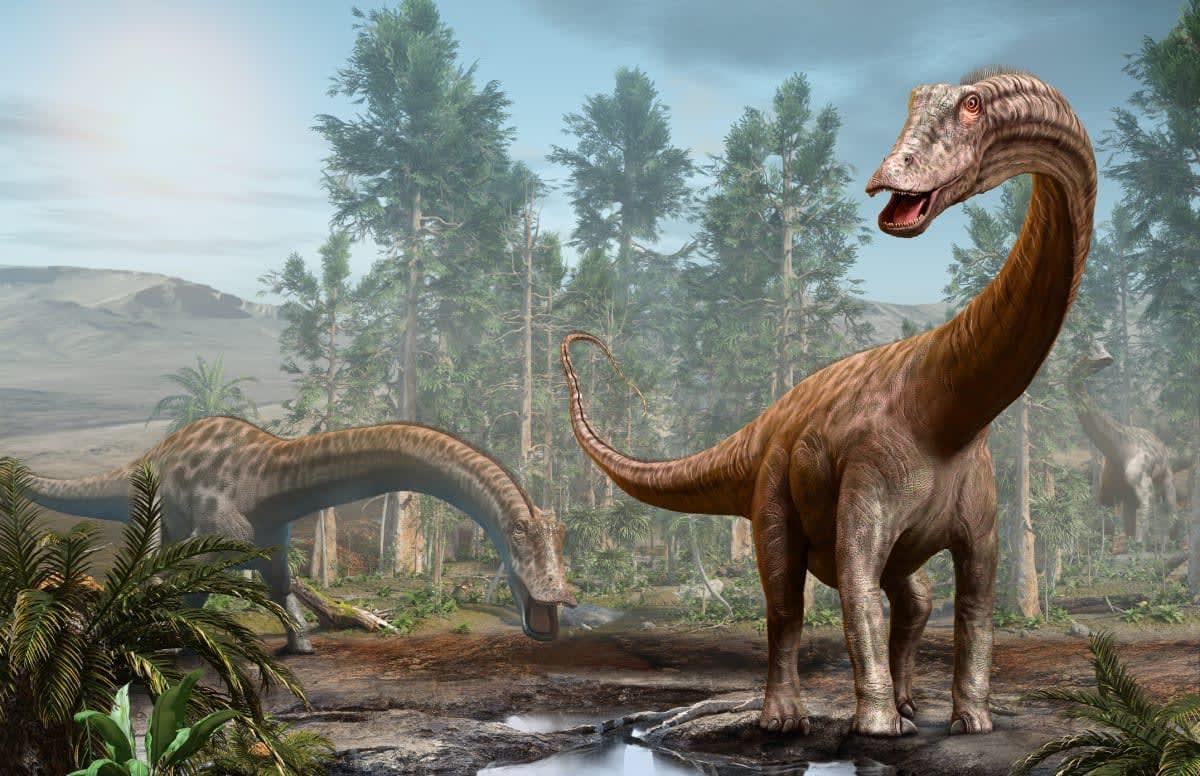
Depiction of Diplodocus dinosaurs roaming in prehistoric wetlands
Of hundreds of fossils that are exhibited in the park, this turned out to be “one of the longest dinosaurs on Earth,” unearthed at the site, marking the first fossil excavations at this location since 1924, per The Independent. Examination of the fossil’s identity revealed that it was a “Diplodocus,” a large, long-necked dinosaur, and the longest found in the Carnegie Quarry. NPS explains that this dinosaur could reach up to 92 feet long and had pencil-like teeth with which it stripped leaves off the low-growing plants. The name “Diplodocus” itself comes from the Greek meaning “double beam,” which relates to the two parallel protrusions that appear on the bottom of the tailbone.
A study published in Science revealed that dinosaur populations were still thriving in North America around 66 million years ago, before an asteroid struck Earth and wiped out their population. Ever since, the area around Colorado turned into a historical bonebed, a storybook of dinosaurs’ mysteries waiting to be read by archaeologists and paleontologists. The remains of this Diplodocus were identified on September 16 with support from the Utah Conservation Corps crew, volunteers, and construction workers.
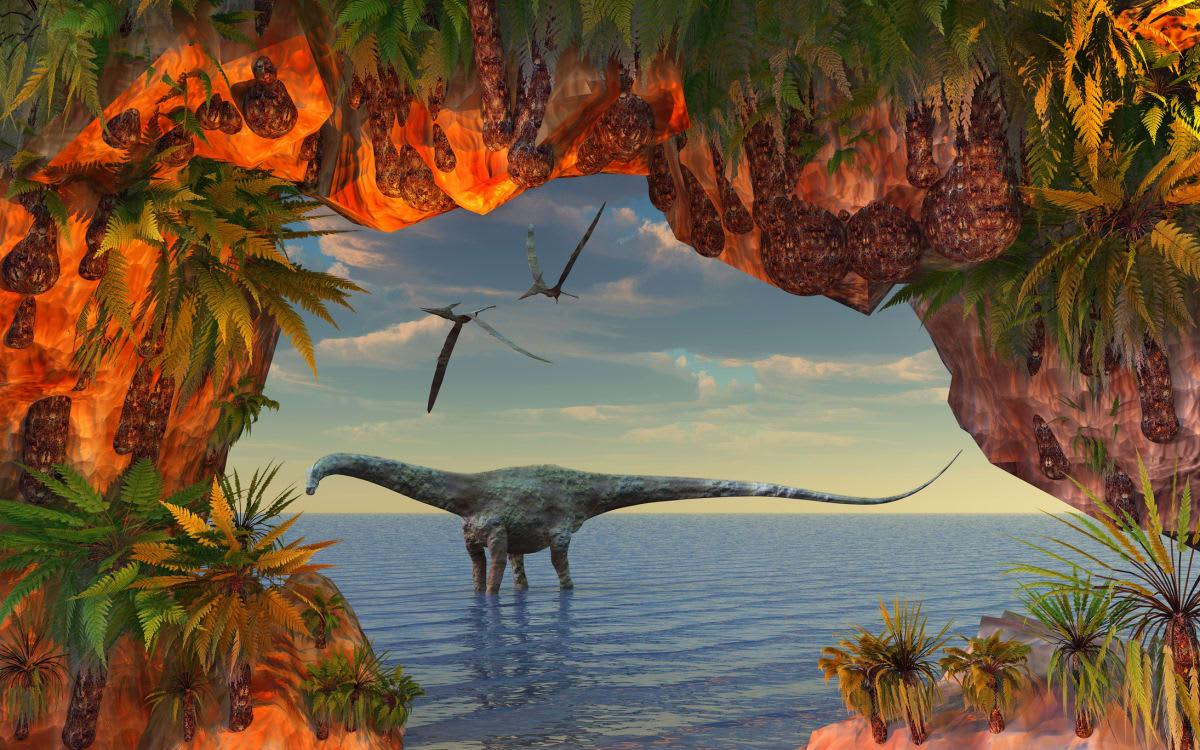
Depiction of Diplodocus dinosaur roaming in a pond near a cave embellished with grasses and plants
The newfound fossils are currently housed at the Utah Field House of Natural History State Park Museum in Vernal, Utah, inside the museum’s preparation laboratory. Fossils are being cleaned, and investigation work is going on. Meanwhile, park officials are waiting for the winter snow to pass so they can continue the excavation in spring.