
Nobel Prize Winner Creates Breakthrough Device That Pulls 1,000 Liters of Clean Water from Air Daily
Published Feb. 24 2026, 8:26 a.m. ET

Water harvester machine
The growing scarcity of drinking water is becoming one of the major global problems that requires an immediate solution. A 2025 Nobel Prize winner, Professor Omar Yaghi, has developed a machine that could solve the problem. From the University of California, Berkeley, he has invented a device that can harvest up to 1000 liters of clean drinking water daily from thin air. A company called Atoco, founded by Yaghi, has developed a technology that can be used even in areas with only 20% humidity. This new innovation can prove extremely useful in regions struggling with drought and water scarcity.
Yaghi originally developed a field called reticular chemistry, and the new machine is built on that concept. The primary component of the project is called “Metal-Organic Frameworks” (MOFs). These are man-made porous materials designed to soak moisture like highly super-advanced sponges. They are engineered meticulously at a molecular level and have an incredibly large surface area. To put into perspective, just a few grams can create internal space comparable to a football arena.
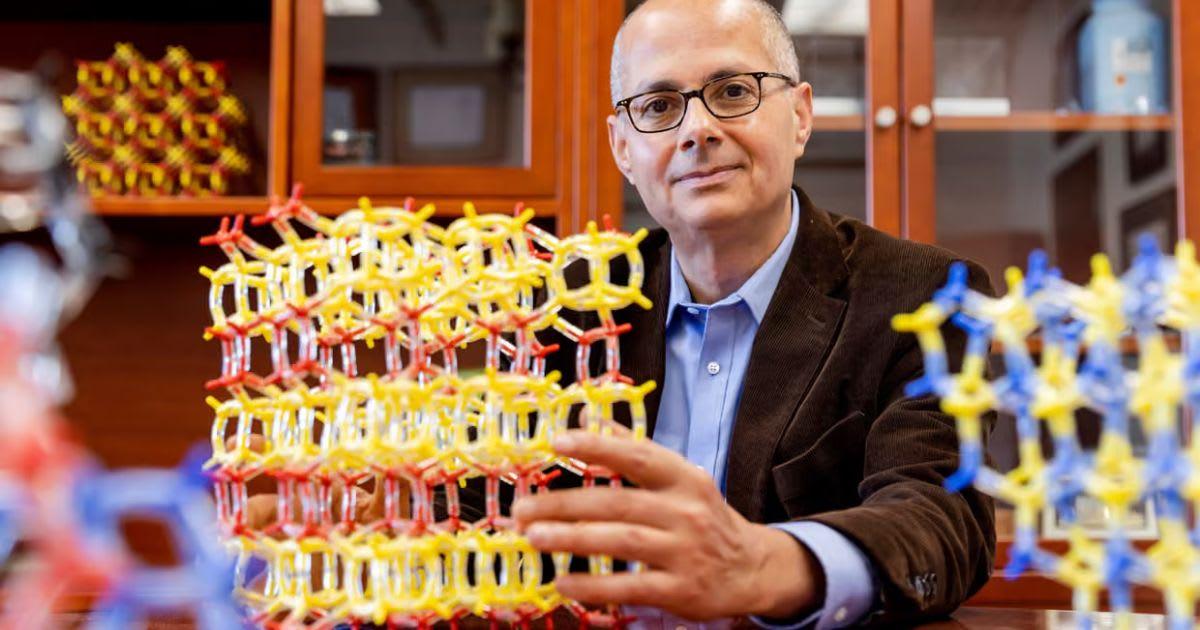
Omar Yaghi
As air flows through the system, water molecules get trapped inside the microscopic pores of the MOFs. Then the material releases the stored moisture as vapor when exposed to sunlight or low levels of heat energy. This vapor is then cooled and turned into liquid water, which is ready for use. What makes the system different from traditional atmospheric water generators is that it does not depend on heavy electricity use to cool the air. Instead, the entire process runs off-grid using heat from the sun.
The United Nations (UN) recently announced that the world is facing a “global water bankruptcy,” which means around 2 billion people lack access to clean drinking water. The report said, “Around 2.2 billion people still lack safely managed drinking water, 3.5 billion lack safely managed sanitation and about 4 billion experience severe water scarcity for at least one month a year.” This invention could not arrive at a better time, providing a way out of the crisis.

Hurricane Beryl Impacts Texas Coastline
Moreover, Yaghi said that the invention could help islands in the Caribbean prone to drought, and communities destroyed by hurricanes such as Beryl and Melissa. “Hurricanes such as Melissa or Beryl unleashed heavy flooding, destroying homes and crops and impacting thousands of lives in the Caribbean. This devastation is a stark reminder of the urgent need for enhanced water supply resilience in vulnerable areas, particularly small island nations susceptible to extreme weather events,” he said, per The Guardian.
Desalination has long been used to turn seawater into drinking water, especially in coastal areas, but the process has its own limitations. Besides requiring a huge amount of energy to operate, it also leaves behind highly concentrated salty waste. It can damage marine ecosystems when released back into the ocean. However, Yaghi’s atmospheric water harvester offers a cleaner and more environmentally friendly alternative. Roughly the size of a 20-foot shipping container, the system is designed to be portable and easy to deploy where it is needed most. It could be sent to hurricane-hit islands, disaster zones, or remote desert communities where access to safe drinking water is limited or existing infrastructure simply does not exist.