
Sacred ‘God’s Crossing’ Disappears from Japan Lake. Experts Say It's a Chilling Climate Signal
Published Feb. 17 2026, 9:35 a.m. ET

Frozen Lake Suwa, Nagano Prefecture, Japan.
Climate change is causing many changes, and one of them is the vanishing of “God’s Crossing” from the world, according to AFP. This phenomenon, called “miwatari” in Japanese, occurs when a crack forms in Lake Suwa in Nagano. Thinner ice shards enter through the crack and form a ridge-like structure. According to local beliefs, deities cross this ridge to meet their partner. In the past, it was a regular spectacle, but later it became increasingly rare. Experts believe that climate change played a key role in this shift.
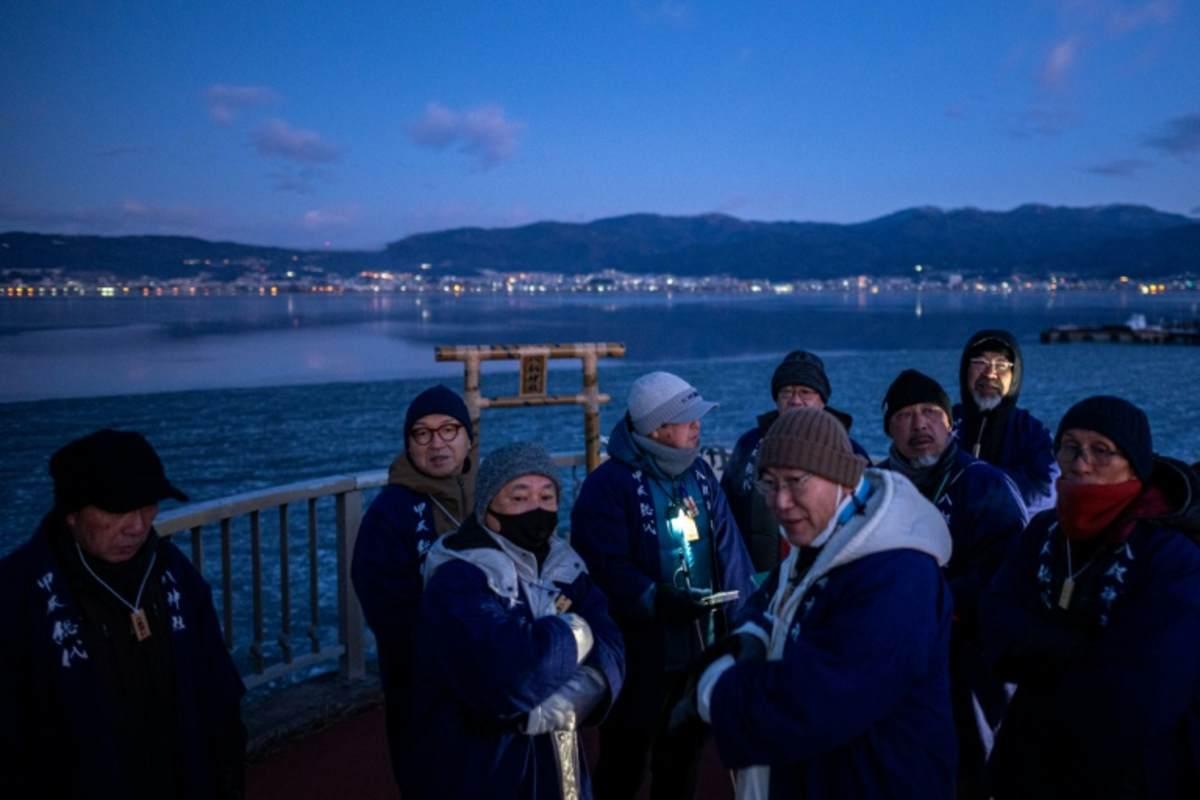
A Japanese priest and his parishioners gather before dawn, hoping climate change hasn't robbed them of a rare communion with the sacred.
“God’s Crossing” has been monitored by a priest of the nearby Yatsurugi Shrine for centuries. In the last seven years, the phenomenon has not appeared even once. The current priest, Kiyoshi Miyasaka, and his group were hopeful that this year the phenomenon might return after recording a full freeze on January 26, 2026. They noted an ice chunk being carved out from the lake’s surface. The group believed that God’s Crossing was on the horizon, but all hopes were dashed when the surface melted away days later. On February 4, 2026, Miyasaka again declared a state of “open sea” or “ake no umi,” hinting at a low probability of the phenomenon appearing before spring.
Besides Miyasaka, other experts believe that climate change has caused God’s Crossing to disappear. The ice ridges on which the deities apparently walk appear when the lake’s surface freezes completely. Such ice ridges reportedly elevate up to the human eye level. This is only possible if the temperature in the area is below -50°F continuously for multiple days. In this situation, the ice lid contracts and expands, between day and night, in accordance with temperature fluctuations. These processes push open the cracks, filled with shards made out of frozen lake water. The shards eventually crash and produce a distinctive roar.
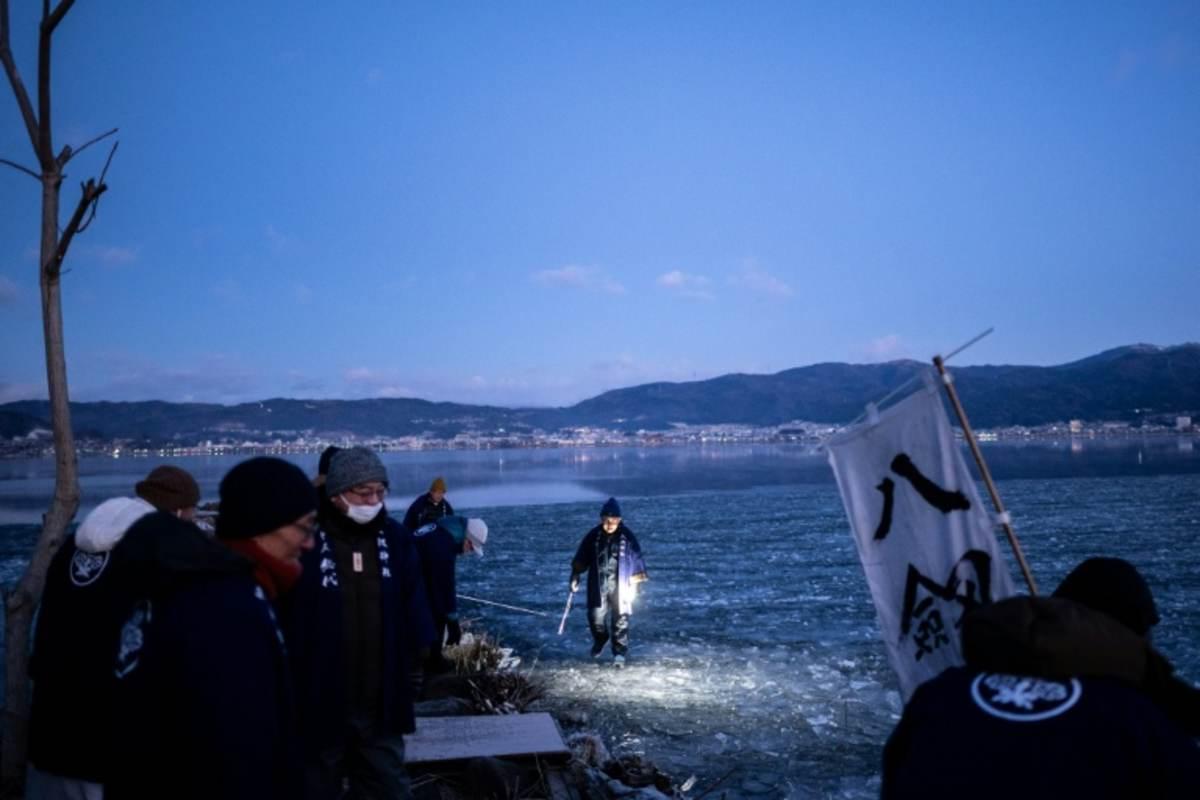
For Mikami, the god's long absence is a warning that 'global warming is accelerating.'
Takehiko Mikami, the professor emeritus at Tokyo Metropolitan University, claims that the phenomenon occurred every winter until the 1980s. After that, morning temperatures were never low enough to allow the lake to completely freeze. This could be a consequence of global warming, as full freezes have become a rarity now. “This is a warning from nature,” added Mikami. The phenomenon’s absence in 2026 now marks this period as the longest “godless” stretch recorded, along with a period in the 16th century. However, Mikami considers the 21st-century stretch to be the longest, as he is doubtful regarding the records. “If the trend continues, I am afraid we will never see the miwatari phenomenon again,” Mikami shared.
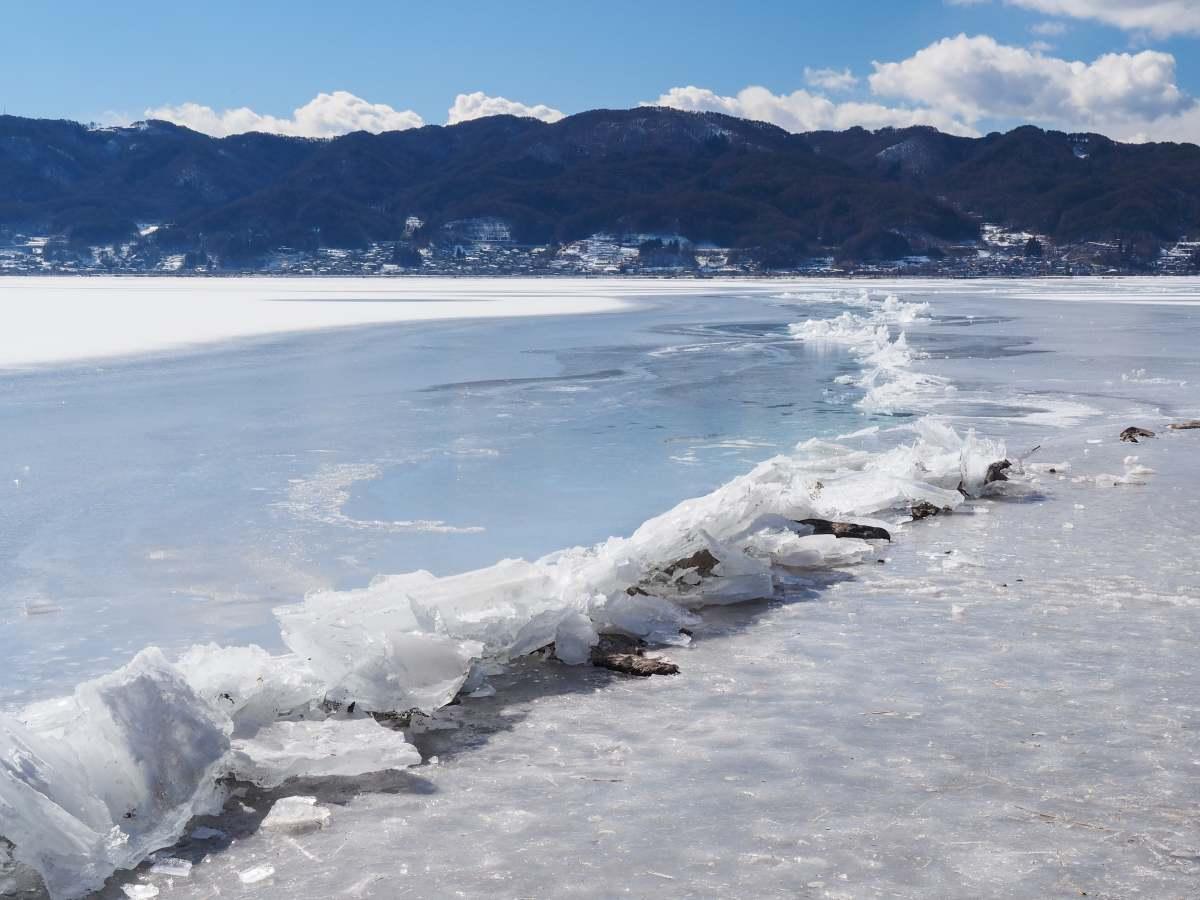
Cracks that form in the ice on Lake Suwa.
Miyasaka began this year’s watch on January 5, 2026, along with his flock. The group sported a jacket showing the shrine’s symbol. One of the members carried a worn flag for the pursuit, while another had a giant axe. Their watch lasted for 30 days. They were hopeful that the trend would reverse this year, but the temperature measurements of lake water quickly dashed their optimism. In his four-decade tenure, Miyasaka has observed God’s Crossing only 11 times. Still, he had a job to record the lake’s conditions like his predecessors.
Records regarding Lake Suwa are available since 1443, and the priests have undertaking observations from 1683. These records are considered extremely valuable by climate scientists. “The chronicle shows data taken at a single location over hundreds of years, and thanks to it, we can now see what the climate was like centuries ago,” said Naoko Hasegawa, a geographer at Tokyo’s Ochanomizu University. “We find no other meteorological archive comparable to it.”