
A Mysterious Foam Has Taken Over Portugal's Beaches. And It's Linked to the Recent Deadly Storms
Published Feb. 16 2026, 10:55 a.m. ET

Blanket of sea foam in Cascais
Something strange is happening on the beaches of Portugal and Spain after a series of storms. A thick layer of sea foam seems to have covered the beaches, and it is looking like snow. Recently, powerful storms caused heavy damage across Western Europe, especially in parts of Portugal and Spain. The event was so intense that a state of emergency was declared. The unexpected weather caused massive floods, creating a major crisis, according to reports. It leads to hundreds of thousands of people being evacuated across Spain, Portugal, and Morocco.
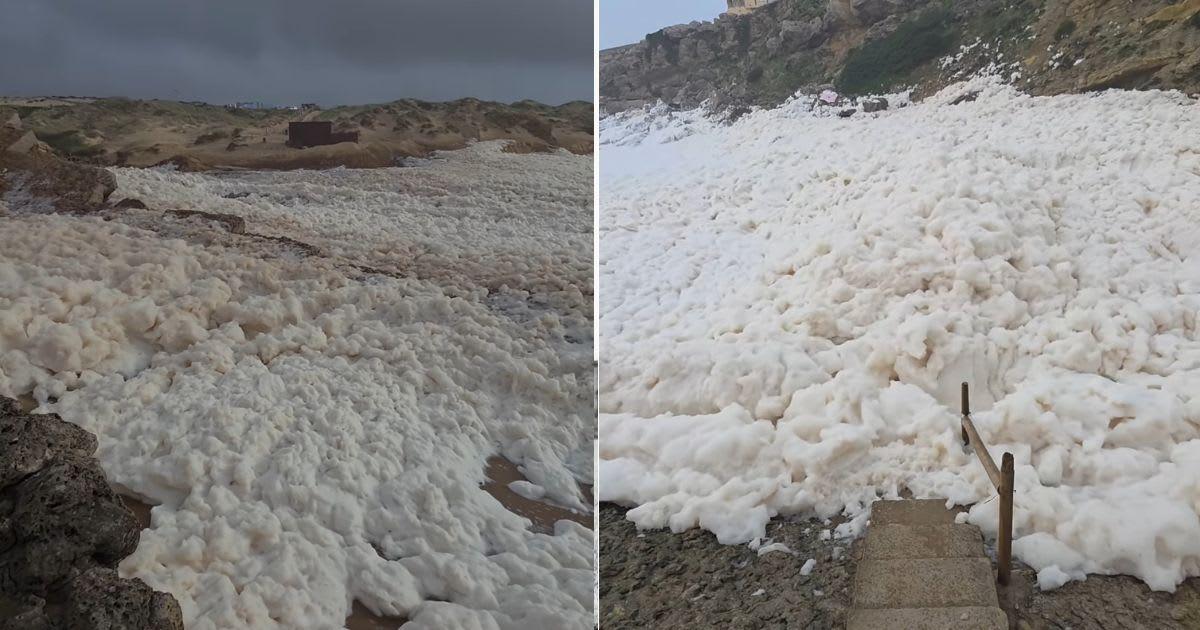
Sea foam at Cascais
The Portuguese government described the situation as devastating, as Storms Leonardo and Marta caused widespread destruction. The signs of the storm remain, but the worst of the weather has now subsided. However, in popular surf areas like Cascais and Praia do Guincho in Portugal, a thick blanket of sea foam has covered the beaches. “Guincho area today in Cascais. I've never seen so much foam in my life. Sea foam is a natural phenomenon caused by strong winds and waves (often during storms) agitating high concentrations of dissolved organic matter, such as algae, in ocean water,” according to Lisboa Live.
Even though images of thick sea foam and unusual surf sessions may make the situation look almost playful, the reality is way more serious. The region has been hit hard by relentless storms, bringing heavy rain and powerful winds, leading to massive flooding. Communities across affected areas are dealing with major damage to homes, roads, and infrastructure. According to reports, the government has estimated that over $4.76 billion will be needed for direct reconstruction and recovery efforts. The storms have also taken a human toll, with at least 15 people reported dead due to severe weather and flooding. Officials are monitoring the situation to get the full scale of the destruction as cleanup begins.
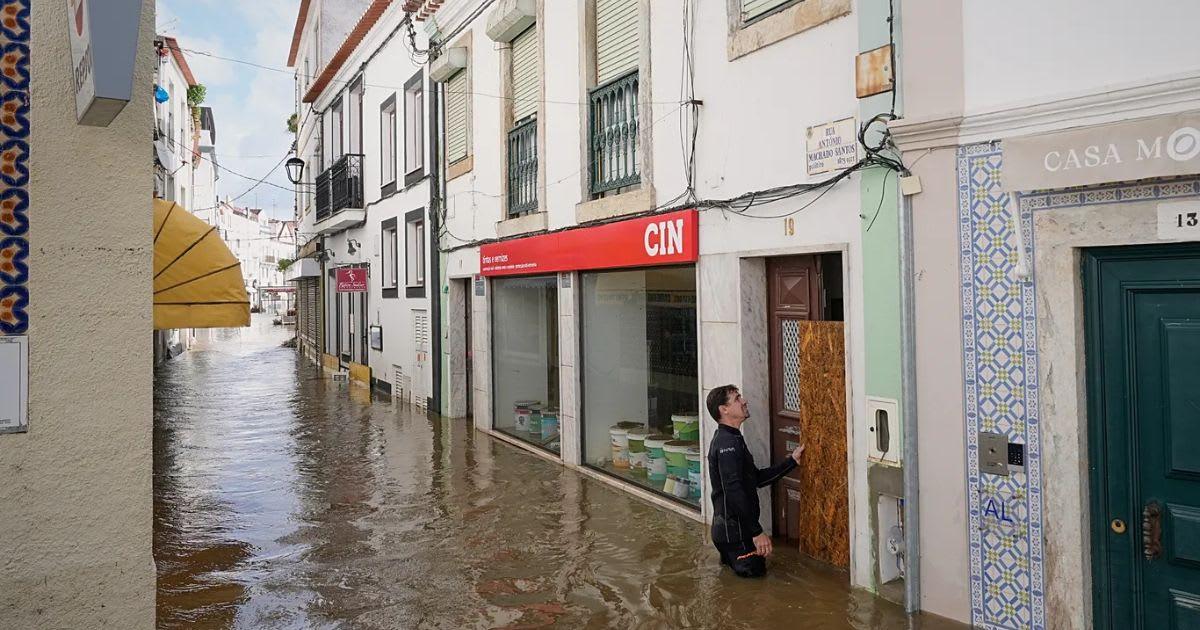
Flooding in Southern Portugal
After days of non-stop rain and wind, the storms have left communities across the region devastated. The big wave pioneer Garrett McNamara posted on Instagram with the caption, “Nazare, like so many incredible places, has been hit hard these past few weeks. This place is home, and seeing friends, family, and places hit with such destruction is not easy to process. A shift in responsibility and mindset reminds me to do what I can. Together…These are photos and videos from my phone and other’s, and there are thousands others showing the catastrophic changes these storms have brought.”
Climate change is one of the causes that has been putting increasing pressure on urban areas, exposing weaknesses in how cities are designed and built. Rising temperatures, stronger storms, and heavier rainfall mean many urban spaces struggle to cope with extreme weather. Experts argue that cities need to “bring nature back” by adding more trees and green spaces, which can cool neighborhoods, improve air quality, and help absorb excess rainwater to reduce flooding.
At the same time, rapid construction with poorly planned development has made some areas more vulnerable. Areas where low-quality materials or quick building solutions are used have been hit hard. Aging infrastructure is also being pushed beyond its limits, as systems designed for past weather conditions cannot take on the changing climate. They are now facing stronger winds and more intense storms. “Perhaps we also failed to assess the risks in the light of climate change,” Professor Maria Rosário Partidário said, according to Euro News.