
NASA Captures Aerial View of Lake Within Ancient El Salvador Volcano That Mysteriously Changes Color
Updated March 11 2026, 4:30 a.m. ET

Lake Coatepeque captured by an astronaut aboard the International Space Station.
Miles above Earth, an astronaut aboard the International Space Station captured a breathtaking view of Lake Coatepeque, a stunning blue body of water nestled within an ancient volcanic caldera in El Salvador. The image, taken on February 10, 2026, when the station passed over Central America, didn't just capture the lake's striking color but also the terrain surrounding it. According to NASA, the caldera, or volcanic crater, was formed during a series of explosions between 72,000 and 51,000 years ago. The eruptions didn't halt even after the crater's formation, and several lava domes along its western side were formed in the aftermath. The Isla del Cerro (Isla Teopán) is one of the lava domes within the Coatepeque Caldera.
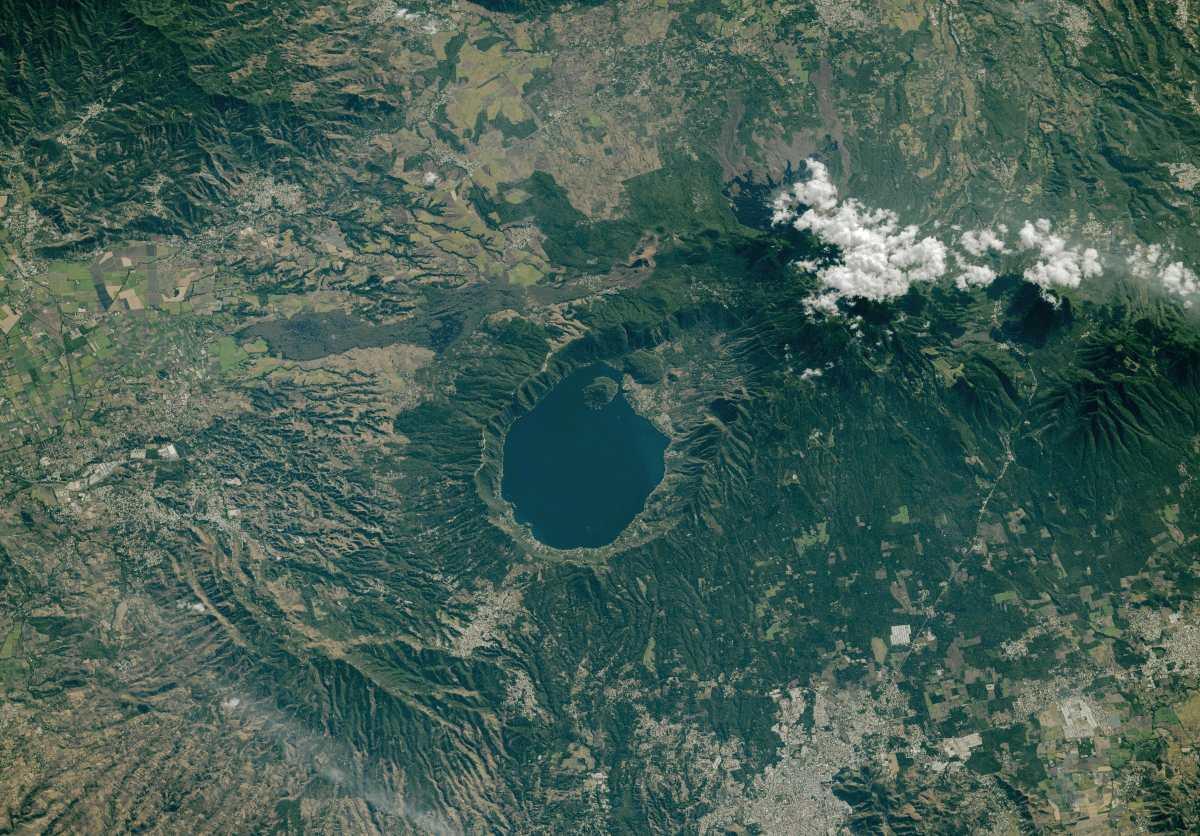
Lake Coatepeque, situated inside an ancient volcanic caldera in El Salvador, captured from space.
The last known eruption of the volcano is uncertain, as per the Smithsonian Institution’s Global Volcanism Program. There's also been no record of eruption in the Holocene period, which is about the past 11,700 years. Centuries of dormancy have prompted humans to create establishments in their surroundings, including homes, restaurants, boathouses, and other structures lining the lakeshore. Over the years, human development has expanded, stretching westward toward the caldera’s steep rim of the volcanic crater or caldera that encapsulates the lake. The rim or outer edge of the caldera is located on the eastern side of El Salvador’s tallest volcano, Santa Ana. Santa Ana, also known as Ilamatepec, is an active volcano. It has erupted several times since the 16th century, with its last recorded severe eruption having occurred in 2005.
Coming back to Lake Coatepeque, the astronaut who was a member of the Expedition 74 crew captured the striking blue hue of the lake. At times the color changes to a unique shade: bright turquoise. According to the space agency, the reason behind this shift in color remains undetermined. In 2024, scientists suggested it was pigments released from microalgae and cyanobacteria that caused the color change, but it could also be through natural mineralization that the water in the lake momentarily turns turquoise.
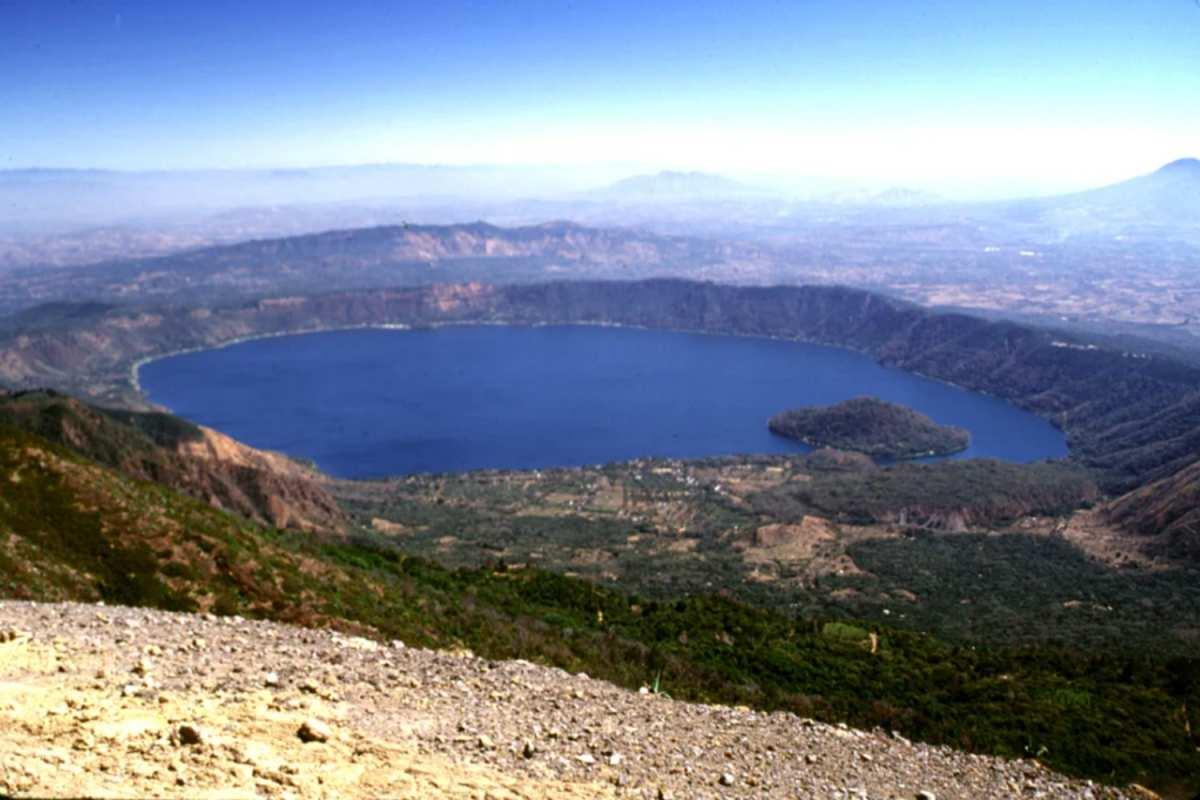
Serene view of Lake Coatepeque, located within an ancient volcanic caldera in El Salvador.
Viewed from space, as seen in the images, the blue patch appears salient next to the green terrains, almost like a painting imagined. NASA revealed that the area surrounding the lake and the Santa Ana volcano is a "mosaic of urban areas." Volcanic terrains and agricultural fields also make up the vast landscape. The city of Santa Ana is located about nine miles north of the region. San Salvador, the capital city of El Salvador and surrounded by volcanoes, is situated about 25 miles to the east. The volcanic land makes up a large portion of the region, stretching a staggering 600 miles along Central America’s Pacific coast, from Guatemala to Panama.
According to Centro America, Lake Coatepeque is about 50,000 years old, formed in the aftermath of a period of mega-telluric activity that ended with a massive explosion. The blast created a huge crater more than 12.4 miles wide and about 1.2 miles deep. Over a prolonged period, the cavity accumulated rainwater and underground water, forming the lake we see today. These areas around the lake have a local population of more than 20,000 and host about 5,000 tourists monthly.