
A Chicago-Sized Bulge Has Appeared Near Yellowstone’s Volcano — and Scientists Say It’s Growing
Updated Jan. 30 2026, 3:59 p.m. ET

Interferogram created from satellite radar data collected on October 7, 2024, and October 2, 2025, over the Yellowstone region by the Sentinel-1 satellite system
Yellowstone National Park is a must-visit site for its geothermal features. From hot springs to geysers, the place is embellished with serene views at every corner. Beneath the park's landscape lies a volcano that hasn't erupted in more than 600,000 years. But recently, experts observed a one-inch-high bulge from underneath, prompting speculations of an eruption. The slight rise in ground along Yellowstone's north rim is as wide as the city of Chicago.
Mike Poland, scientist-in-charge of the Yellowstone Volcano Observatory, spoke to Cowboy State Daily about what he and his fellow scientists observed at the site. “It’s an area over 19 miles across, give or take a few miles,” he said, adding, “Saying the uplift is the size of Chicago makes it sound incredibly grandiose, but I think it’s pretty stunning even if it’s not particularly unusual."
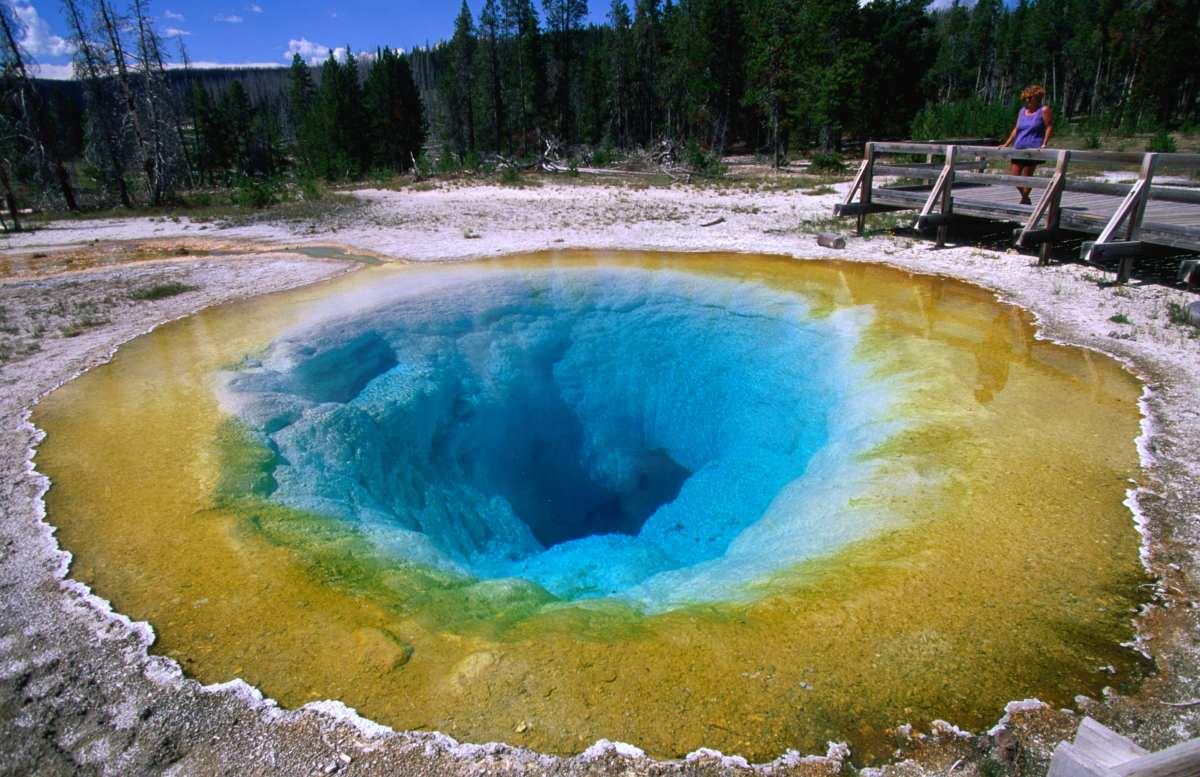
Morning Glory Pool in the Norris Geyser Basin, Yellowstone National Park
Does the wide bulge indicate that an eruption is on the horizon? Experts have slashed the speculations without any fluff. “That doesn't mean that the volcano is about to erupt. It’s Yellowstone being Yellowstone," Poland said. The reply makes perfect sense, given that the ground uplift has happened a few times before. Under the outlet's Facebook post, people reacted similarly to the news, not making too much of a big deal out of the development. "Is it time for the annual Yellowstone is gonna erupt stories again?" one person wrote. "A whole inch, huh? Wowsers," another wrote, sarcastically. "Not a bad thing. Upheavals in Yellowstone happen all the time," a third added. The slight movement of the surface above the dormant volcano of Yellowstone, a deformation known as the Norris Uplift Anomaly, occurred once between 1996 and 2000 near Norris Geyser Basin. The instance repeated in 2004 and then again in 2020.
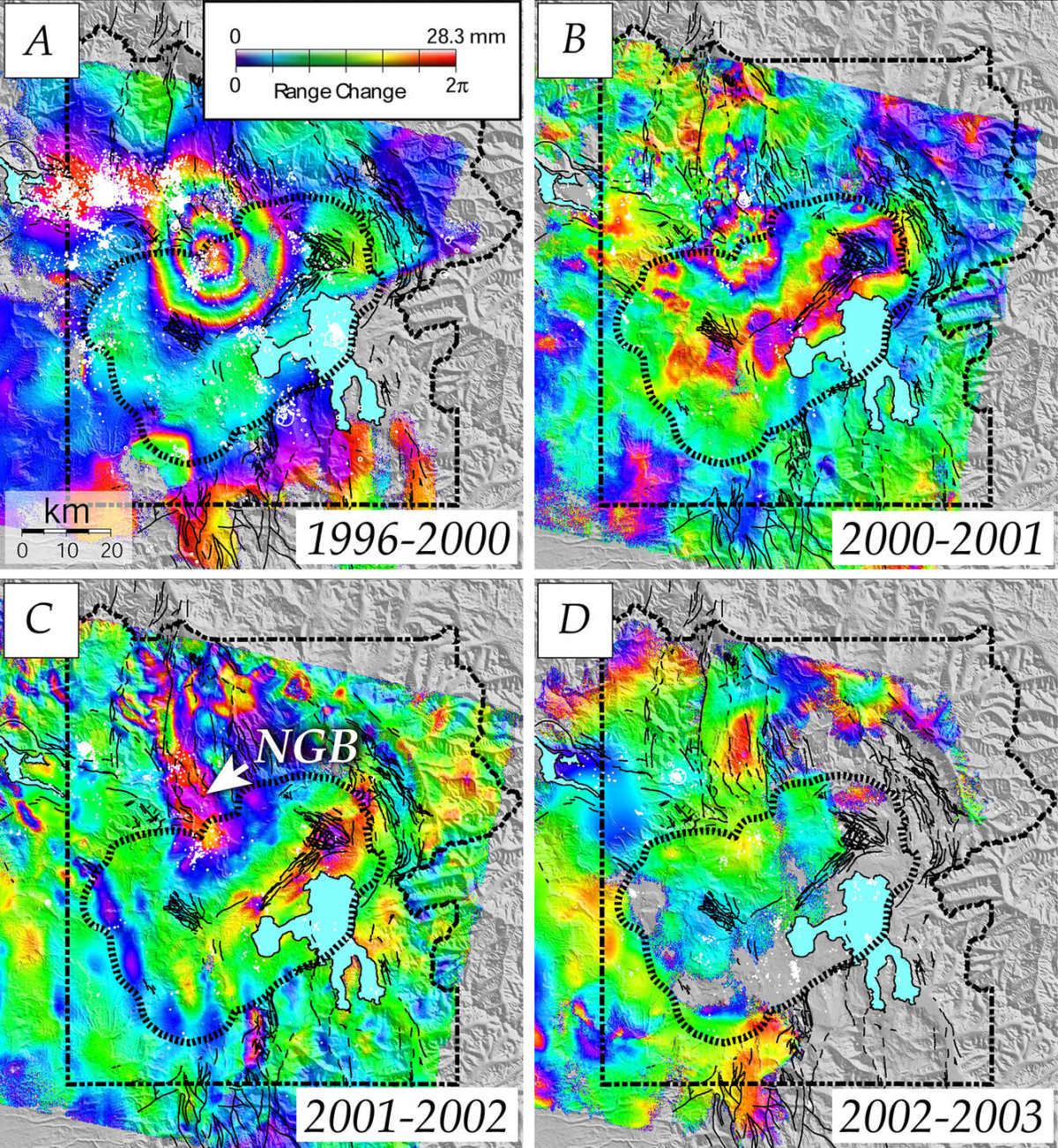
Four radar interferograms (InSAR data) superimposed on digital terrain showing surface movement at Norris Geyser Basin and Yellowstone Caldera from 1996 to 2003
Thanks to modern technology, scientists can get real-time data on the movements of the ground along Yellowstone's north rim and other areas of the park. The data has enabled experts to curate a map showing the uplift or "bulge" in the middle of Yellowstone. “It's a measure of how advanced our monitoring networks have gotten, and their sensitivity in detecting these small changes. That’s the story of the year for me,” Poland noted. The expert compared the bulge to a balloon blowing up in the subterranean and is quite insignificant in size to be observed with the naked eye. However, advanced technology has allowed scientists to observe these slight upheavals quite accurately. Poland revealed that the experts have been observing movements through radar maps and satellites.
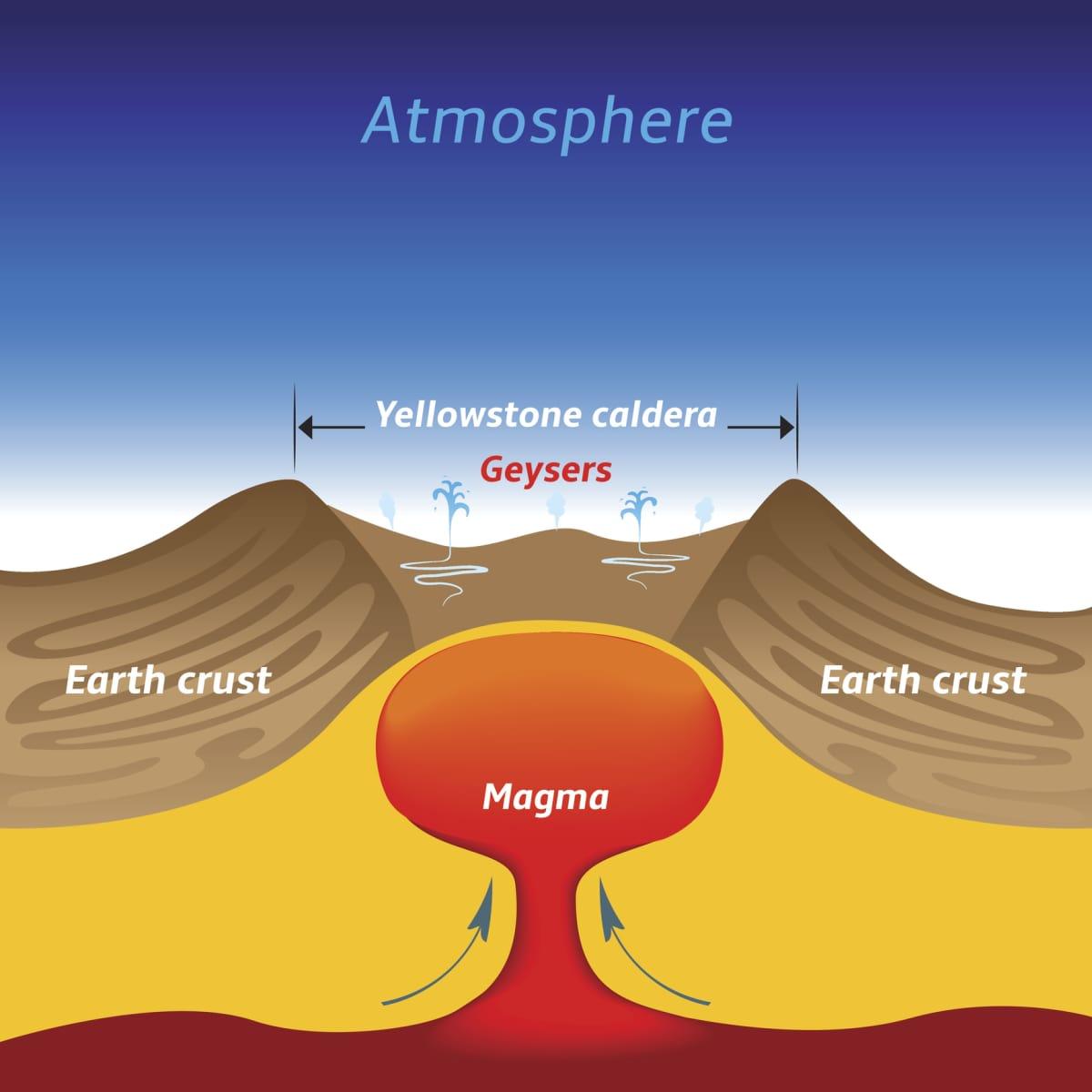
Magma chamber under Yellowstone supervolcano
“We've got 17 GPS stations in Yellowstone, and many more in the surrounding area, and they could pinpoint exactly when this uplift started," he revealed. But if Yellowstone's volcano shows no sign of eruption, then what does the bulge indicate? Experts believe that the activities within the magma chamber of the volcano are the most probable explanation behind the sudden yet subtle ground uplift. “The most likely explanation is that it's the accumulation and withdrawal of magma at a depth of nine miles,” Poland explained. The movement is nothing to be worried about and will certainly not result in an eruption. Scientists believe that the bulge would be much larger if the magmatic system were preparing to erupt anytime soon.
"We know there's a magma chamber, so it's not surprising that there's stuff moving around down there," said Poland. "We're not worried about much in the way of eruption just because those signs aren't there," he added.