
Warming Oceans Are Forcing Whales to Compete for Food — Way Earlier Than Scientists Expected
Published Jan. 28 2026, 8:00 a.m. ET

Humpback Whales.
In a new study, researchers have discovered how whales are fighting for food with each other due to climate change, as published in the journal Frontiers in Marine Science. Researchers claim that sharks are facing a hard time due to damaging developments in the North Atlantic. These consequences have led to water becoming warm and the shifting of ice patterns. These effects have put pressure on marine life, especially whales. For these creatures, finding food sources in these new conditions has become challenging. Whales have already adapted to the new conditions in terms of the prey they are targeting, the feeding site, and the timing of their foraging.
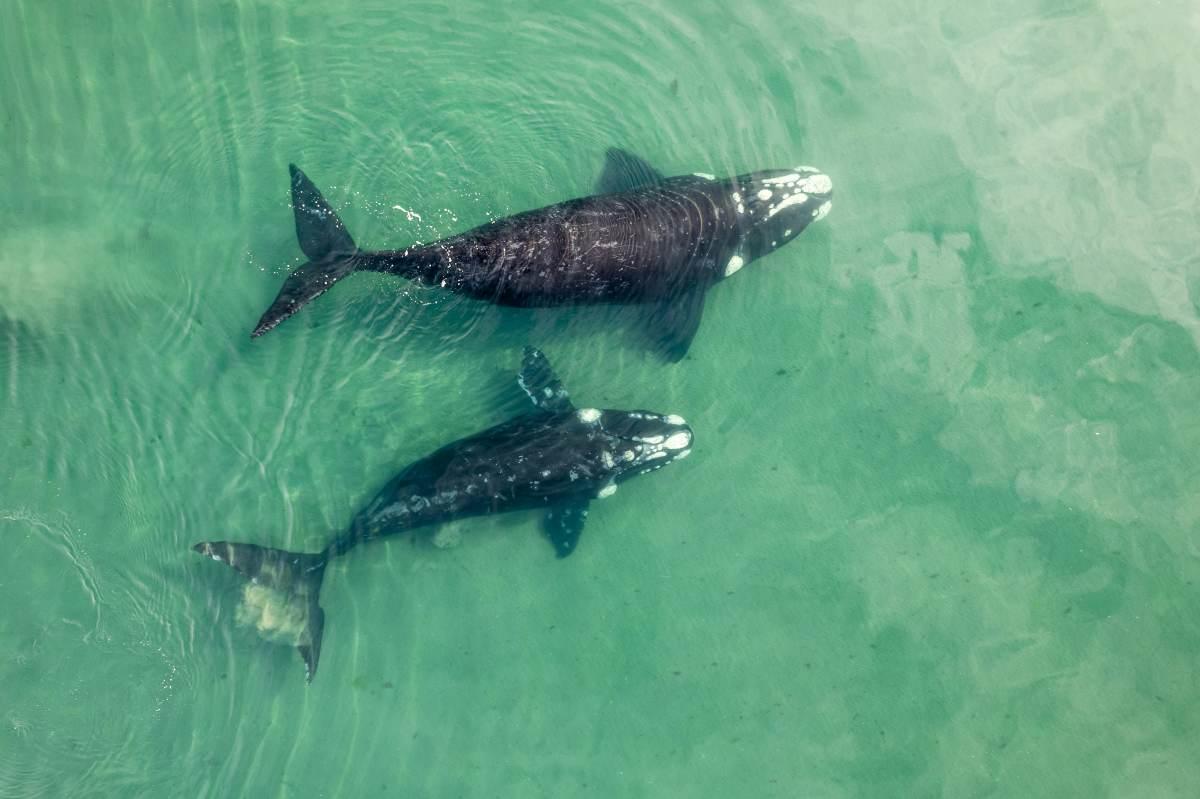
Whales in Shallow Water
Researchers investigated the whales that feed in the Gulf of St. Lawrence, and it was in these whales that they noted the transformations. Due to the aftereffects of climate change, whales require more energy than before to survive. For the investigation, the team analyzed three large whale species and followed them for around three decades at the site. These species were the fin, humpback, and minke whales. During this period, the ocean temperatures elevated from cooler-than-average to much warmer.
The analysis suggested an increase in resource partitioning amongst the three whale species. It led to diet changes in each of these species due to the lack of prey, like Arctic krill. Fin and minke whales, due to reduced availability of their prey, have shifted to eating more forage fish, like herring, capelin, and mackerel. Forage fish remain a primary prey of humpbacks, who now struggle for them because of increased interest from the other two baleen whales.
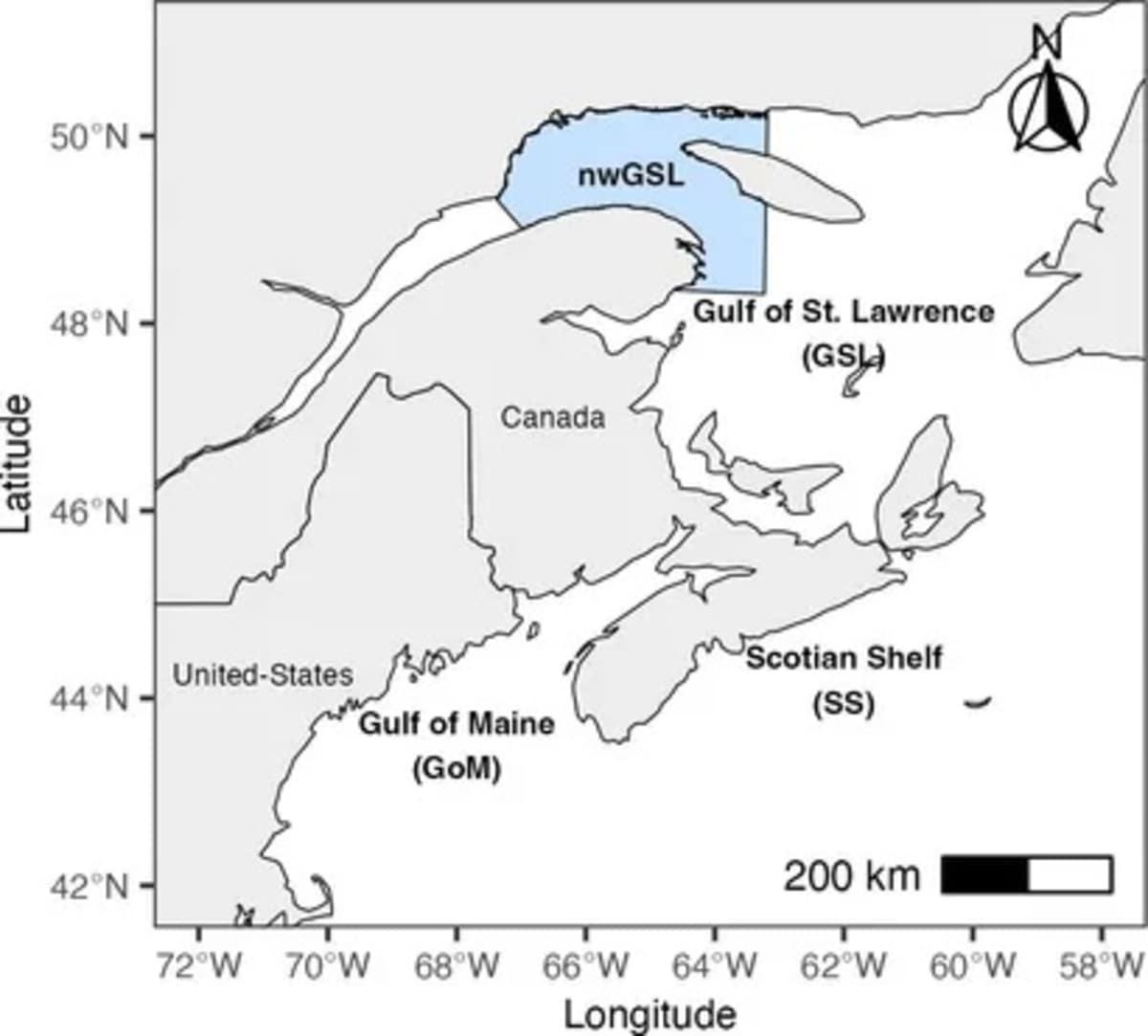
Study area ranging from the Gulf of Maine and Scotian Shelf (GoM/SS) to the Gulf of St. Lawrence (GSL).
Lead author Charlotte Tessier-Larivière, with Université du Québec à Rimouski, shared that Arctic krill was an important prey for fin whales in the 1990s. “Our study shows that whale species are able to adjust their diet to varying availability of preferred prey,” Tessier-Larivière explained, according to CBC. “This is positive as it shows a certain capacity to adapt — but we don't know the full extent of their adaptive capacity.” Researchers took tissue samples from all three whale species and their known prey. They did it during the summer months for 28 years.
They further looked into the carbon and nitrogen isotopes in the tissues to learn about their diet. In the later years of investigation, there was more evidence of forage fish in these diet signatures. This finding is valuable, as it reveals that the number of forage fish is decreasing. These creatures are long known as the backbone of the marine ecosystem; their dwindling will have a major impact. Despite challenging circumstances, the baleen whale species, along with looking after themselves, are also taking care of each other. Researchers noted that in recent times, there has been less food overlap amongst the three species. Even if they were hunting from the same pool, they were targeting different species, maybe even at distinct times and places.
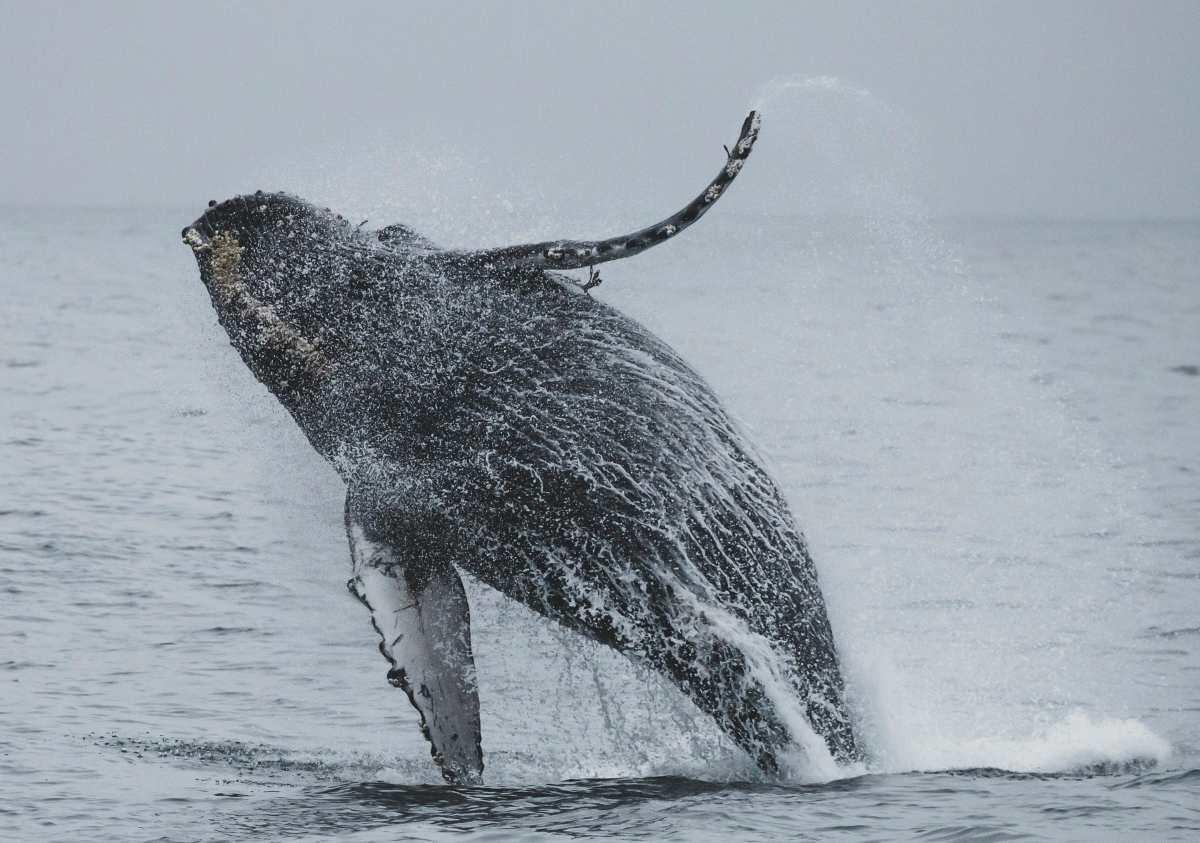
Humpback Whale Jumping over the Sea
“They are highly intelligent beings,” shared Janie Wray, CEO of BC Whales and North Coast Cetacean Society. “Even from year to year, there can be upswings and downswings in regard to prey availability for them. So they do need to adapt.” Environmental advocates are ecstatic that whale species can adapt to challenges posed by climate change, but are also distressed that the situation has become so precarious.
“I think that this confirms what scientists have been observing for a while now in the Gulf, and that is that the ocean is changing, climate change is having a real impact on our oceans, and a slew of ocean life from large whales all the way down to small forage fish are responding to those changes in real time,” Hanna Vatcher, campaigner at advocacy group Oceana shared.