
Scientists Lowered a Camera 300 Feet into Antarctic Ice— What It Revealed Left Viewers in Awe
Published Jan. 12 2026, 4:14 a.m. ET

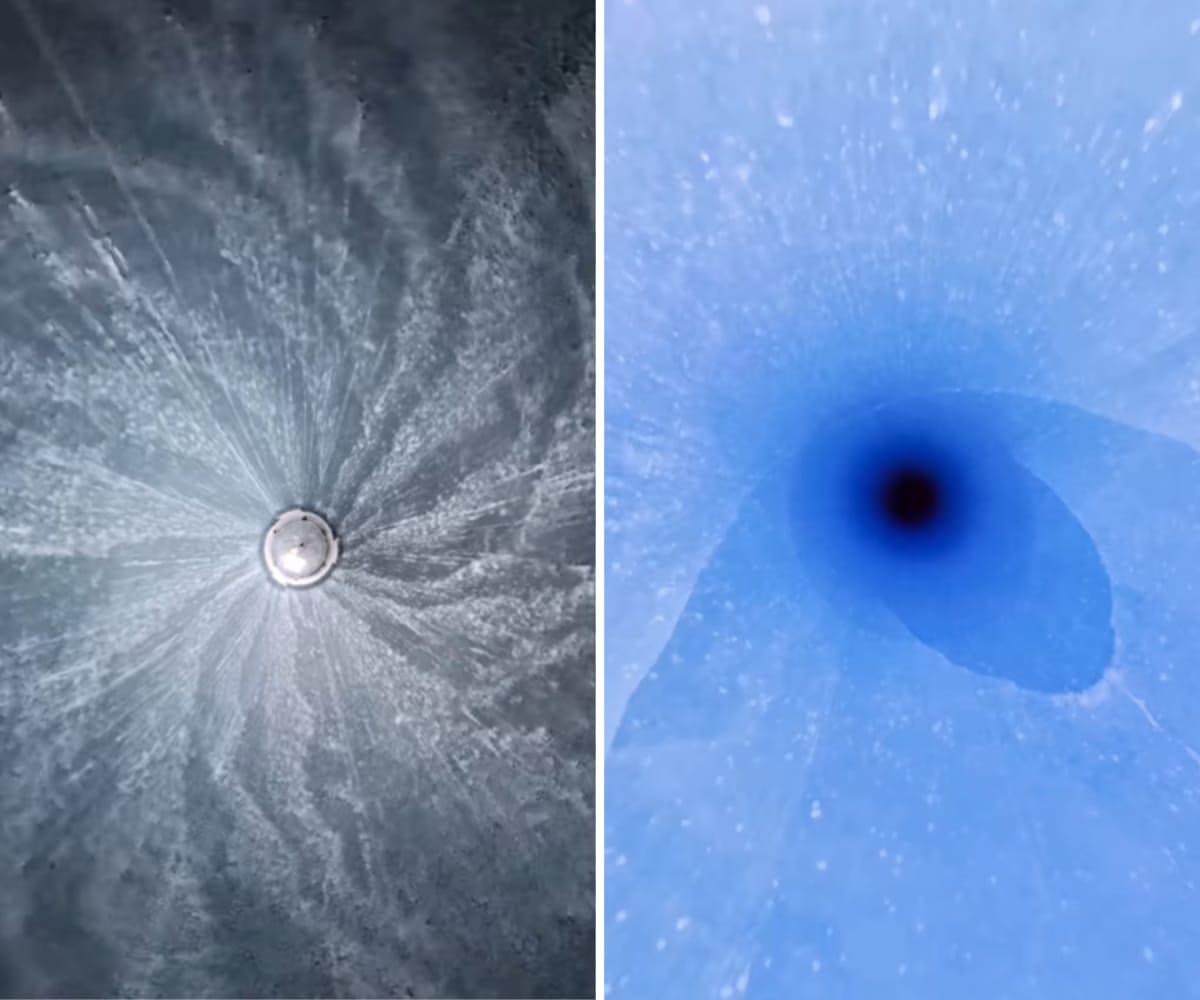
Scientists sent down a camera attached to a drill down the blue ice of Allan Hills and recorded how it looked like in a surreal video
About 50 miles north of Antarctica's Ross Ice Shelf, nestling in the South Victoria Land, the glassy blue ice of Allan Hills glows in sunlight like a vast, flattened pearl. Except for this glow, however, everything here is harsh, from the wild eddies of katabatic winds to temperatures as low as minus 38 degrees Celsius and snow blizzards that slap away every snow angel carved into the ice. Yet the dramatic climate and brutal conditions don't stop curious scientists from braving the stinging cold.
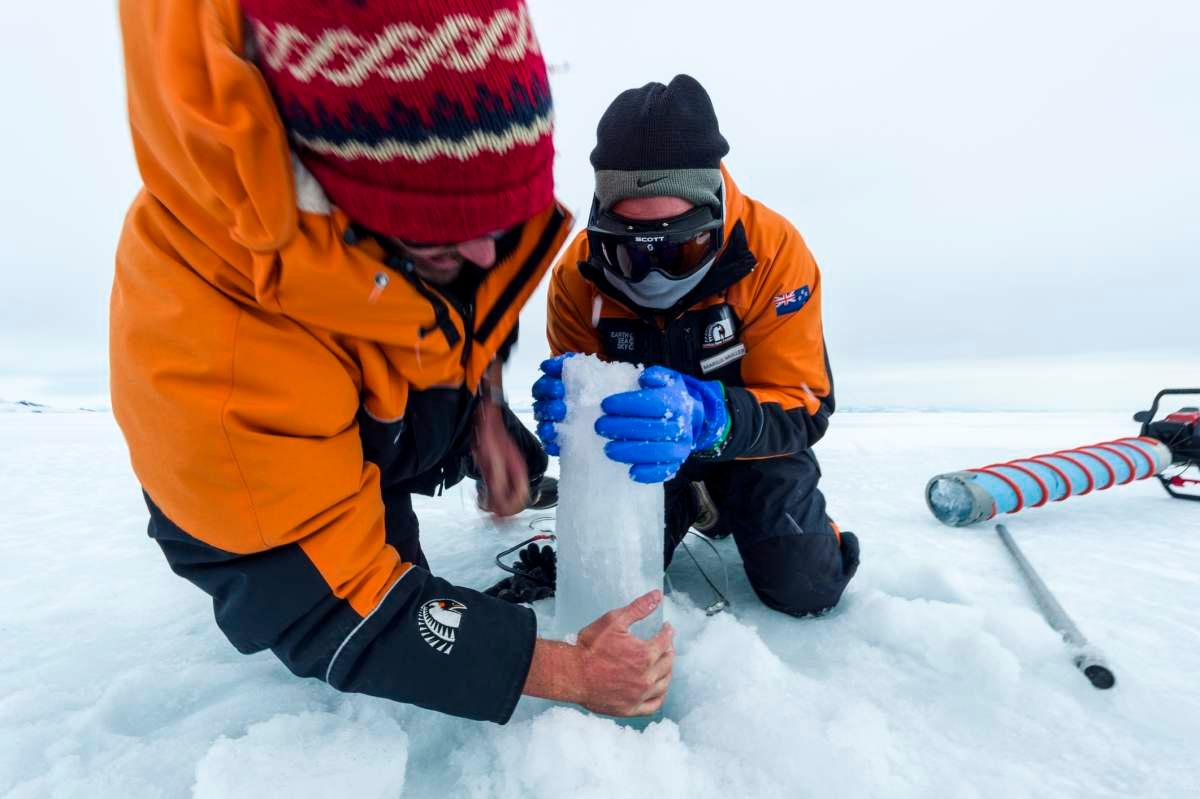
Scientists drilling an ice core from thick Antarctic Ice sheet
Tents are set up in the ice. Drilling towers loom upwards, and as they prepare to immerse themselves in the story of the ice, they gather around teapots simmering with Antarctic-style tea. In footage that has amassed millions of views, photographer Martin Froger Silva (@martinfroger) plunged a camera 298.56 feet into the East Antarctic Ice Sheet from a camp set up in the Allan Hills area.
Scientists sent down a camera attached to a drill down the blue ice of Allan Hills and recorded how it looked like in a surreal video
Filmed by Austin Carter, a doctoral student, the footage documents a project by the U.S. National Science Foundation (NSF) and the Center for Oldest Ice Exploration (COLDEX) team at this remote field camp. The drilling depicted in the footage is a sequence of processes that scientists carry out as they scoop out ice from the underbelly of Antarctica. The drill is warmed up at first. Scientists pull out their gloves from the drying box, as shown in a post by COLDEX. Once the drill is ready, its cylindrical ice-penetrating tube pierces through the ice, venturing on a time-travel journey. A 700-metre-long cable unrolls from the spool and supports the tube as it digs deeper. The drill collects ice cores and chips from deep within for scientists to review and investigate.
In the sped-up footage, Roger and Carter took a journey back in time as their drill ventured into a glacier crammed with ancient ice. The footage starts by revealing a blue ice hole dug into the Allan Hills icefield. As the drill probes into the ice, the recording shows gossamer layers of ice fanning in and out, shimmery curtains spiraling and twisting with the increasing depth.
Scientists sent down a camera attached to a drill down the blue ice of Allan Hills and recorded how it looked like in a surreal video
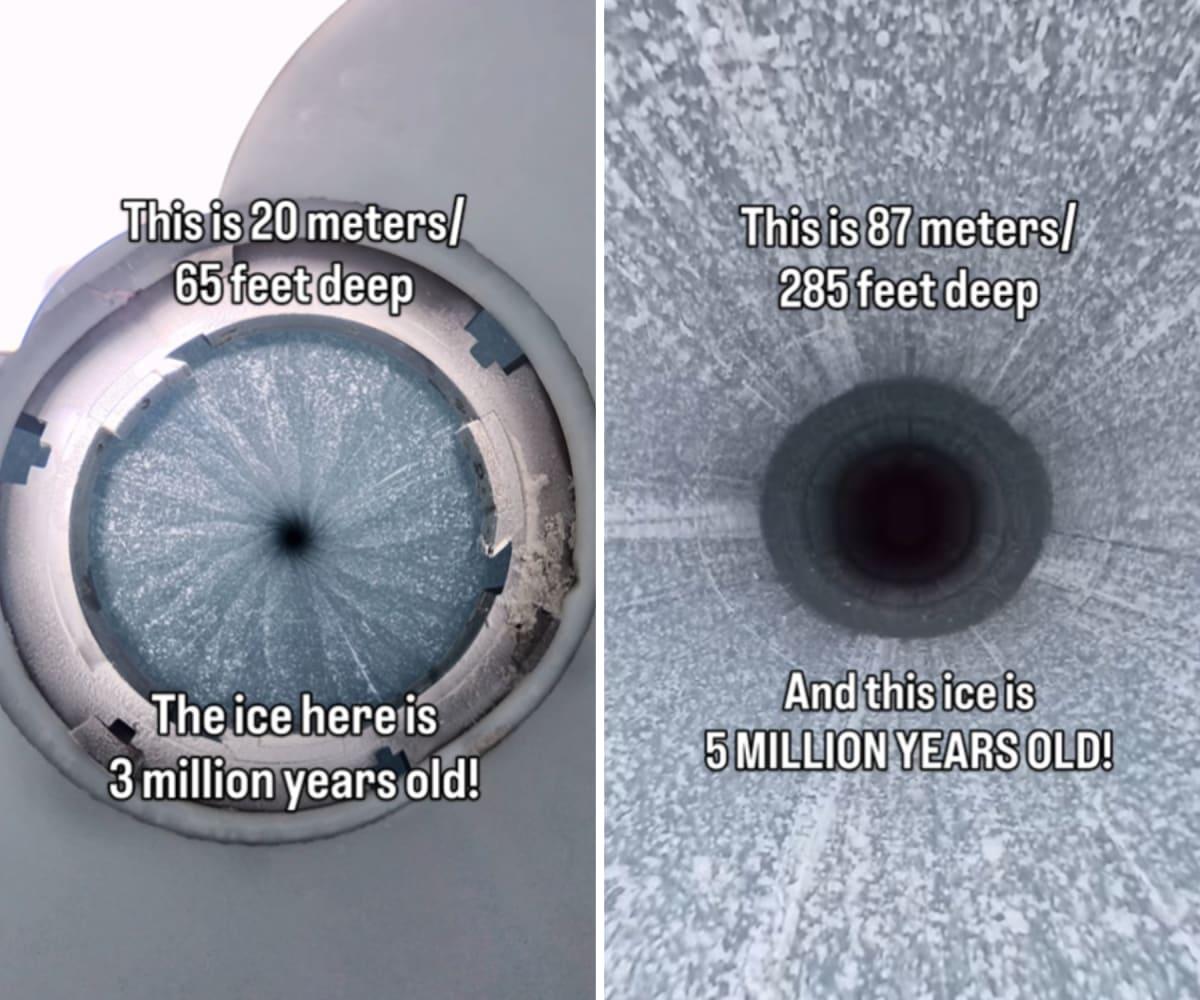
As the depth increases, the color of the ice seems to change from azure blue to powder blue to creamy white. The reason for this, as Roger explained in a comment, is the changing reach of sunlight. Much like an ocean, the ice is brighter on the surface, and the deeper we go, the less light gets there, so the darker it gets, Roger said.
The background music—"Wormhole” from the movie "Interstellar"—only adds to the terrifyingly surreal effect, as the camera seems to be scissoring through an actual wormhole. It's a "chef’s kiss," one viewer said. Streaks of glowing ice crystals twist and dance in mathematical patterns or kaleidoscope-like patterns. At 65 feet deep, the camera meets ice that is three million years old.
Scientists sent down a camera attached to a drill down the blue ice of Allan Hills and recorded how it looked like in a surreal video
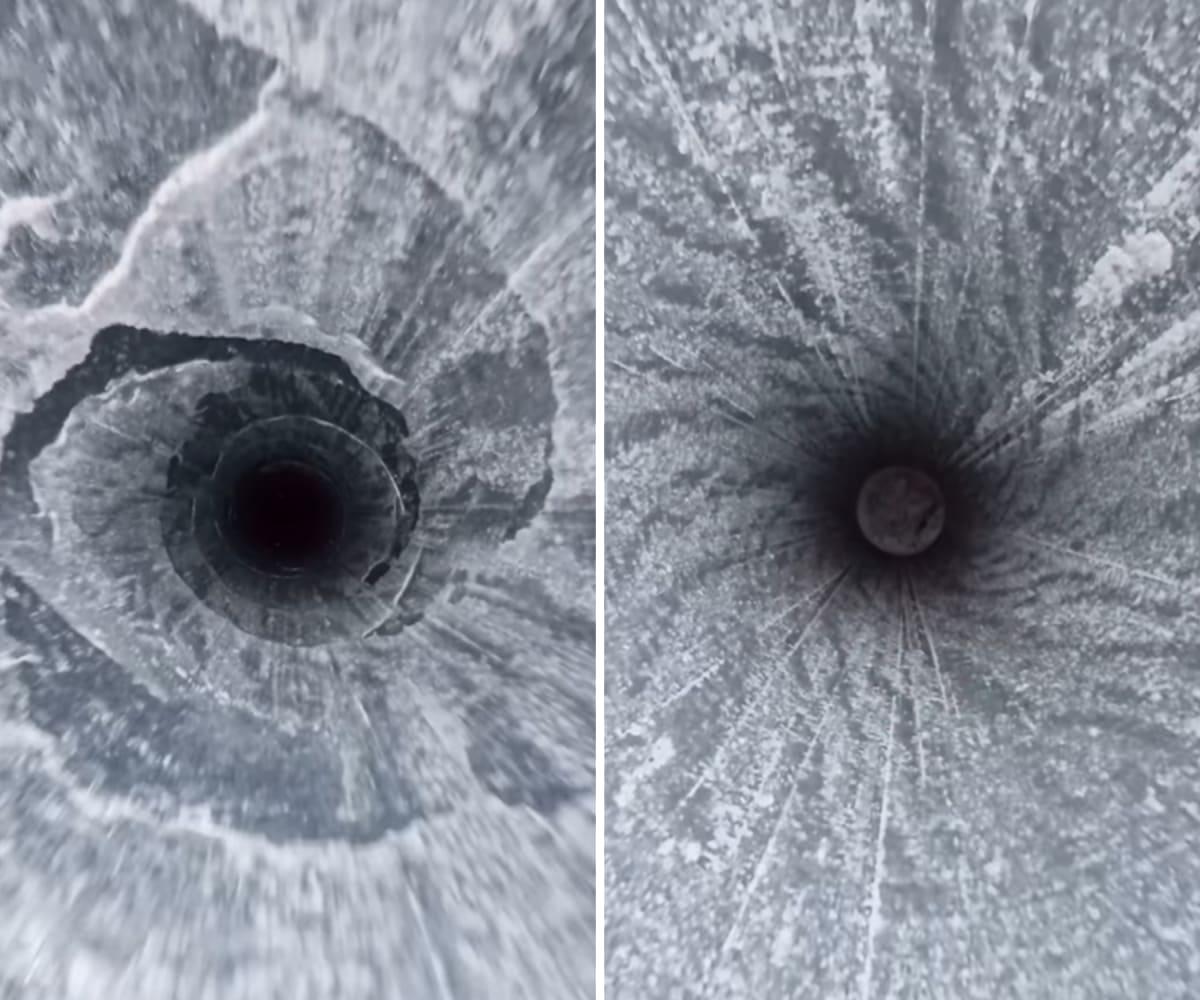
The camera continues to propel deeper into the ice. Passing through the layered curtains of shadowy dark ice, it reaches 285 feet down, where the ice caked into the walls is five million years old. The drill and the camera stop their time travel journey at about 297.5 feet. On the camera, the bottom appears like a corridor with walls studded with zillions of teeny diamonds; at the top of the core barrel, it looks like a vortex of ice spinning around a black hole.
Shot from Insta360, the footage prompted a flurry of mixed reactions, from "the coolest video I have ever seen" to "so hypnotizing." Others churned out bizarre speculations on how the camera's odyssey into deep ice is like going down there and interviewing gas bubbles, volcanic rocks, and microbes lurking in old ice, and asking them about the stories they know from the times long gone by.