
World’s Smallest Penguin Spotted More than 5,000 Miles Away from Home Surprises Scientists
Published Jan. 20 2026, 5:59 a.m. ET

A Little Blue Penguin travelled 5,000 miles to reach Falkland Islands
In the cold, electric heart of the South Atlantic Ocean, the Falkland Islands have a new visitor, a flightless bird who travelled more than 5,000 miles from its home to reach here. @estancia_excursions, a local tour company based in the capital city, Stanley, managed to “catch up the rare visitor” and snap a photograph. Nobody knows how long the new guest plans to stay here, but the cute slate blue penguin seems to have set up a little lodge for itself on a beach.
When dusk sets in, the penguin retires to the warm shelter of its lodge located in a natural den formed by a boulder’s hole and the rocks gleaming in yellow and silver colors. Meanwhile, people passing by are curious to know the mystery of why this bird came all the way from a foreign land, a mystery whose answer only the penguin itself knows, and nobody else.
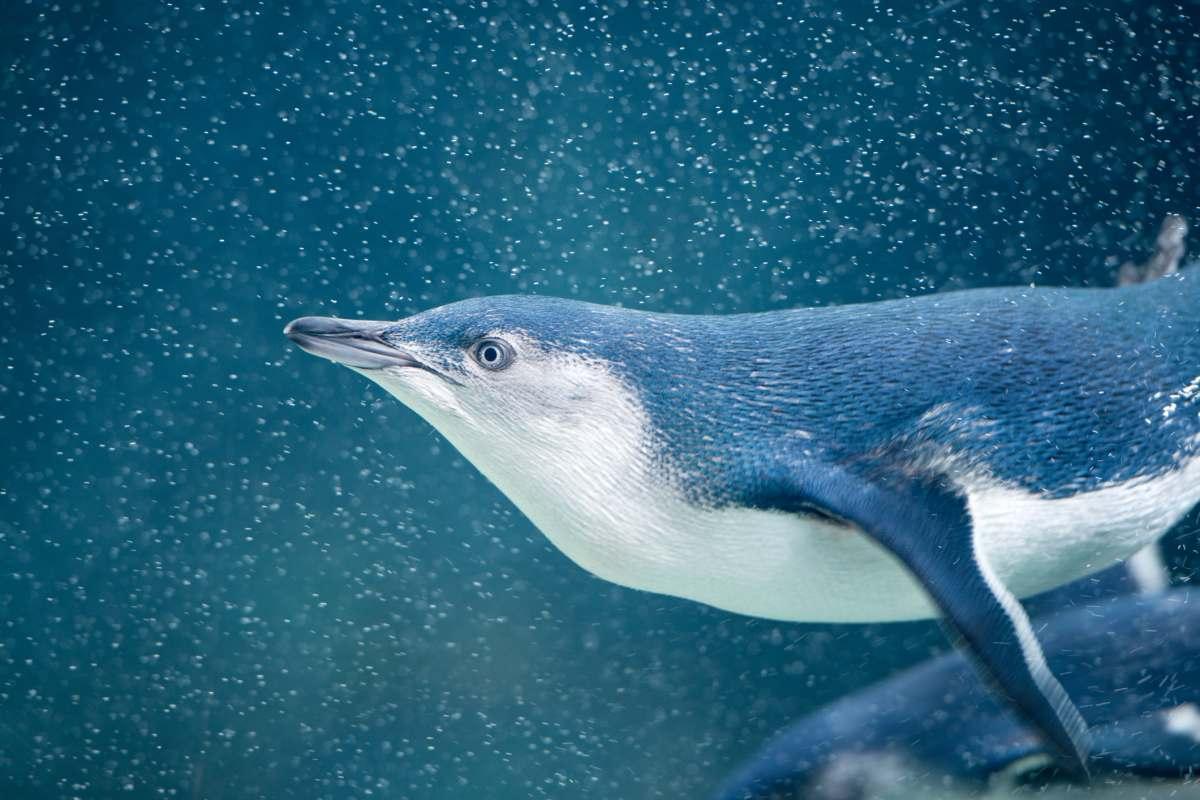
Little blue penguin of Southern Australia
Roughly 300 miles east of mainland South America and about 750 miles north of the Antarctic Peninsula, the rugged Patagonian ice shelf paves the way for a set of small islands. Named Falklands, the archipelago of islands is blanketed by the mist of quiet remoteness that makes it feel like a secluded hinterland, invaded by a small family of playful creatures. Travelers often find these creatures lazing around on the coastlines. A black-browed albatross splaying its feathers on the cold and wet treeless desert.
A Southern Giant Petrel is gliding over the sea flapping its big wings. Plovers and oystercatchers bobbing their necks and creepy-looking sea lions basking in fresh, golden light. There’s a whole lot of wildlife to be seen here, but when eddies of whipping winds brush and sweep above the Falklands, the creature they encounter the most is penguins, as FalklandIslands.com explains.
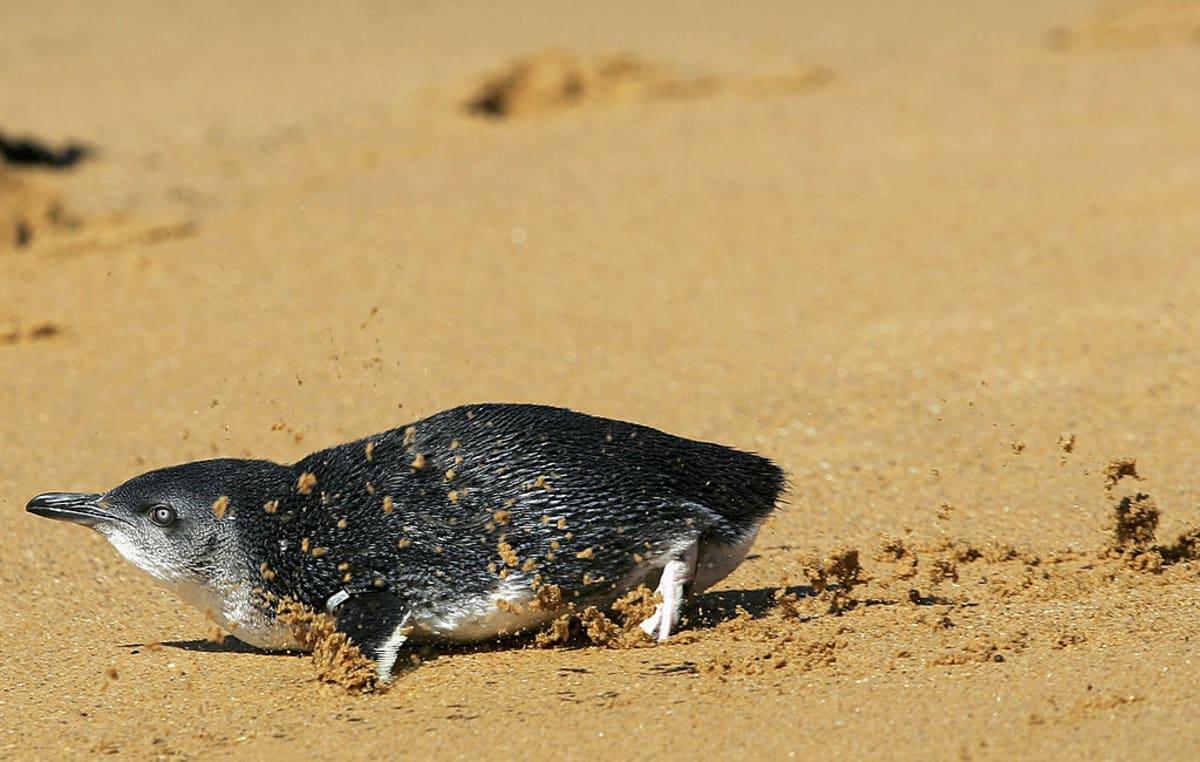
A fairy penguin in Sydney.
Falkland is rumbling with the raspy notes of penguins, mothers calling to their chicks, and males calling to their female counterparts. The breeze of this archipelago strums with a cacophony punctuated by these raspy calls plus the chirps and squawks of other penguin individuals. A lone, golden-crested Macaroni penguin combing the beach for pebbles, and a mate. A Southern Rockhopper waddling on tussocky white grasses, a huddle of Gentoos toddling across sandy beaches, and diddle-dee heaths. Or a majestic Magellanic penguin lounging on a windswept rock, munching on tiny fish.
These are some of the dominant species that have colonies on the coastlines of this southern archipelago. The steep slopes and the rolling hills, the dense canopies, the chaotic piles of shiny rocks, the bluegrass meadows, cushion plants, spiky shore grasses, the glacier-carved valleys; the nooks and corners of Falkland are dotted with these short-legged birds.
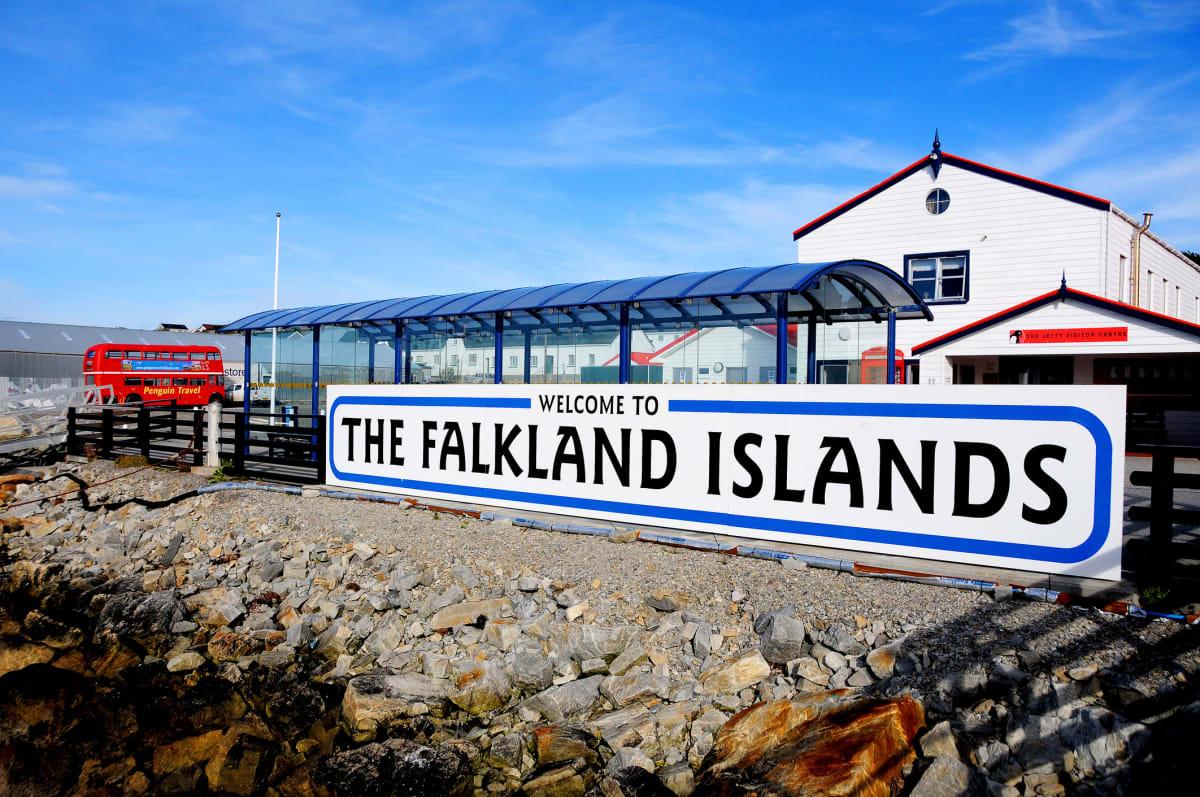
The harbor of Falkland Islands in the capital city Stanley
To have this new foreign visitor is a surprise for the island’s residents. Called Little Blue Penguin or Fairy Penguin, this specie of penguin is known to reside along the coastlines of Southern Australia, Tasmania, and New Zealand. The tour company wrote that this particular individual came from New Zealand. Known for their signature slate blue plumage, hooked bills, and hazelnut eyes. These white-breasted penguins are shy, nocturnal birds with a vigorous appetite for fish they catch from shallow waters, per the Aquarium of the Pacific. Much like underwater fairies, they like to stay huddled in their dens and burrows. But every once in a while, when it's time for foraging or mating, they send out raspy calls, chatting and communicating with sounds of grumpy ducks.
The Little Blue Penguin, dubbed Eudyptula minor, is also the world’s smallest known penguin, standing just as tall as a regular ceramic vase (10 to 12 inches) and is as heavy as a small laptop or a hardcover book (2.2 pounds), per MercoPress. While the new guest from a foreign land enjoys its visit on the southern island, people watching its adorable photo are already googling Little Blue Penguin to know more about them and see whether they have one residing near their home.