
Biggest Solar Radiation Storm in Over 20 Years Hits Earth and Sets Off Stunning Auroras
Published Jan. 21 2026, 3:59 a.m. ET

Auroras in the sky
Sun’s activities peaked yet again, sending a powerful solar radiation to Earth. On Monday, January 19, a severe G4 geomagnetic storm shook our planet’s magnetic shield. As a result, auroras filled the skies in low-latitude regions across the Northern Hemisphere, especially in Europe. Although experts predicted aurora visibility across 24 U.S. states, the event peaked before sunset in North America with no evidence of visibility. However, certain parts of South America, including Alabama, Georgia, New Mexico, and California, reportedly witnessed the Northern Lights in their glory, as per Live Science. The geomagnetic storm began on Monday after a coronal mass ejection (CME) collided with Earth’s magnetic field a day before.

Gorgeous curtains of glowing lights decorating the night skies of Alaska's wilderness during an aurora display
The geomagnetic storm reached the “severe” G4 level at 2:38 pm EST on January 19. It slightly calmed down before peaking again at 3:23 a.m. EST the following day, Tuesday, January 20. The geomagnetic storm was accompanied by S4 solar radiation, making it a powerful event. Although there have been many solar radiation events in the past, this event was record-breaking, as attested by the National Oceanic and Atmospheric Administration (NOAA). “A Severe (S4) radiation storm is a rare event and exceeds the intensity during the October 2003 'Halloween' space weather storms,” the agency wrote. After over a decade, a powerful solar radiation storm showed its effect on Earth. The G4 geomagnetic storms are the second strongest in the category, which can cause major disruption in everyday activities on Earth.
It can cause temporary radio blackouts, power outages, and could even damage spacecraft orbiting near our planet. Since the recent geo storm is quite severe, NOAA has listed the potential impact it could have. Astronauts and flights traveling on polar routes are at high risk of being exposed to harmful radiation. High-frequency communication, especially in the polar regions, could be hindered. NOAA’s Space Weather Prediction Center (SWPC) has alerted several airlines and stakeholders to be prepared with precautionary methods in case the condition worsens. A solar radiation storm occurs when particles released from the Sun are accelerated. For an S4 storm, the accelerated particles move towards Earth with great intensity and quality.
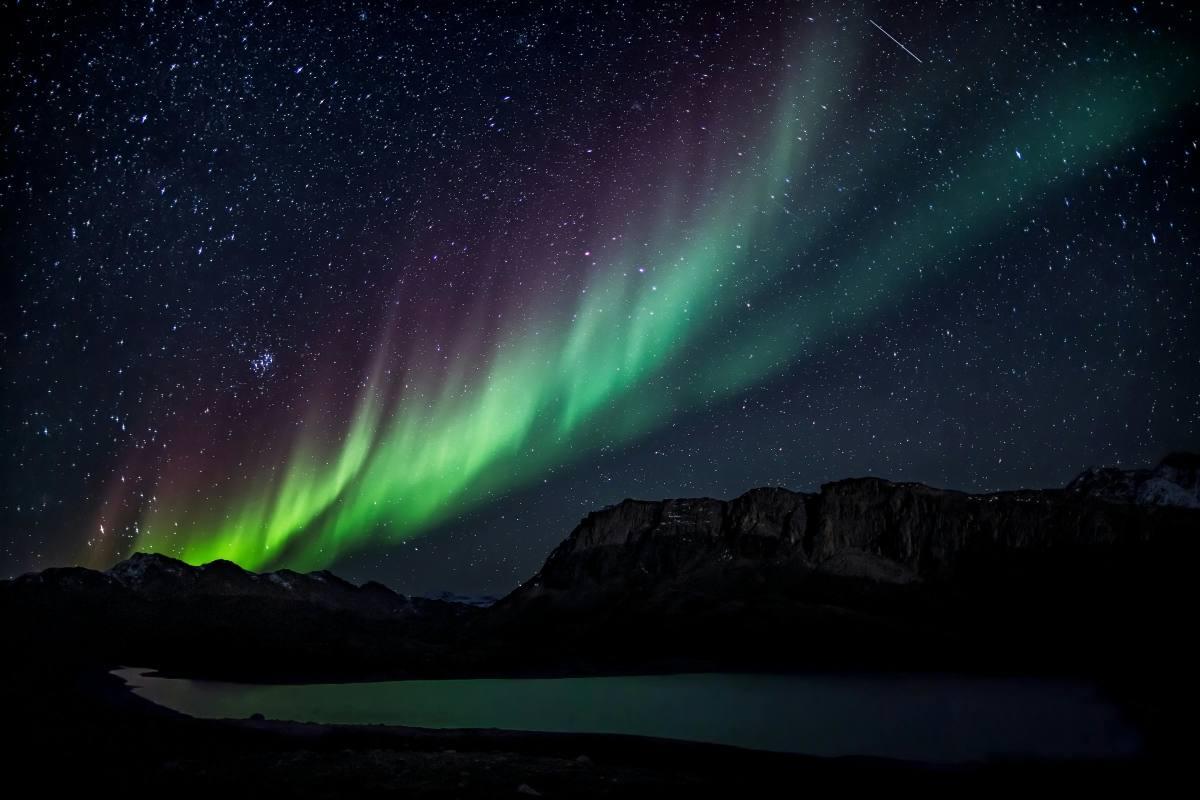
A photo of the Aurora Borealis.
“This is the largest solar radiation storm in over 20 years. The last time S4 levels were observed was in October 2003,” the agency wrote in a Facebook post. “Potential effects are mainly limited to space launch, aviation, and satellite operations,” it added. They also notified the infrastructure operators and authorities to take action to mitigate any severe impact of the solar radiation storm. The event could increase the possibility of voltage issues that, although manageable, can disrupt everyday activities. With powerful geomagnetic and solar radiation storms come increased risk of defects or anomalies to satellite operations. Some of the potential impacts include a long duration of GPS degradation.
On the bright side, no matter how powerful these effects might be, they could not directly pose any harm to our planet, at least not yet. The Earth’s magnetic field prevents strong radiation from directly entering the planet, as per NASA. Another perk of the intensified solar activities is the spectacle that is the auroras. The stunning mesh of gradient light is a treat to the sore eyes, and people travel from all over the world to witness it once in their lives.