
As Antarctica's 'Doomsday Glacier' Melts Faster Than Expected, Experts Plan to Build a 50-Mile Wall
Updated Feb. 13 2026, 7:36 a.m. ET

Tents dot the landscape at Cavity Camp on the Eastern Thwaites Glacier Ice Shelf. Scientists reside here as they conduct research as part of the International Thwaites Glacier Collaboration.
The Thwaites Glacier, also known as the “Doomsday Glacier,” has been melting faster than expected, and scientists are worried. They worry about how much it could affect sea levels if it keeps melting rapidly. If it melts completely, it could raise global sea levels by roughly 65 centimeters, or 25 inches. This means coastal regions and island nations will be at a greater risk of flooding. To prevent this catastrophe, scientists have proposed the unusual idea of installing a massive underwater wall anchored to the ocean floor. The main aim of the project is to reduce warm ocean water from reaching the glacier and slow down the loss of ice.
The idea was proposed as part of the Seabed Curtain Project. The team consists of scientists, engineers, and policy specialists who believe that cutting emissions alone may not be enough to protect the glacier in time. Their proposal is extremely ambitious, both in design and scale. The wall would need to stretch more than 50 miles across the seafloor and rise to around 492 feet, and it will be placed as deep as 2,000 feet underwater.
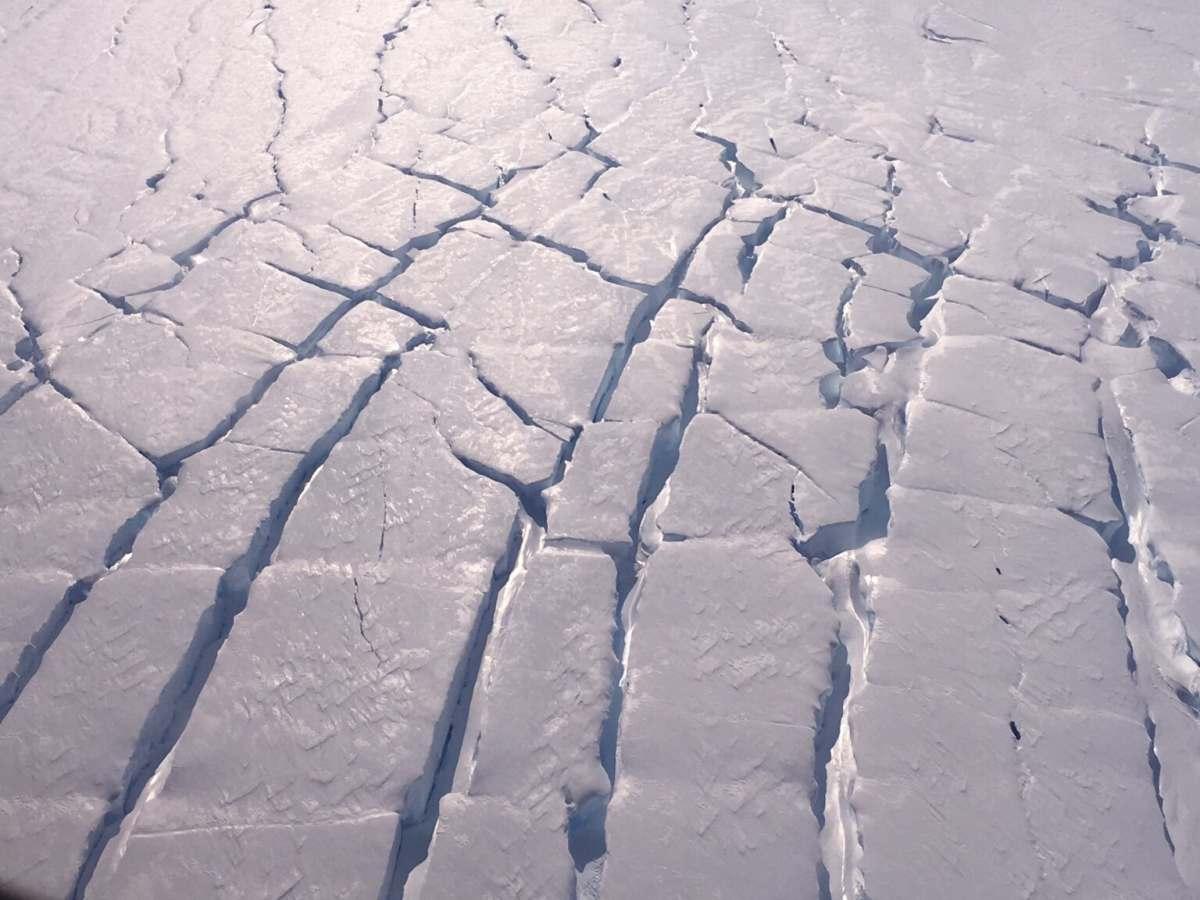
Cracks in Thwaites Glacier.
“Just because it’s extremely difficult is not an excuse not to try,” said Marianne Hagen, co-lead of the Seabed Curtain Project, to IFLScience. The project is planned in stages, and it will start with a three-year research period. During this phase, scientists will focus on choosing the right materials. Also, they will design secure anchoring systems and test early prototypes to examine how the idea may work in real conditions.
Engineers are already collecting mooring data from the Thwaites region to understand the environment and technical challenges. Furthermore, the team is raising about $10 million to support early development. The team will consist of experts from several major institutions, including the University of Cambridge, the University of Chicago, New York University, Dartmouth College, Alfred Wegener Institute, Norwegian Institute for Water Research (NIVA), Aker Solutions, and the University of Lapland Arctic Center.
Researchers are also working to understand what is happening underneath Thwaites Glacier. Teams from the UK and South Korea are using hot-water drilling to break through the glacier’s main ice shelf. This gives them access to areas that have not been studied directly before. Instruments will be lowered nearly 3,280 feet (1,000 meters) below the surface once the boreholes are completed. It will help the team to closely monitor conditions at the ice’s base.
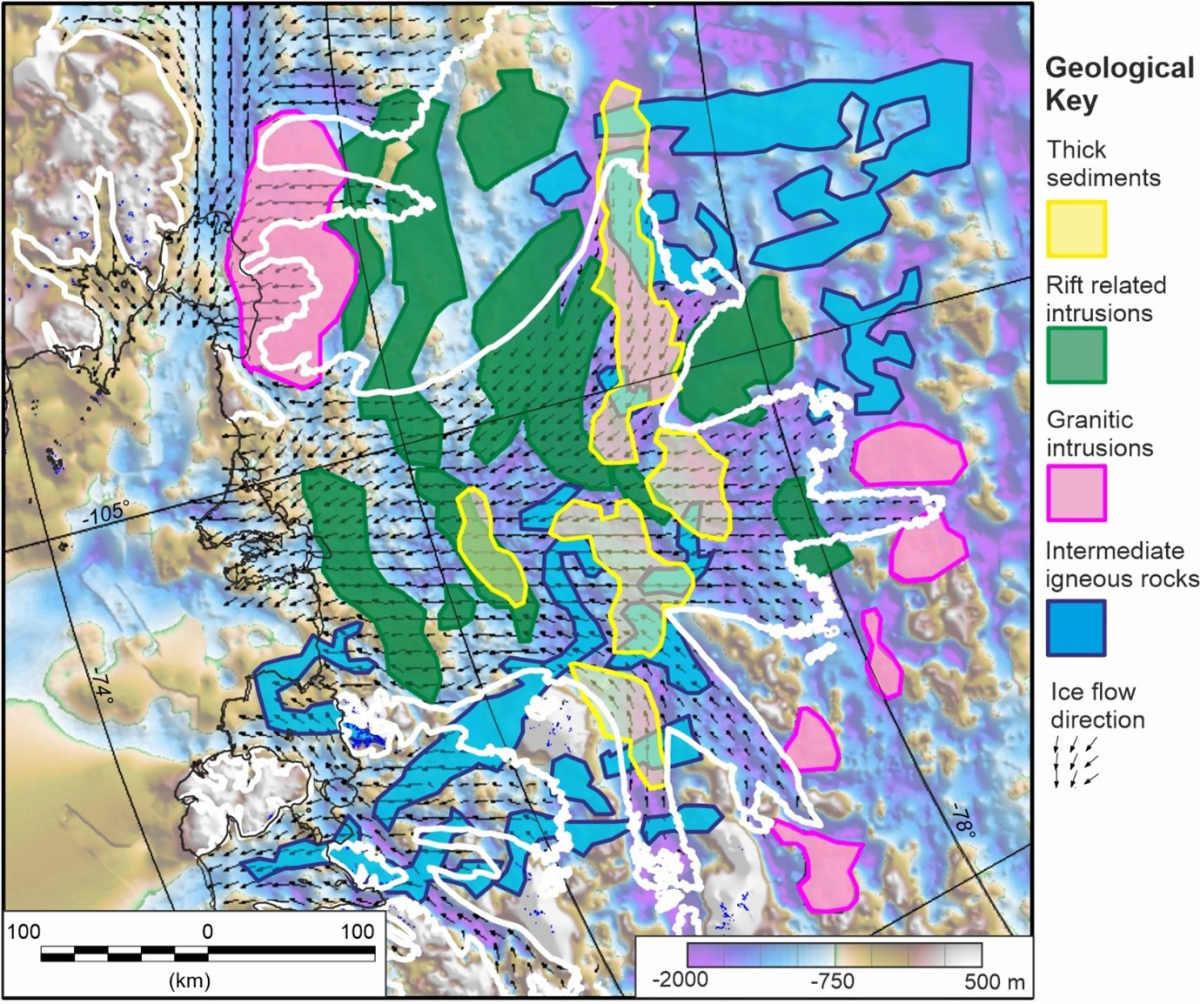
A detailed geological map of under Thwaites Glacier shows the surprising low areas of thick sediments, and the long strips of rift related intrusions
“We’ll be watching, in near real time, what warm ocean water is doing to the ice 1,000 meters below the surface. This has only recently become possible and it’s critical for understanding how fast sea levels could rise,” Dr Peter Davis, a physical oceanographer at the British Antarctic Survey, said, according to Oceanographic.
The project may seem easy in theory, but it contains several hurdles. “It would be absolutely insane, from an economic perspective, to go straight to Thwaites and start building something. We need to test this at a much lower cost, in less harsh conditions,” Hagen said. Besides the engineering hurdles, building a seafloor curtain near Thwaites could also create political issues. Antarctica is not owned by any one country. It is governed by the Antarctic Treaty System. Any attempt to build something in the region could lead to tensions.