
Archaeologist Unearths Intricate Medieval Gold Ring in Historic Viking Town
Published Jan. 6 2026, 3:11 a.m. ET

Norwegian archaeologist found a gold sapphire ring entombed seven centimetres deep into the soil
It was a quiet summer day, and archaeologist Linda Åsheim was alone at work when she was jolted into an “out of body” experience. At a depth equal to the size of a teaspoon or a credit card, there was a dazzling gold ring buried in the soil. With no one to call out to, she stood there, wondering what to do with the newfound piece of jewelry, now caked with soil. For probably hundreds of years, the ring had been entombed in the grounds of Norway’s Tonsberg. The ring is old, and no one knows to whom it belongs. But Asheim and her fellow archaeologists suspect that it likely belonged to a rich woman from a royal castle, which once loomed above these grounds. “And now I just have to quit being an archaeologist, because now I've reached the top,” Asheim joked after making this “dream find,” as she described it in a report by the Norwegian Institute for Cultural Heritage Research (NIKU).
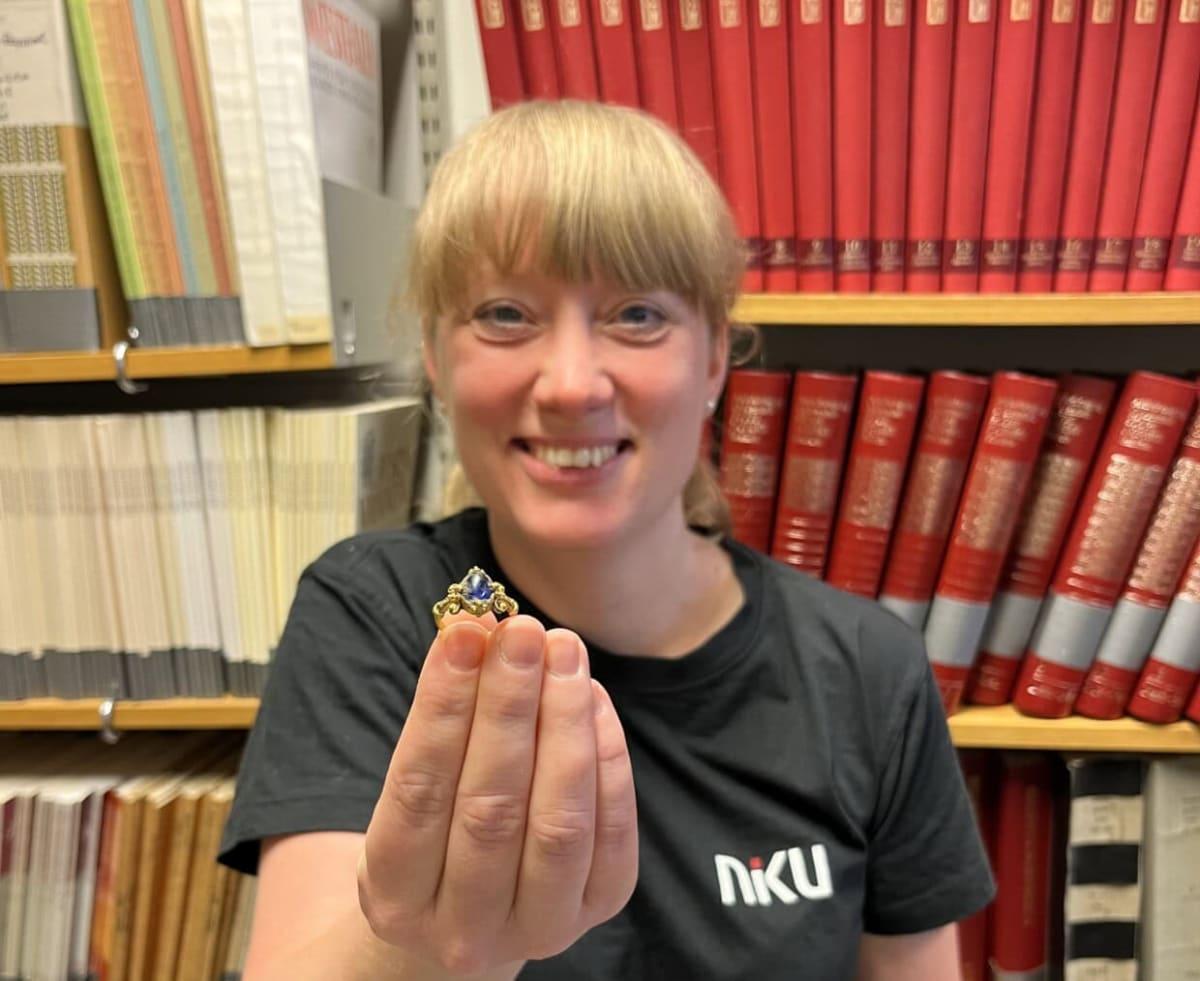
Archaeologist Linda Åsheim with the gold ring.
The ring was pulled out from 0.22 feet beneath the cultivation layer, as part of a collaborative project with Tonsberg Municipality. While the municipality conducted some work on stormwater management, Asheim and other archaeologists worked on digging out this ring. In what is located right at the intersection of Storgaten and Prestegaten in the historic center, NIKU archaeologists have been excavating for the past two years. The cultivation layer has not been dated yet, but a spruce twig discovered in the layer was dated to 1167-1269.
Not just the location, the design of the ring holds fascinating stories about those who dwelled here in the medieval ages. The ancient artifact seems exquisitely crafted with thin metal threads twisted, bent, and soldered in what designers call intricate “filigree patterns.” The filigree technique has been blended with another technique called “granulation,” which appears in the form of small spirals, reminiscent of Carolingian and Byzantine goldsmithing. Etched into the center of the ring is a glittering oval gemstone featuring midnight blue color.
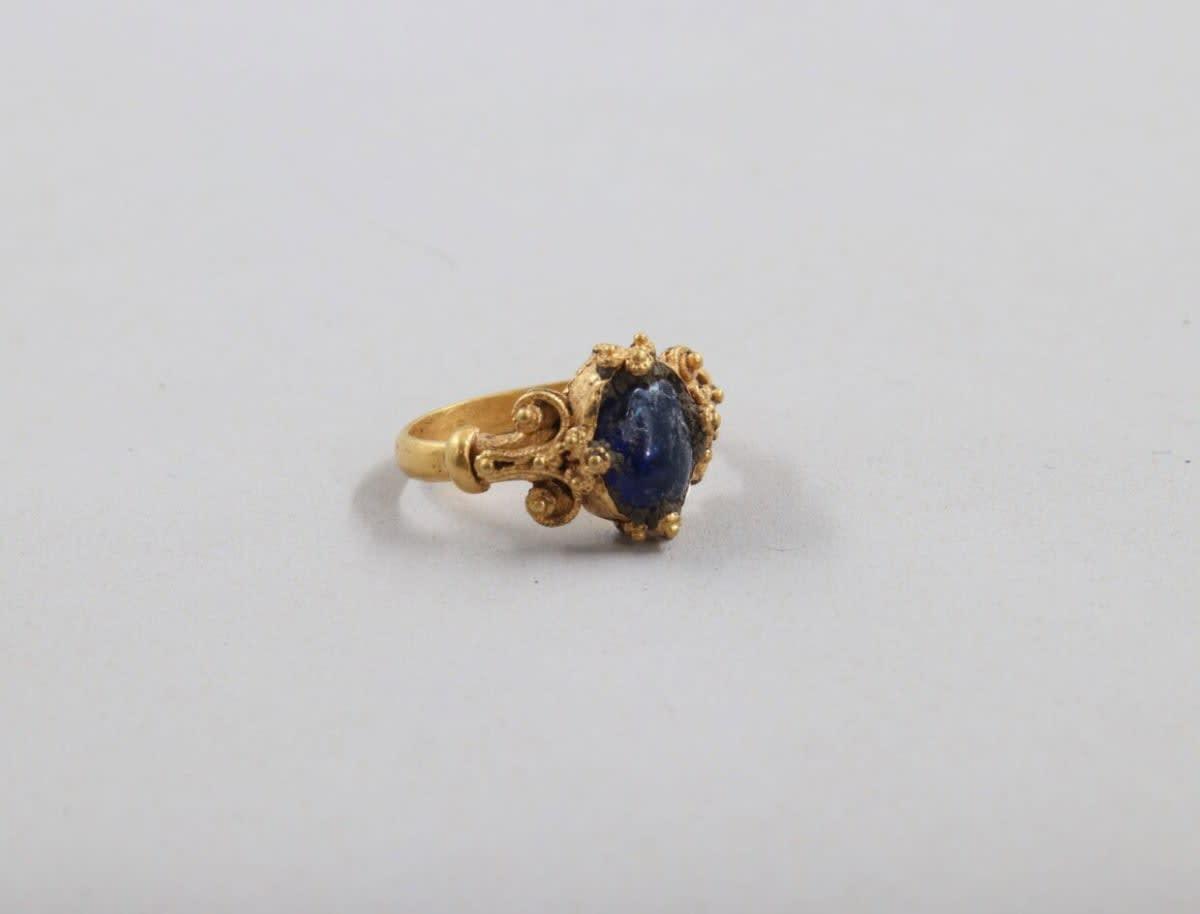
A midnight blue stone is at the center of the ring
The ring also reminds archaeologists of the Renaissance jewelry that was sold during the 14th to 16th centuries. However, on the surface, the treasured piece resembles the finger rings dating between the ninth and eleventh centuries. But when Asheim spotted it, she couldn’t believe that it was pure gold. “I thought, ‘Is that gold?’ and then I was completely shaken,” she quipped. “I had to ask the construction guys if they were messing with me,” she recalled.
Once Asheim broke the news, the ring also triggered a wave of excitement in the Project manager Hanne Ekstrøm Jordahl. “It has been 15 years since we last found a gold ring in Tønsberg, and this one is a fantastically beautiful and rare specimen,” she said. The report says that there are 220 gold rings registered currently in the national artifact database Unimus, of which 63 are from the Middle Ages.
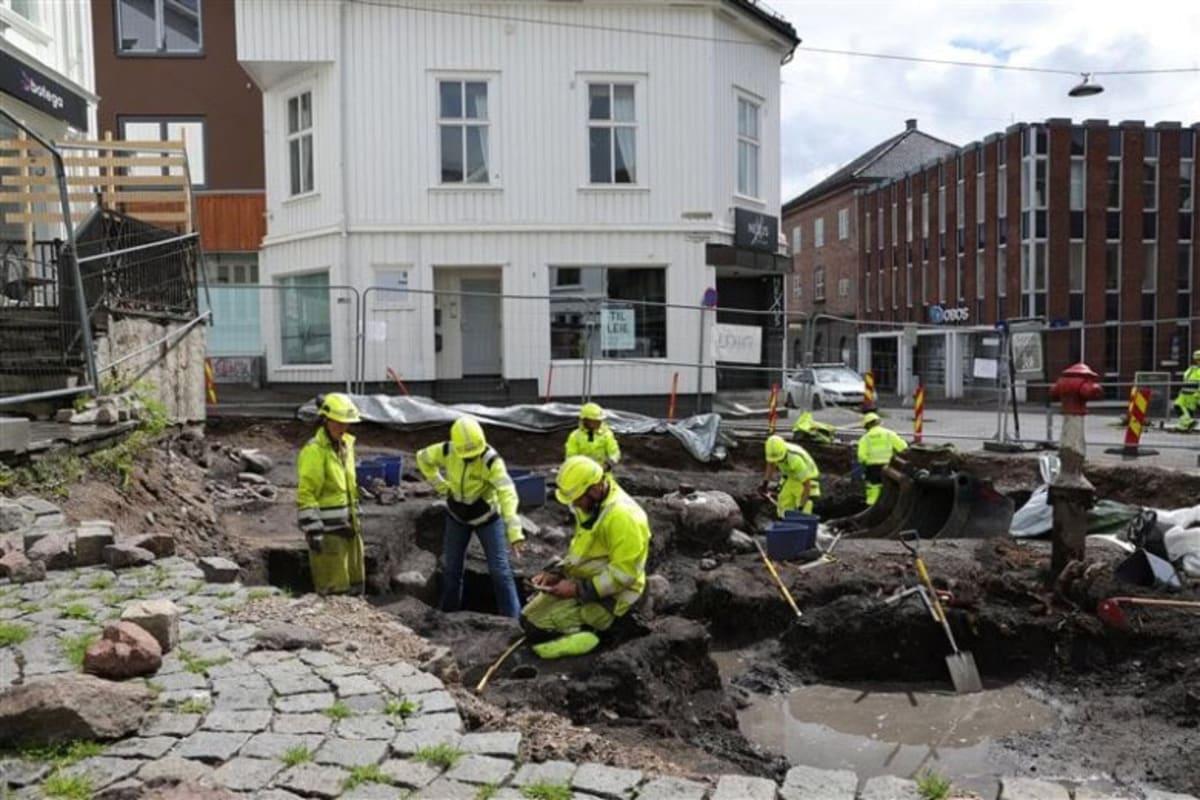
The excavation site is in the center of the Norwegian town.
The gold ring also tells stories from a time gone by. Archaeologists believe that once it was regarded a potent container of magical properties and lots of symbolic meanings. For instance, the royals could be using it to cool down the inner heat o their bodies. They probably wore it to cure ailments or strengthen divine power and protect themselves from evil. The unbroken circular shape of the ring, they believe, is a powerful protective symbol in mysticism. Other possibilities are that it depicted power and social position.
Meanwhile, before Asheim ventures on her next expedition to the top, she is probably dreaming about the stories of these medieval royals and the jewelry that adorned their silhouettes.
More on Green Matters