
Woman Accidentally Finds Huge Treasure Hidden for 900 Years While Out on a Casual Walk
Published Dec. 18 2025, 8:09 a.m. ET

A woman looks inside a treasure chest
More than 900 years ago, someone, likely a rich person, stashed away thousands of silver coins in a ceramic canister. They buried them under the soil, probably to keep them safe. Their action served the purpose. The coins remain not just safe, but untouched for 900 years, until a woman decided to go for a walk. The unnamed woman must have thought of good heart health and flexible muscles when she went for a walk, but what she discovered surpassed all that she had imagined: this 900-year-old stash overflowing with more than 2,150 silver coins. When she showed the coins to archaeologists, they told her that the coins are known as denarii.

Woman goes for a morning walk holding a bottle of water in her hand
The woman was taking a walk in the Kutnohorsk Region of the Czech Republic when she made the discovery. An in-depth investigation was required to dig up the chronicles hidden in the coins and the history they captured in their features. Archaeologists from the Institute of Archaeology of the Academy of Sciences of the Czech Republic (IAASCR), Prague, and the Czech Silver Museum in Kutná Hora, took up the project.
The coins were found in what was the Kutná Hora region, dating somewhere around the first quarter of the 12th century. Due to the lack of knowledge about the period’s financial structure, archaeologists aren’t sure whether the owner of the coins was rich or poor. But whoever they were, the amount is still a lot, like a lottery jackpot. “Unfortunately, for the turn of the 11th and 12th centuries, we lack data on the purchasing power of the contemporary coin,” reflected lead archaeologist Filip Velímský. “But it was a huge amount, unimaginable for an ordinary person, and at the same time unaffordable. It can be compared to winning a million in the jackpot,” he added.
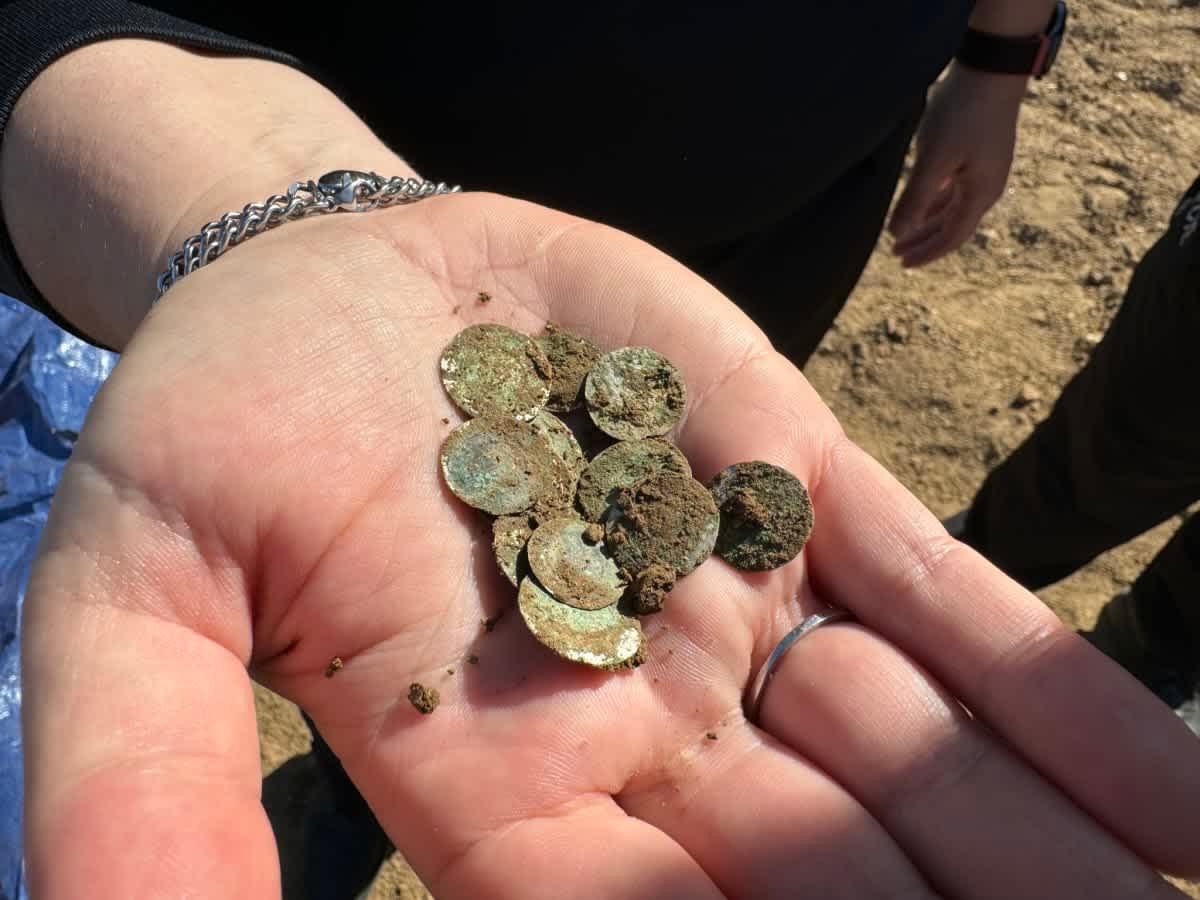
European woman discovers a stash of ancient silver coins buried in the soil while having a stroll
But why did the owner stash away the coins at this particular location, and why didn’t they return to claim them? Archaeologists have some theories. The first and simplest hypothesis is that the person probably lost it, and the ceramic pot went unnoticed. The second theory relates to the history of the Kutnohorsk Region. This region was known for frequent battles, which implies that the coins could have been part of a “war booty” or wages of soldiers.
Lenka Mazačová, director of the Czech Silver Museum, believes that the silver for the coins was imported from Bohemia. This theory comes from a turbulent chapter of the region’s past. Known as the House of Přemysl, the region was ruled by three different Přemysl leaders. Sometime after the year 999, one ruler named Boleslav died. At the end of the 12th century, Prague became the epicenter of major family disputes, per IFL Science. This is to say that someone hid away the treasure to avoid getting them distributed or to avoid losing them to another family member.
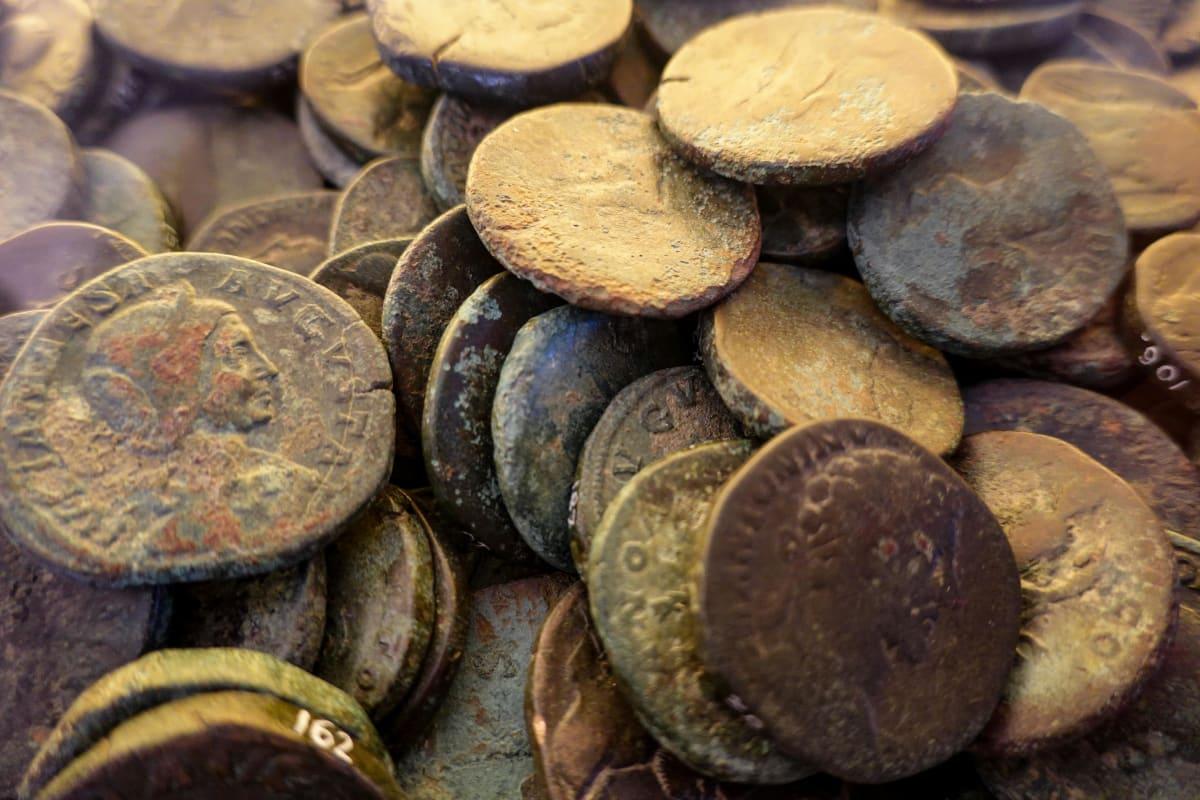
Pile of ancient coins
Velímský agreed. He said that, at this time, Prague was going through a tumultuous civil unrest and political instability. Of all the theories, this one seems the most plausible. But even if the theory isn’t the truth, it doesn’t really matter that much if you ask the woman who first stumbled upon the booty. She will receive 10 percent of the coins’ value as the reward. So, the next time you don’t feel like going on a walk, remember this episode.